

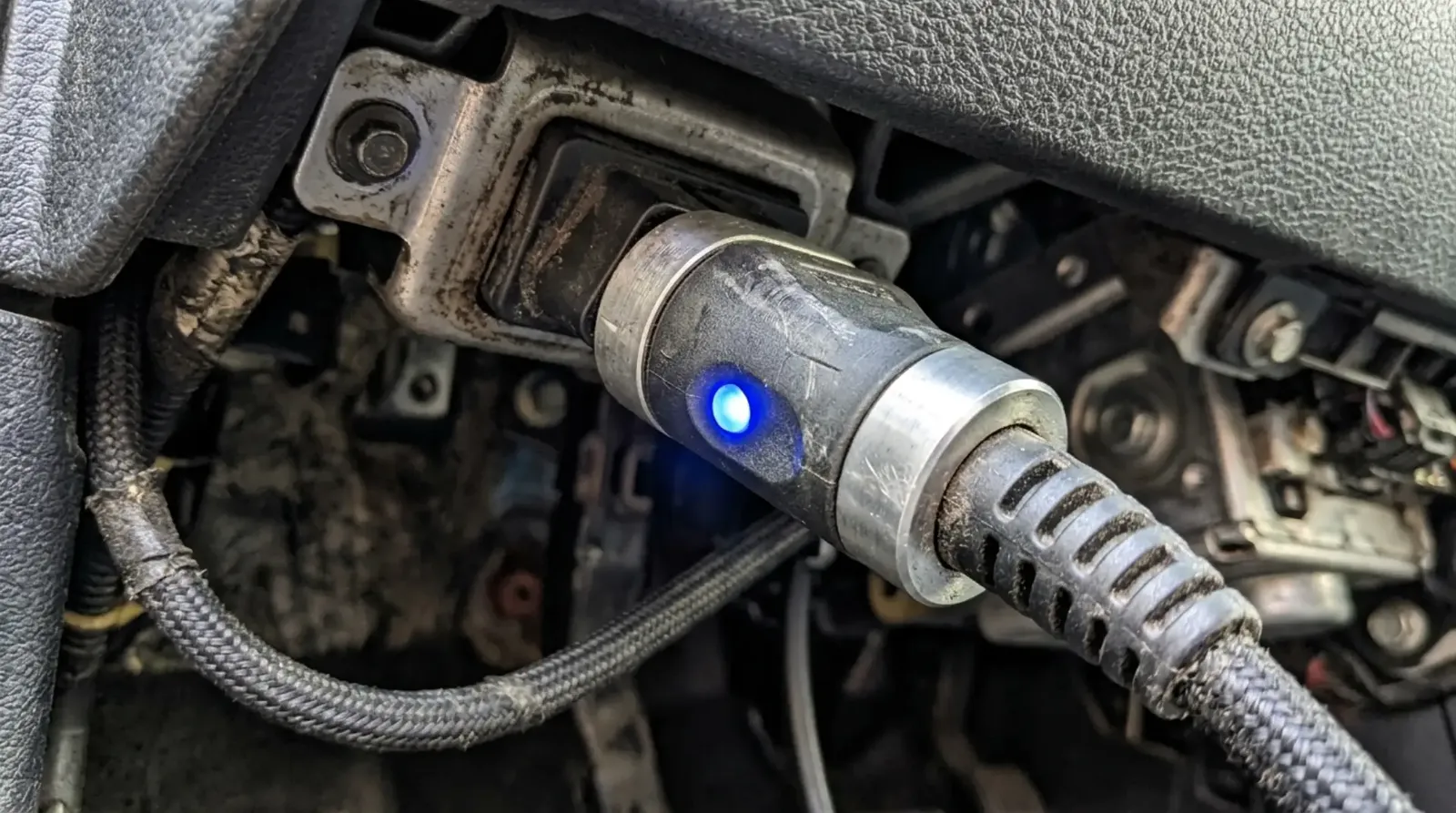
Automotive software for the shop, not the vehicle
Every tech is under a car and the phone is ringing. That call is a booking you will lose, and the parts quote nobody has time to chase is a job that sits another day.
Our automotive work is aftermarket service software: booking, parts procurement and the shop phone. Nothing we have shipped runs on a car. If your project involves embedded control units, ADAS, AUTOSAR or ISO 26262, you want a different firm. You should hear that on the first call, not in month three.
Both phones cost you money
A repair shop has two phone problems and only ever fixes one. The first is the phone that rings while every tech is on the tools. Nobody answers, and the customer calls the shop down the road.
The second is the phone nobody has time to dial. Someone has to ring four suppliers to find a bumper, compare prices, and write the answers on a pad. That is an hour of skilled time spent on hold.
ZhoopZhoop covers both. Inbound AI agents take the customer call and book the appointment. Outbound agents ring suppliers, gather availability and pricing, then hand back a comparison. Your managers see every call, transcript, quote and booking across all branches on one dashboard.
- 01A missed call at a busy shop is not a lost call. It is a lost job, and usually a lost customer.
- 02Parts quotes belong in a record, not on a notepad by the till.
- 03Count how many bookings your branches take differently. That number is the project.
- RingTwilio routes the audio in.
- ListenDeepgram handles speech and turn-taking.
- DecideThe model checks the diary, not its memory.
- BookWritten to the schedule, confirmed aloud.
- EscalateAnything odd goes to a human, fast.
- RecordTranscript and summary on the dashboard.
Step five is the one buyers forget to ask about. An agent that cannot recognise a call it should not be handling is a liability with a phone number.
What we build for service businesses
AI reception that books work
Inbound voice agents answer, collect the booking details and confirm the appointment. Built on Twilio Programmable Voice for call routing, Deepgram Voice Agent for the speech pipeline and OpenAI for reasoning and function calls.
Outbound parts procurement
Agents call suppliers on request, collect availability and pricing, then return a comparison your procurement team can act on. Quote documents are parsed and stored rather than read out and rewritten.
Bookings over WhatsApp
A WhatsApp assistant on the Twilio WhatsApp Business API handles the same booking work over chat, for customers who will never phone you.
Multi-branch visibility
One dashboard across every location, with role-based access for shop managers, front desk and procurement. Live updates over WebSockets, on a FastAPI backend with PostgreSQL, Celery and Redis.
Customers hate phone robots. Here is the honest version
People do not hate automated phones. They hate being trapped by one. The old menu tree fails because it cannot understand you and will not let you out.
A voice agent earns its place on two behaviours. It has to book against the real diary, so it never promises a slot that does not exist. And it has to hand over the moment a caller is upset, confused or describing something unsafe.
That second rule is where cheap builds fail. On ZhoopZhoop the agents were tuned against real call transcripts, with Sentry watching the live workflows. You find your bad calls by reading them. A demo will never show you one.
- Give the caller a route to a person in the first sentence.
- Read the transcripts weekly. The failures are specific and fixable.
- An agent that guesses at availability will double-book your Saturday.
Businesses where a missed call is a lost job
ZhoopZhoop
AI receptionist and parts procurement for a multi-branch auto repair business.
Read the case study →
Maidily
Integrated operations platform for residential cleaning businesses.
Read the case study →
WorkMateAI
Dispute resolution, payments, and compliance for Australia's on-demand trades.
Read the case study →
“They really help you understand the problem and deliver solutions in a short time frame.”
Johannes Peter · CEO, TomoDomo Coliving
An IVR menu against a voice agent
| Criterion | The phone menu you have | How we build it |
|---|---|---|
| Understanding the caller | Press 1 for service. The caller adapts to the machine. | The caller talks normally and the agent asks for what is missing. |
| Booking a slot | Takes a message. Someone rings back tomorrow, if the note survives. | Writes to the real diary during the call and confirms it aloud. |
| Reaching a person | Buried at the end of a menu, often after a wait. | Offered early, and forced whenever the caller sounds unhappy or unsafe. |
| What you learn afterwards | Call volume, and little else. | Every transcript, summary and outcome, readable per branch. |
| Outbound work | None. Staff ring suppliers by hand. | Agents collect parts availability and pricing, then return a comparison. |
The stack behind ZhoopZhoop
Built with
Voice and messaging
Running it
Questions shop owners ask first
01Will an AI agent book appointments into our real diary?
Yes, and refuse any build that does not. The agent has to read live availability and write the booking during the call, then confirm it aloud to the customer. An agent working from a summary of your schedule will promise a Saturday slot you already sold, and you find out when two cars arrive.
02How does the agent handle a caller who is angry or in a crash?
It hands over to a person immediately, and that rule is written before any booking logic. Distress, confusion and anything sounding unsafe all trigger an escalation rather than another clarifying question. We tuned the ZhoopZhoop agents against real transcripts, which is the only way to find the calls where a handover should have happened sooner.
03Can software collect parts quotes without staff on the phone?
Yes. ZhoopZhoop's outbound agents call suppliers on request, gather availability and pricing, then hand back a comparison. Quote documents get parsed and stored against the job, so procurement decisions stop depending on a note somebody wrote on a pad.
04Do you build software that runs inside vehicles?
No. We build shop and service software, and nothing we have shipped runs on a car. Embedded control units, ADAS, infotainment and anything governed by ISO 26262 or AUTOSAR sit outside what we do. Hiring us for that would be a mistake, and you deserve to hear it on the first call.
05We run four branches that each work differently. Can one system hold them?
Yes, and the hard part is permissions rather than features. ZhoopZhoop runs multiple repair locations on one dashboard with role-based access for shop managers, front desk and procurement. Settle which decisions are central and which stay local before the build, because changing that answer later rewrites the data model.
06What happens when the AI gets something wrong on a live call?
You need to see it the same day, which means recording, transcribing and monitoring every call from launch. Sentry watches the live workflows on ZhoopZhoop and the team reads real transcripts to tune the agents. A vendor who cannot show you last week's worst call is not running the system, only hosting it.
07How do we start without betting the shop on it?
Pick one phone line and one branch. Scoping calls are free, so bring the workflow that annoys you most and we will size it together. Where the work starts inside software you already own, a paid two-week diagnostic gives you a fixed price instead of a guess.
