

WorkMateAI
Safe payments and fair disputes for every home-service job.
Disputes, payments, and compliance for Australia's on-demand trades.
Key takeaways
4 things that decide this
- 01Hashlogics built WorkMateAI's trust-and-safety system, which handles contracts, held payments, and disputes for Australia's trades marketplace.
- 02Payments run through Stripe Connect on a hold-and-release model, freeze on dispute, and generate chargeback evidence.
- 03A three-layer agreement model covers platform terms at signup, a provider agreement at onboarding, and a contract per accepted job.
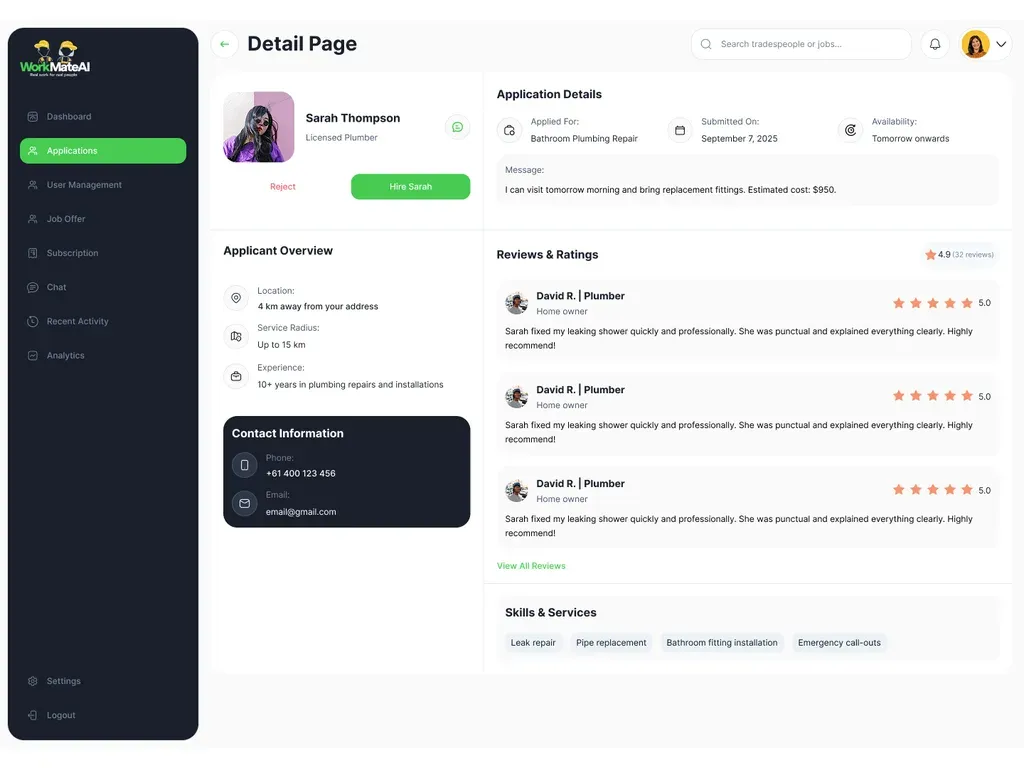
- 04Providers are verified against ABN, trade licenses, and insurance before they accept work.
- Client
- WorkMateAI
- Industry
- Home Services Marketplace
- Region
- Australia
- Engagement
- Marketplace · commissions + platform fees · Trust, safety & payments platform
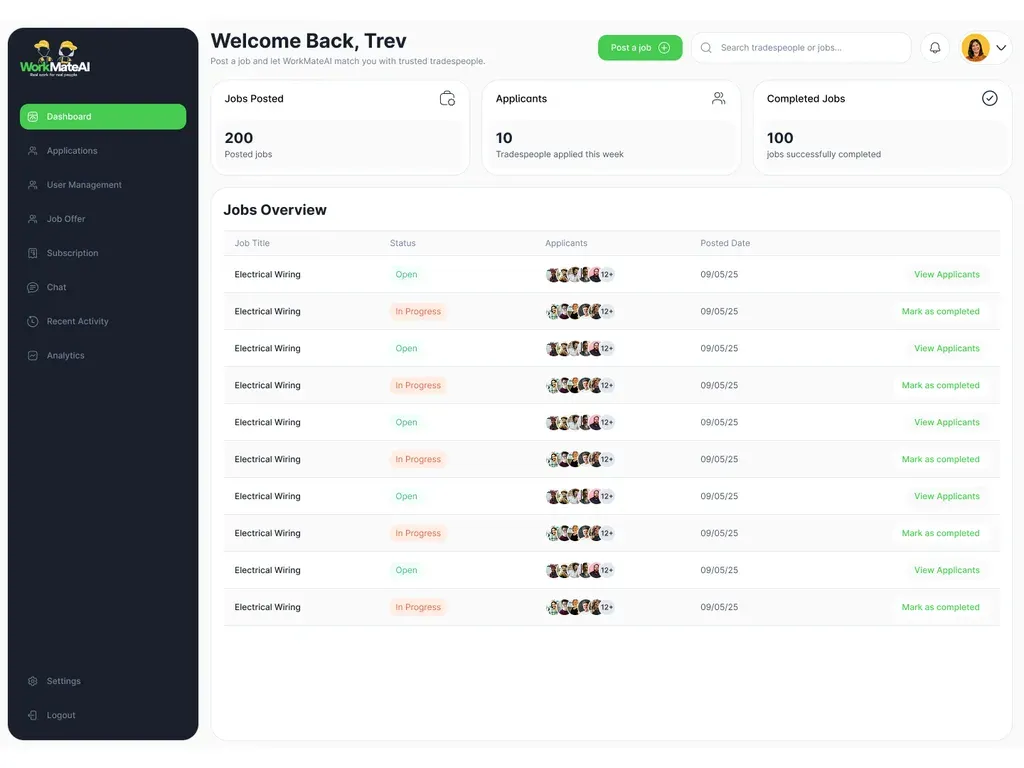
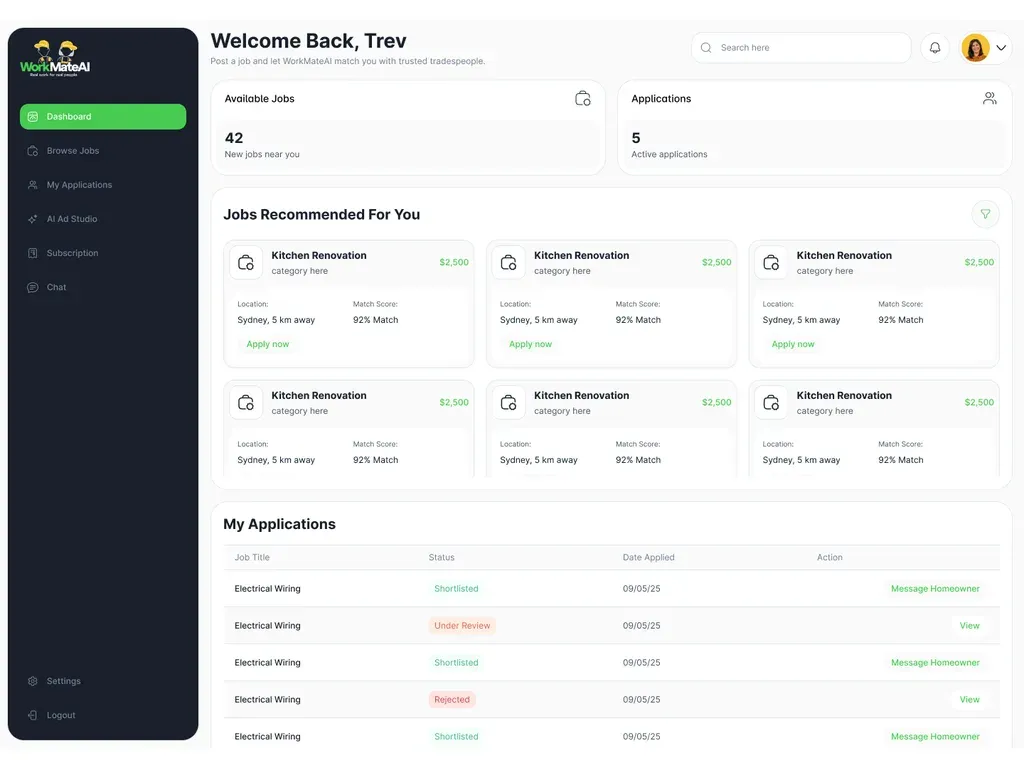
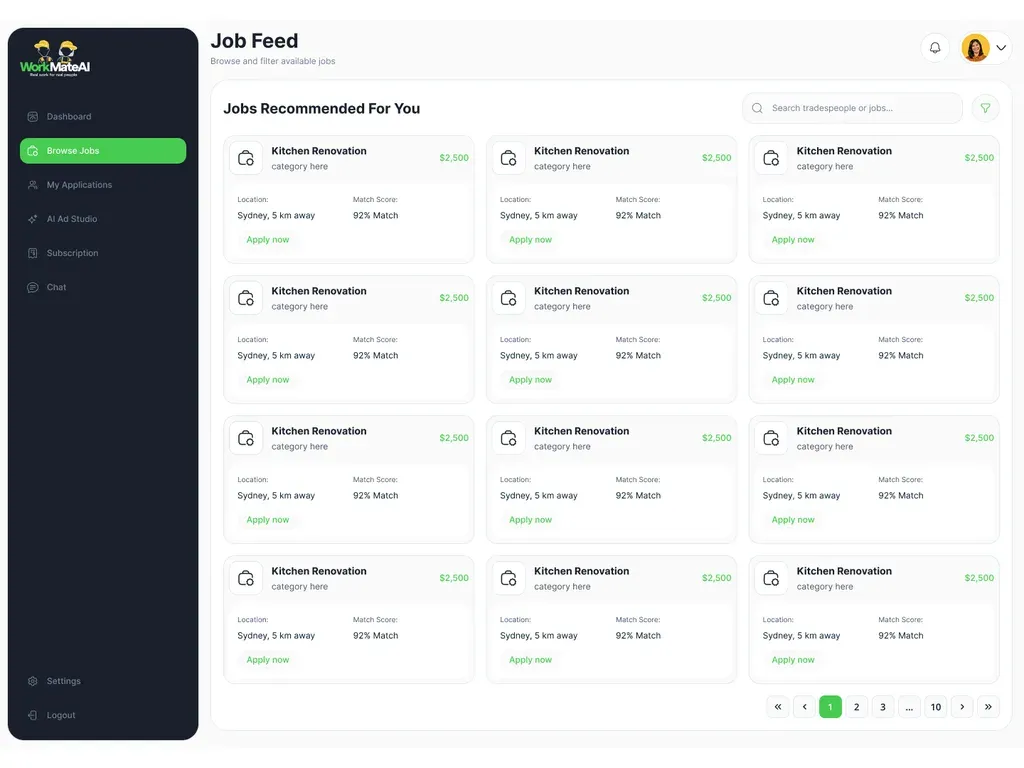
WorkMateAI connects customers with verified tradies for home repairs and upgrades. As it grew, payments, contracts, and disputes created real legal risk. We built a structured trust-and-safety system: clear legal agreements, held payments, provider checks, and a phased dispute process. The platform is now legally protected and easier to run.
Where the platform carried the risk.
The platform had no control over payments or chargebacks.
There was no legal contract framework between the parties.
Dispute handling was manual and undefined.
Tradie verification was weak: licenses, insurance, and identity went unchecked.
Messaging language could imply the platform was liable.
Payments happened off-platform, with no document generation and limited admin tooling.
What success needed to look like
- Payments stay inside the platform, with disputes and chargebacks handled instead of absorbed as risk.
- Every job is backed by a clear legal agreement, not informal messaging that could imply liability.
- Tradies are verified on license, insurance, and identity before they can accept a job.
- Disputes follow a defined process the platform can defend, not ad hoc handling.
How we delivered it.
- 01
Diagnose
Reviewed where payments, messaging, and disputes exposed the platform to legal and money risk. Unverified tradies and liability wording in messages topped the list.
- 02
Design
Designed a three-layer legal agreement model: platform terms, provider agreement, per-job contract. A phased dispute plan starts manual, then adds rules and AI help.
- 03
Build
Built hold-and-release payments on Stripe Connect, with dispute freezes and chargeback evidence. Contracts are e-signed via DocuSign or HelloSign. Providers are checked against ABN, trade licenses, and insurance. Documents live on AWS S3.
- 04
Launch
Rolled out the admin case dashboard with automated timers and alerts, next to the new payment and vetting flows. It replaced an off-platform process with no rules.
- 05
Run
Kept the dispute framework in its manual-to-rule-based phase. The system is built to add an AI resolution agent as case volume grows.
What we built.
We designed a structured, compliant dispute and payments system that sets clear legal limits. A three-layer agreement model covers platform terms at signup, a provider agreement at onboarding, and a job contract per accepted quote. All carry version history. Payments run through Stripe Connect on a hold-and-release model, freeze on dispute, and generate chargeback evidence. Providers are verified before they accept work. The dispute process runs in phases: manual first, then rule-based, with AI help on the roadmap.
- Job acceptedPer-job contract e-signed, payment held via Stripe Connect.
- Dispute filedPayment freezes; evidence locker opens for both parties.
- Manual reviewAdmin dashboard timers and alerts drive the case to a decision.
- Rule-based triageRepeat patterns route by rule instead of a fresh manual read.
- ResolutionRelease, refund, or chargeback evidence generated automatically.
AI-assisted triage is the next phase, added as case volume grows.
Tech stack
- Stripe Connect
- AWS S3
- DocuSign / HelloSign
Integrations
- Stripe Connect (hold-and-release payments + identity)
- DocuSign / HelloSign (e-signature)
- AWS S3 (secure document storage)
Security
- Encrypted storage for legal files
- Role-based admin access
- Audit logging for all dispute actions
- Clear data-retention policies
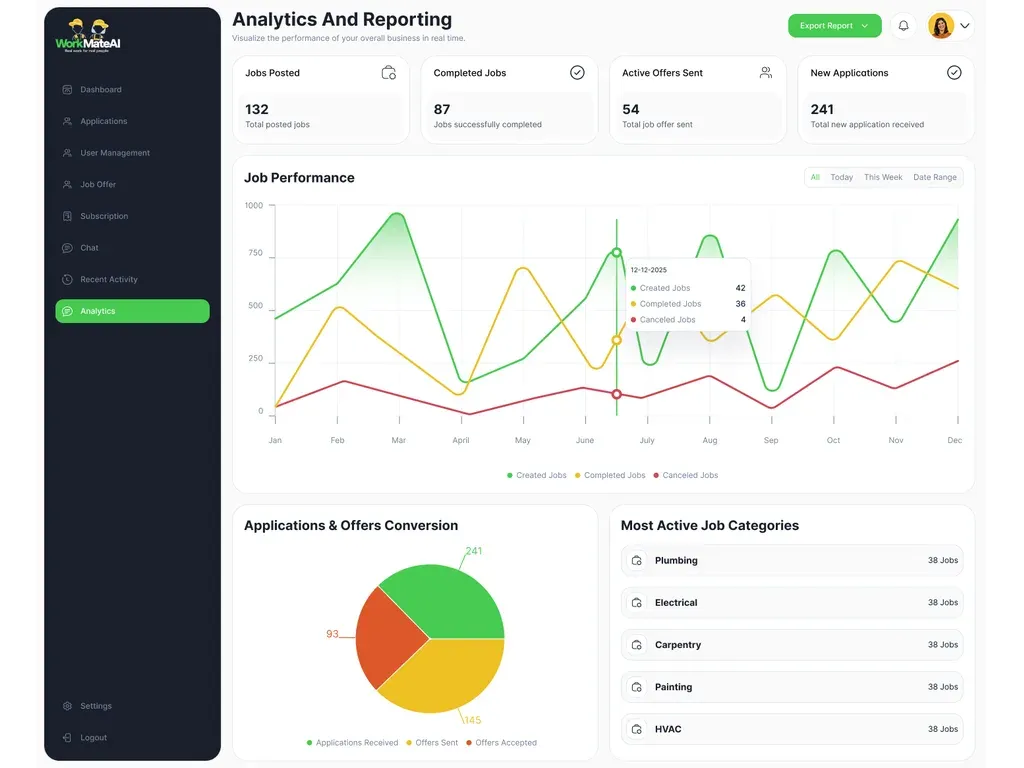
A marketplace's legal exposure shows up when something goes wrong. Building the dispute and payment framework first is what makes growth defensible. Resisting AI resolution on day one was the harder call. A pattern needs a human review before it becomes a rule. A rule earns automation only once it holds up.
