


AI, automation and custom software for HVAC companies, built around the systems you already run
You keep ServiceTitan, Housecall Pro, Jobber, FieldEdge or whatever you run. We build the layer around it: the phone that gets answered at 11pm, the estimate that gets followed up, the install that stops getting chased, the numbers you can actually see. Then we keep it running.
- 4.8 on Clutch across 22 reviews
- PremiumAudit.io: audit cycle cut 75%, calculation errors cut 95%
- In production for SmartREI, Tankaware, ZyloBase, KiwiWrite
What changes for you
3 things that decide this
- 01Your phone gets answered around the clock, and the call turns into a booked job in your own system instead of a voicemail nobody plays back.
- 02The work behind the call runs on its own: estimates get followed up, sold jobs get install-ready, crews get briefed, invoices go out, memberships renew. You stop chasing.
- 03When your platform can't do something, we build it: reporting that shows where the margin leaks, integrations between the systems you've already paid for, and the odd workflow no vendor is ever going to ship for you.
On the record
What you can check before you call
4
countries our client work runs in: US, UK, Switzerland, Australia
2017
building since. TechNova 2026: Best AI-Native Software House of the Year
2 mo
of support and maintenance free after launch. NDA before the first call
Eight places an HVAC company loses money, and what we put in each one
Pick the one that's hurting this month. Every card keeps the platform you already run and adds the AI, automation or custom piece it's missing.
Stop losing leads. Book more jobs.
Your CSRs juggle calls, web leads, missed calls and after-hours inquiries across the FSM and a messaging tool, with gaps between them. We add AI calling, missed-call recovery, qualification and booking around your system, and write the result straight back into it.
AI voice agents for HVAC →
Recover more estimates. Close more revenue.
Your comfort advisors run replacements, proposals, financing and unsold estimates inside the platform. We automate the follow-up, the financing reminders and the unsold-estimate recovery, and only build custom sales tools where the platform genuinely can't do what you want.
Estimating automation for HVAC →
Reduce delays. Get jobs install-ready faster.
Once a job is sold, someone chases deposits, equipment, permits, purchase orders, financing and an install date across the FSM, supplier portals, email and a spreadsheet. We connect those so they move together instead of being chased one at a time.
Dispatch and field automation →
Less office chasing. More productive crews.
Your dispatcher coordinates techs, install crews, work orders and job updates in the platform while most of the communication still happens by phone and text. We automate the handoffs, alerts and customer updates around it, and build the operational workflows where the standard system gets in the way.
Dispatch and field automation →
Fewer callbacks. Protect your margin.
Crews capture startup data, commissioning results, photos, model and serial numbers and checklists across FSM forms, Fieldpiece, Testo, measureQuick and whatever else they carry. We pull that into one QA process that flags missing information and callback risk before the job is closed.
How we catch callbacks before the job closes →
Prevent shortages, mistakes and install delays.
Equipment selection, accessories, POs, supplier availability and install readiness live between the FSM, distributor portals and your purchasing process. We connect sold jobs to that process and track what was sold, ordered, received and still missing, without moving your purchasing team onto a new system.
Tracking equipment from sold to installed →
Know where profit is made, and where it leaks.
You review revenue, job costing, labour, equipment cost, gross margin and A/R across QuickBooks, the FSM and a few spreadsheets. We bring the numbers together from the systems that already hold them and give you a clear view of margin, cash and the jobs that need attention.
HVAC business software and reporting →
Turn every install into years of repeat revenue.
Memberships, tune-ups, renewals, warranties, reviews, referrals and reactivation are spread across the FSM, Podium, email and SMS. We automate all of it off the customer records you already have, so the renewal doesn't depend on anyone remembering.
Maintenance agreements: the revenue nobody bills on time →
An HVAC job from the first ring to the renewal, and where the machine takes over
Pick your platform. Tap a station to see what happens today, what we automate, what stays with a person, and what gets written back.
Station 01 · The call comes in
- Today
- It rings through to a CSR who's already on a call, or to voicemail, or to a tired on-call tech, and most people won't wait. They hang up and dial the next shop on the list.
- What we automate
- Your line answers in two rings, day or night, confirms the address and the system, asks the questions your CSR would ask, and books a slot or escalates by rules you wrote.
- What stays human
- Anything life-safety goes straight to a person before the caller finishes the sentence: a CO alarm, a gas smell, something burning, water on the floor.
Writes to ServiceTitanNew job with job type, arrival window and the call recording linked to the customer.
Station 02 · The estimate and the follow-up
- Today
- Your comfort advisor sends the proposal, and then the week happens. Financing never gets re-offered and the unsold estimate sits in a status nobody filters by.
- What we automate
- Timed follow-ups fire off the estimate status: a text, a financing reminder, a 'what changed' nudge, and a callback list on the advisor's desk each morning.
- What stays human
- Your advisor still makes the call. We just make sure it's on their desk at 8am with the context attached, instead of buried in a status nobody filters by.
Writes to ServiceTitanEstimate status, follow-up notes and the task on the advisor's board.
Station 03 · Sold, and waiting to be install-ready
- Today
- Deposit, equipment order, permit, PO, financing approval and the install date get chased across four systems and two inboxes by whoever has time.
- What we automate
- One checklist per sold job that watches each item (deposit in, PO placed, permit filed, equipment received) and nudges the right person when one stalls.
- What stays human
- Your people still make the supplier call when a unit is back-ordered, and they still have the customer conversation when a date moves. They just stop discovering the problem three days late.
Writes to ServiceTitanJob tags and notes; install date set when the checklist clears.
Station 04 · Dispatch and the drive
- Today
- Your techs get a text with an address and a guess at the problem, and when one job runs long your dispatcher re-plans the whole afternoon by hand.
- What we automate
- The tech gets the call summary, the unit on file, the last visit and the parts the caller mentioned before the van leaves. When a job overruns, the board re-checks itself rather than just the next slot.
- What stays human
- Your dispatcher still decides who goes where. Our system proposes the re-plan; your office approves it or overrides it with one tap.
Writes to ServiceTitanTech assigned, job notes and tags updated, ETA texted to the customer.
Station 05 · On the job: readings, photos, the refrigerant log
- Today
- Startup data, commissioning readings, model and serial, refrigerant recovered and added: all of it lives on a paper ticket until Friday, assuming the ticket survives the week.
- What we automate
- The tech's photos, readings and checklist land on the job from the phone. Refrigerant recovered and recharged is logged against the tech's EPA 608 cert on the same job. Missing items flag before close-out.
- What stays human
- Your tech still does the diagnosis, the repair and the conversation at the door. We only take the paperwork off them.
Writes to ServiceTitanJob form, equipment record and attachments updated.
Station 06 · Invoice, collect, and see the margin
- Today
- Invoices go out late, declined cards sit in a folder, and the cost of any one job lives in three places, which means the margin on it lives nowhere you can see.
- What we automate
- Invoice at close-out, card retried on failure, a polite text after seven days. Job cost pulled together from the FSM and QuickBooks so you see margin per job, per tech, per month.
- What stays human
- Disputes and goodwill stay with a person, because nobody wants a bot deciding whether to waive a fee.
Writes to ServiceTitanInvoice and payment status; your QuickBooks sync stays as it is.
Station 07 · Renewal, review, referral
- Today
- Agreements lapse quietly, tune-ups don't get scheduled, and reviews get asked for whenever someone happens to remember.
- What we automate
- Renewal reminders on schedule, spring and fall tune-ups booked against capacity, a review request after every closed job, and members flagged the next time they call.
- What stays human
- Saving a lapsed member is still a call from you or the owner. We make sure you know which members are about to lapse.
Writes to ServiceTitanMembership status and the next scheduled visit.
Every station writes to your board of record, whatever it is. Running an older FSM, a spreadsheet or something you built yourself? Stations stay the same; only the write-back changes, and that's the part we build.
A heat wave shouldn't be the day the schedule falls apart
HVAC demand is seasonal in a way most field businesses aren't. One stretch of extreme heat or a sudden cold snap can double your call volume in a day, and every one of those calls is a no-cool or no-heat emergency to the person making it.
A dispatch board sized for a normal week doesn't flex. Calls queue, techs run over their routes, and the office falls back to a phone tree that can't see who's closest or who's already booked solid.
So we build dispatch for the spike and the average. Automated intake captures the details while a human queue fills, and routing re-checks the whole board when one job runs long, rather than only the slot after it.
- Intake keeps capturing when your desk is saturated, so the surge becomes a queue instead of a pile of missed calls.
- Triage by rules you wrote: outdoor temperature, vulnerable occupants, members first.
- The board re-plans itself when one job overruns; your dispatcher approves, not retypes.
- Job dispatchedTechnician and unit get matched on the job.
- Refrigerant recoveredPounds logged, tied to the tech's EPA 608 cert.
- Recharge or disposalRecharge is the other half of the record, logged on the same job.
- Record filedFindable by job, unit or date, not by memory.
- Invoice generatedFrom the same job, nothing re-typed.
- Agreement updatedThat visit counts against the maintenance contract, if there is one.
Most scheduling tools stop after the first box. Your compliance record and your invoice either come from the same job, or they drift apart and you find out when an inspector asks.
“They will treat your vision like their own and build it that way.”
Ron Klabunde · Founder, SmartREI ↗
“TankAware has revolutionized how we manage petroleum sites. The real-time data and automation have exceeded expectations.”
Blake Sutherland · President, Sutherland Excavating Ltd.
Some of the systems we have shipped
What the office sees when an AI answers the phone
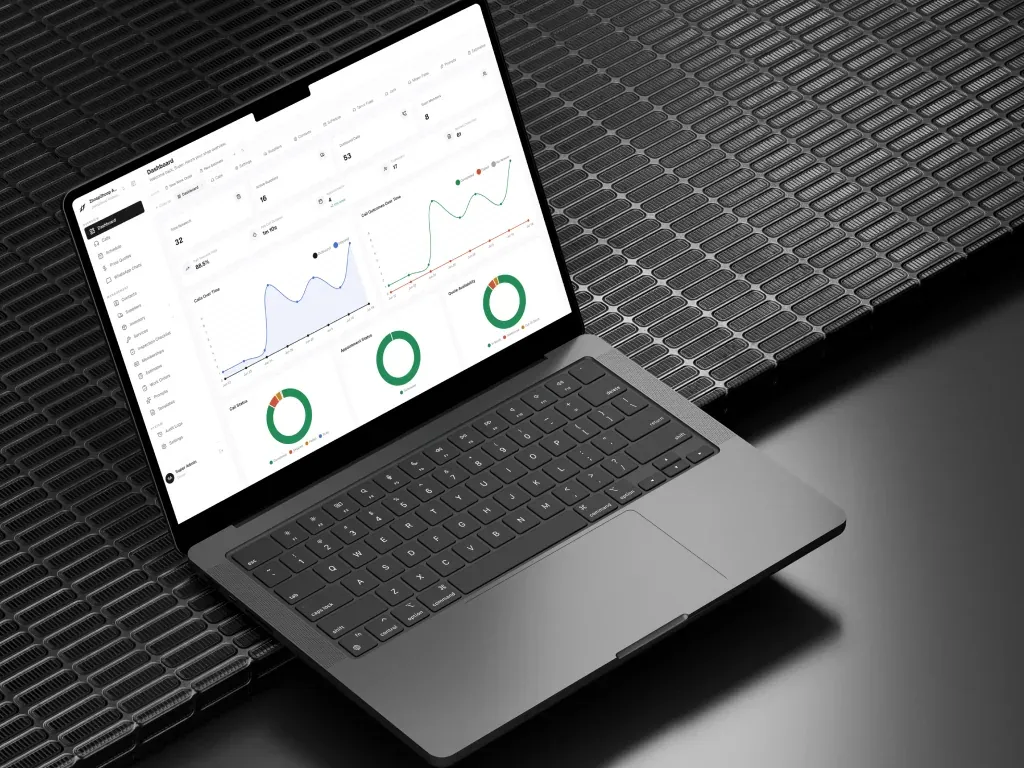
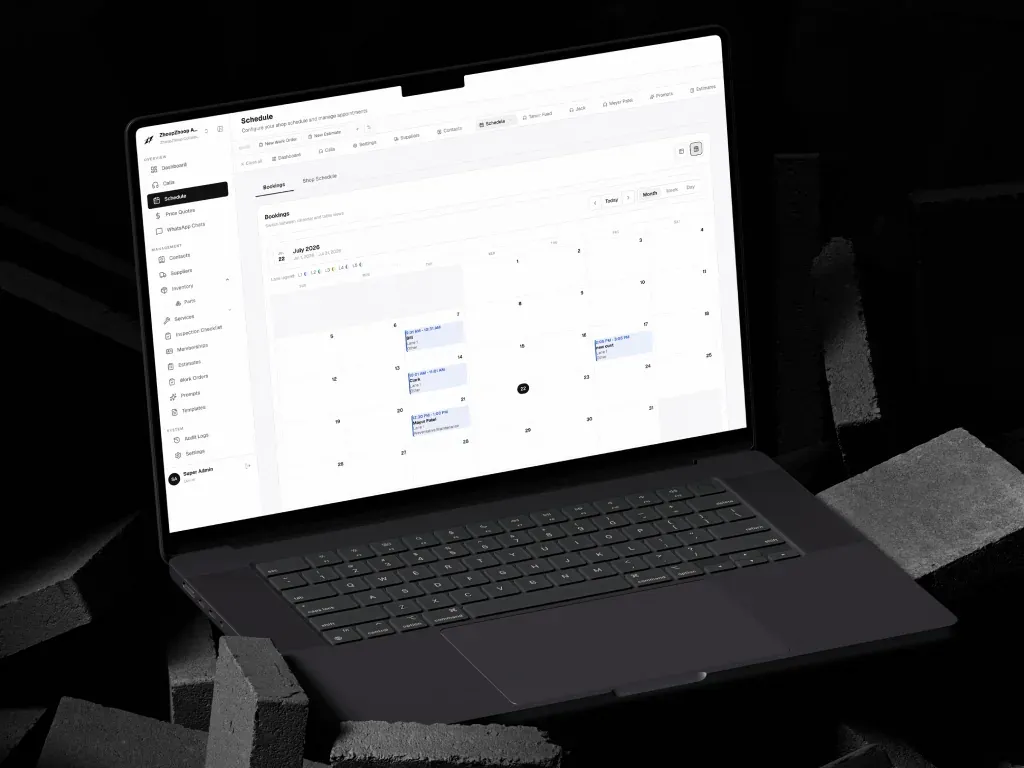
We don't replace ServiceTitan, Housecall Pro, Jobber or whatever you run. We build what they won't.
Every HVAC platform is good at the job it was built for. And most shop owners we talk to describe the same three gaps around it: the phone after hours, the workflows between systems, and the numbers that live in four places. Those three gaps are what we build, and we build them on top of whatever you already run.
That means the access model matters more than the brand. Housecall Pro and Jobber expose booking and jobs through public APIs. ServiceTitan needs API access through its developer program and your tenant credentials, and we confirm exactly what your account exposes during the audit, before anyone estimates. Running something older, or a spreadsheet, or a system you had built years ago? We write into that instead. Our intake layer doesn't care what sits behind it.
- 01Booking, job and customer write-back to your board, with the recording attached.
- 02QuickBooks stays your ledger; we read from it for job costing and never re-key into it.
- 03Supplier portals, permit systems and financing providers connected where they have an API, and handled by a watched checklist where they don't.
- AuditFree. We read last month's call log by hour, your estimate backlog and your install queue.
- DiagnoseWe map your booking path into your board and sit with your dispatcher for an afternoon.
- BuildFixed price per milestone from the Blueprint. Tested on your real calls and real jobs.
- RunMonitoring, a named engineer, and the first two months of maintenance free.
Best fit: five or more trucks, a CSR desk, and a platform you've outgrown in places. Not a fit: a one-truck owner-operator, who's better served by an off-the-shelf app. You can stop after any stage, and the audit report is yours either way.
Before you book
01Do we have to leave ServiceTitan, Housecall Pro or Jobber to work with you?+
No, and we'd usually tell you not to. You keep the platform your team knows, whether that's ServiceTitan, Housecall Pro, Jobber, FieldEdge or something older. We build the layer around it: the AI line that books into it, the automations that run between it and QuickBooks or your suppliers, the reporting it doesn't give you. We only suggest replacing a system when it genuinely can't do the job, and we'll show you why.
02What happens on a CO alarm, a gas smell, or water pouring from the air handler?+
A person picks up, immediately. Life-safety calls are a hard rule in the triage table, not a judgment the model makes. Your line tells the caller what to do right now where that applies, rings your on-call tech, and stays on until someone answers. Every call is recorded so you can check it.
03Can the system track EPA 608 refrigerant records automatically?+
Yes, and that's the point of logging it on the job instead of on a ticket. Pounds recovered and recharged get tied to the tech's cert on the same job the invoice comes from, so the compliance record is there when an inspector asks, not in a drawer.
04How does it cope with a surge in calls during a heat wave?+
Intake keeps answering when your desk can't, so the surge becomes a queue with real arrival windows instead of a pile of missed calls. Triage ranks by rules you wrote: outdoor temperature bands, vulnerable occupants, members first. And when one job overruns, the board re-checks itself rather than just the next slot.
05Can it run maintenance agreements as well as one-off jobs?+
That's usually where the quiet money is. Renewals fire on schedule, spring and fall tune-ups get booked against real capacity, a failed card gets retried, and members are flagged the next time they call. It writes to your platform's membership or recurring-job object, whichever you run.
06Who owns the number, the recordings and the data?+
You do. The line runs on a number in your name, the recordings live in your storage, and the customer records live in your board. If we part ways, you keep all of it and the code.
07We're six trucks. Too small for this?+
It's about the size where it starts to make sense: enough calls that the misses cost you jobs, and a desk that can't cover nights and surges. Under five trucks and no CSR, an off-the-shelf app is usually the honest answer, and we'll say so on the audit call.
08What's the free audit, and what does the build cost?+
Yes, the audit is free, and it's specific. We read last month's call log by hour, look at your estimate backlog and your install queue, trace your booking path into your board, and name the three things that would recover the most money first. You keep the one-page report either way. Your build is a fixed price per milestone we set in the Blueprint, never a guess on the first call.
A senior engineer, not a sales rep
Abdul Basit founded Hashlogics in 2017, and the team runs from Lahore with a US LLC. Clients rate the work 4.8 on Clutch across 22 reviews, and in 2026 it was named Best AI-Native Software House of the Year at TechNova.
Your audit call is with an engineer who has read call logs and job boards like yours, and it isn't a slide deck. Bring last month's call report and your estimate backlog if you have them, and we'll work from those.
- NDA before the first conversation.
- No pitch on the call. A report you could hand to another firm.
- Fixed price per milestone from the Blueprint, so the number isn't a guess.

More for HVAC companies
- AI voice agents for HVAC →The after-hours call answered, triaged and booked into your board.
- Dispatch and field automation for HVAC →Sold-to-install, dispatch, the drive, the job, and the QA that stops callbacks.
- HVAC business software and reporting →Job costing, margin, A/R and the ERP layer on top of QuickBooks and your FSM.
- Estimating automation for HVAC →Follow-up, financing reminders and unsold-estimate recovery.
- Best HVAC business software →An honest roundup across dispatch, CRM and answering, with us last.
- Housecall Pro vs Jobber for HVAC →Which one, for which shop, and what neither does.
- ServiceTitan alternatives for HVAC →Who should leave, who shouldn't, and the third option.
- The ServiceTitan API: what a real integration involves →Access model, write-backs, and what breaks.
- Housecall Pro and Jobber integrations →What's native, what's Zapier, what needs a build.
- How to automate HVAC dispatch with AI →Intake, triage, capacity-aware booking, write-back.
- How to recover unsold HVAC estimates →The follow-up sequence and what automates.
- Getting jobs install-ready without chasing →Deposits, permits, POs and equipment, watched.
- Catching callbacks before the job closes →Commissioning data and photos into one QA step.
- Tracking equipment from sold to installed →Sold, ordered, received, missing.
- Maintenance agreements: the revenue nobody bills on time →Renewals, tune-ups and failed cards.
- HVAC job costing: where the margin actually goes →Labour, equipment, callbacks, and the numbers in four places.
- Best AI answering services for HVAC →The packaged tools, ranked, and where custom fits.
- What an HVAC company loses after hours →The 11pm call and the jobs that go to the next shop.
- HVAC answering service vs custom AI receptionist →When a human service is enough, and when it isn't.
- How should an HVAC company handle after-hours calls? →On-call rotation, answering service, template AI, custom: by shop size.
- No-heat vs no-cool: how a triage rule should work →Life-safety first, then temperature bands, occupants and members.
- What a summer surge does to an HVAC CSR desk →The week the board falls apart, and what changes.
