

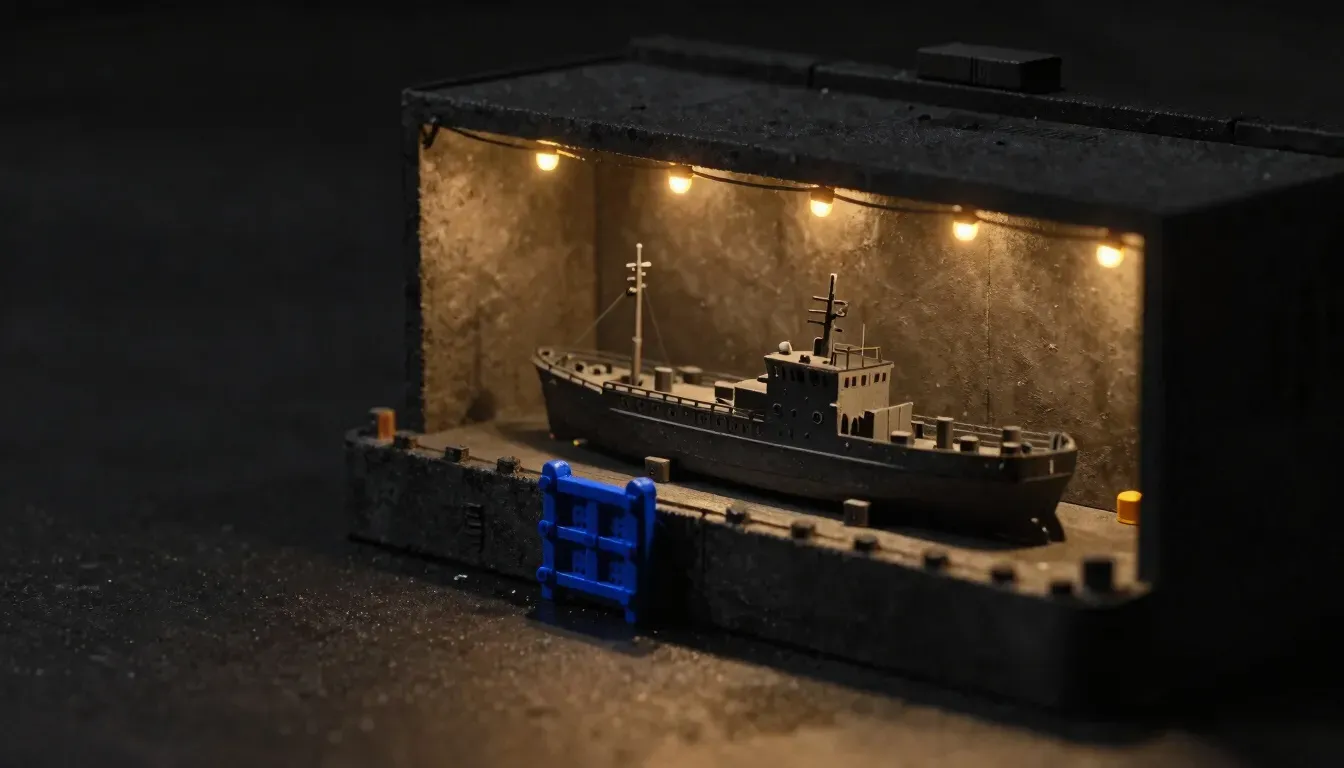
How do shipyards schedule dry docks?
A repair yard sells time in a hole in the water. Everything else about the schedule is arithmetic around that scarcity.
How the schedule actually works
5 things that decide this
- 01Dry dock scheduling runs backward from the dock: class society survey deadlines fix when each vessel must come out of the water, dock windows are the scarce resource, and trades sequence inside each window.
- 02Classification societies such as DNV and ABS require dry-docking inspections on roughly five-year survey cycles, so a yard's demand curve is visible years ahead to anyone who models it.
- 03The chronic failure is running this on a whiteboard and spreadsheets. One vessel arriving late or one emergency haul-out cascades through every following booking, and the cascade gets managed by phone.
- 04A workable schedule tracks three layers together: dock occupancy, per-vessel work scope by trade, and the survey clock each vessel is racing. Most yards track them in three different places.
- 05Marina and boatyard software vendor Dockmaster puts revenue lost to process breakdowns at up to 20 percent for yards running fragmented systems. Repair yards at commercial scale carry the same pattern with bigger numbers.
Three clocks, one hole in the water
Every docking is a negotiation between three clocks. The vessel's survey clock says when class requires her out of the water. The owner's trading clock says which weeks off-hire hurt least. The yard's dock clock says which windows exist at all. The schedule is wherever those three agree, and it is renegotiated every time weather, discovered steel or a late part moves one of them.
Inside the window sits a fourth problem: sequencing trades. Blast before paint, steel before pipe, tanks cleared before hot work. A repair yard runs this for several vessels at once with shared crews and shared cranes, which is why a one-day slip on one hull is never a one-day problem.
- Survey dueClass deadline fixes the latest docking date
- WindowDock slot negotiated against other vessels
- ScopeWork list per trade, estimated in days
- SequenceTrades ordered inside the window
- FloatUndock, sea trial, next vessel in
The model is small enough to hold in software and too big to hold in a meeting. That gap is where yards lose days they never get back.
Model the cascade before it happens
The step change for a mid-size yard is not exotic optimisation. It is having dock windows, work scopes and survey deadlines in one system, so that when a docking slips, the yard sees which downstream bookings move, by how much, before agreeing to anything on the phone. The answer to an owner asking for three more days should be a computed consequence, not a feeling.
The same records feed job costing. Discovered work, the growth between quoted scope and final invoice, is where repair yards win or lose a docking financially. When every added work item enters the schedule with hours and a rate attached, the growth conversation with the owner happens during the docking, with numbers, instead of after it, with a dispute.
- 01Keep a rolling five-year view of survey-driven demand for the fleet types your dock can take. Your future bookings are already visible in class records.
- 02Log every schedule change with its cause. A season of data shows which trades and which work types actually drive slips.
- 03Price emergency haul-outs from the modelled cascade cost, not from instinct.
Yard planning questions
01How far ahead do dry docks get booked?+
Commercial vessels plan dockings around their five-year class survey cycles, so serious bookings land months to years ahead. The forward book is real demand data, and a yard that models it can sell its windows instead of waiting for the phone to ring.
02What causes most dry dock schedule slips?+
Discovered work is the honest leader: steel and coating conditions nobody sees until the hull is blasted. Weather on undocking days and late-arriving parts follow. None are eliminable, which is why the useful goal is a schedule that absorbs slips visibly rather than one that pretends they will not happen.
03Can a yard schedule around an emergency haul-out?+
Yes, if the cascade is modelled. An emergency docking is a pricing question: what does displacing the current plan cost, and does the emergency rate cover it. Yards with the model in software answer in an hour. Yards without it answer in goodwill.
04What should the work order carry per trade?+
Scope description, estimated and actual hours, materials, and any hot-work or tank-entry permits attached to the job itself. When the permit record and the hours live on the work order, both the safety file and the final invoice assemble themselves.
Related
- Industrial: AI, automation and custom software →The industry hub this page belongs to.
- Custom software development →Built for one business. Kept running after launch.
- Energy and petroleum work →Paper inspection logs replaced across hundreds of industrial sites.
- Audit trail →The record structure that survives surveys and disputes.
- Business process automation →Automation that runs unattended, on your own infrastructure.
