

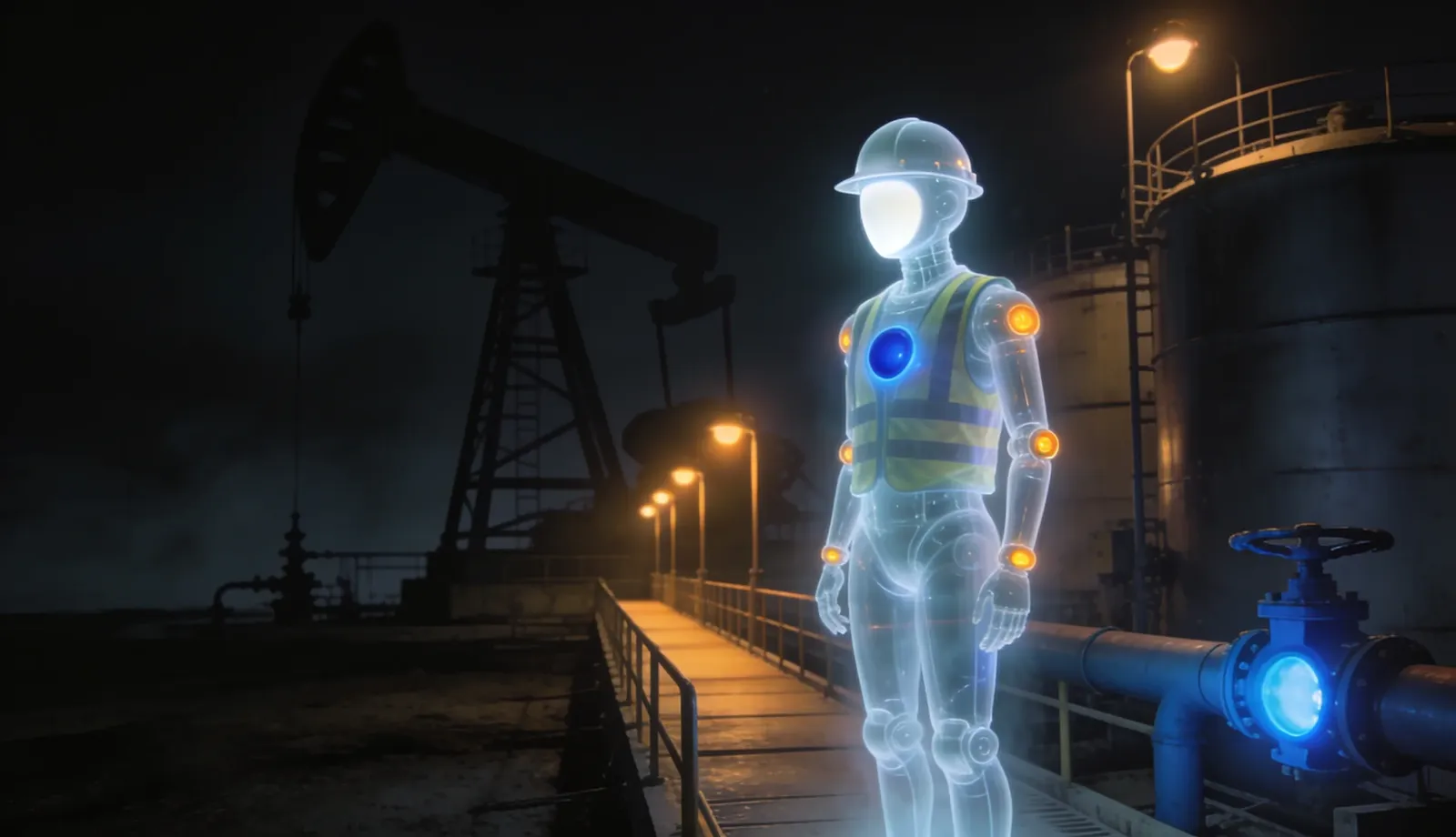
AI, automation and custom software for fuel and oilfield operators, built around the systems you already run
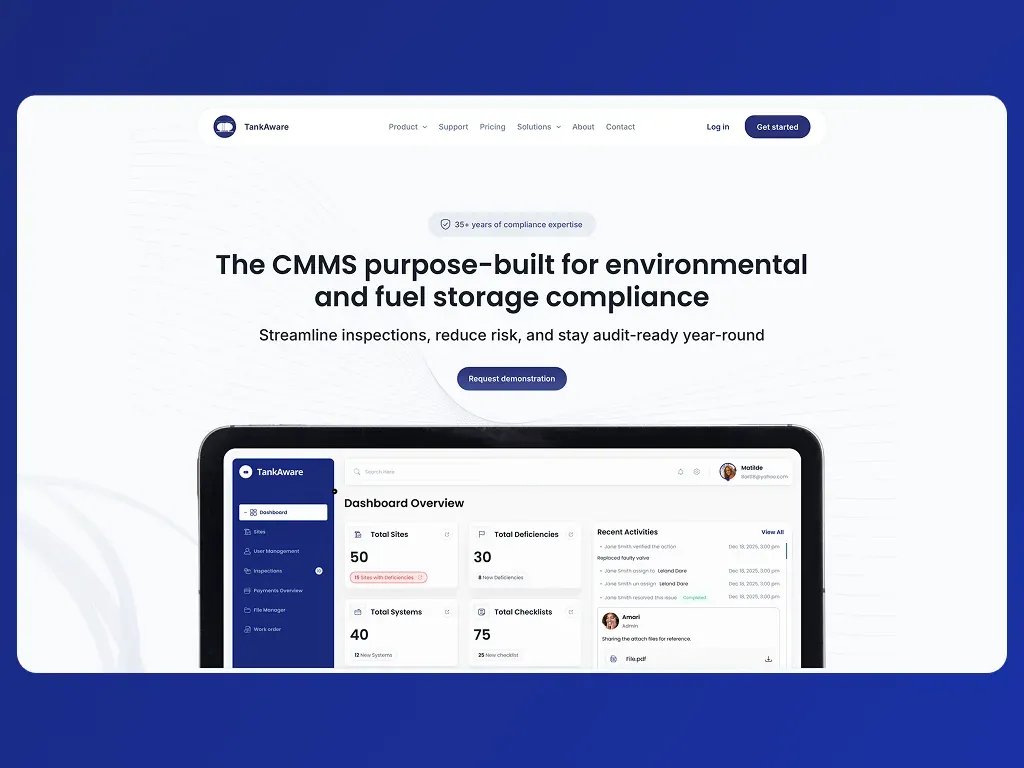
You keep your fuel ERP, Quorum, OpenInvoice, your ATGs, QuickBooks or whatever you run. We build the layer around it: the tank level you know without the drive, the alarm that gets triaged instead of cleared, the 30-day inspection record an inspector can read, and the field ticket that reaches the invoice in days. We built it as TankAware for a petroleum operator in Canada.
- 4.8 on Clutch across 22 reviews
- PremiumAudit.io: audit cycle cut 75%, calculation errors cut 95%
- In production for SmartREI, Tankaware, ZyloBase, KiwiWrite
What changes for your operation
3 things that decide this
- 01Every site reports itself: level telemetry where there's power and signal, offline capture where there isn't, run-out forecasts that are honest about being regression on usage and weather, and the delivery trigger written into your dispatch.
- 02The record is the product. Inspections scheduled per asset and per site, photo-backed and timestamped, immutable, with a gap shown as a gap, and deficiencies escalated to a work order a contractor can close; field tickets approved, validated against dispatch and into the operator's portal in days.
- 03We build on top of your certified detection method, never instead of it: alarm triage, de-duplication and escalation that reaches a person, and a log of who acknowledged what, so the alarm that says that every week stops training your people to ignore the one that matters.
On the record
What TankAware changed for Sutherland Excavating Ltd., as they report it
40%
fewer manual errors, reported by Sutherland Excavating Ltd. after TankAware launched
30%
less operational overhead, same source
30%
higher inspection accuracy, same source
20%
faster maintenance turnaround, same source
A field-inspection platform that runs petroleum sites from one screen
A petroleum operator in Canada ran tank and site checks on paper logs and spreadsheets. Checks got missed. Repairs came late. Contractors had no shared place to log a fault or close it.
We built the field-inspection platform they run today. Sensors stream live tank data. Alerts flag a problem before it becomes a failure. Each site gets its scheduled checks, with photos and timestamps on record. A vendor portal takes each fault to a closed work order. Every client company runs in its own secure space, across hundreds of sites.
The client reports 40% fewer manual errors, 30% less operating overhead, 30% higher inspection accuracy and 20% faster maintenance turnaround. We share the client name and the live system on the call.
- Live tank monitoring with predictive alerts
- Scheduled checks, dynamic checklists and fault escalation
- Vendor portal that takes a fault to a closed work order
- Five roles from super admin to contractor, with audit trails
Eight places a fuel or oilfield operation leaks time and risk, and what we put in each one
Eight areas our audits keep finding across fuel distributors, site operators and oilfield services, in the order a day meets them. Each links to the page that owns it.
Know the level without the drive.
You don't know what's in that tank until someone drives out and sticks it, and every unmonitored tank is a truck roll. We add level telemetry where the site has power and signal, offline capture where it doesn't, a run-out forecast that's honest about what it is, and a delivery trigger into your dispatch.
Site monitoring for fuel and oilfield →
An unanswered alarm is worse than no alarm.
Your ATG says there's an alarm, and it says that every week, so your operators clear it without reading it. We add alarm triage, de-duplication and prioritisation on top of your certified detection method, escalation that reaches a person, and a record of who acknowledged what.
Site monitoring for fuel and oilfield →
The inspection happened. Now you can prove it.
An inspector asks you for twelve months of walkthroughs and you have a binder with gaps, and a missing record is the violation. We put the inspection on a phone: per-asset, per-site schedules, dynamic checklists, photos, timestamps, an immutable record, deficiencies escalated to a work order, audit reports exported. It's exactly what TankAware does.
Site monitoring for fuel and oilfield →
The ticket rode in the truck for three days. Your invoice waited with it.
Paper field tickets ride to the office for a signature, DSO runs in weeks, and duplicate billing is hard to catch on paper. We build digital tickets with approval flow and offline capture, validation against dispatch, tickets submitted to OpenInvoice or whatever the operator demands, and reconciliation that flags the duplicate.
Field operations for oilfield services →
The plan survives the breakdown.
Dispatch is one person's head, and the constraints are ugly: compartments, product compatibility, ullage, hours of service, hazmat routes. We build delivery planning that respects them (a solver, not magic), exception handling for the day a truck breaks down, and driver paperwork captured on the phone.
Field operations for oilfield services →
Know which variance is a leak and which is a meter.
Book stock and measured stock never agree, and the six causes look the same in a daily number. We capture BOLs at the rack with OCR and matching, run statistical reconciliation over a window to separate temperature, meter drift, short loads, water and theft from a real loss, and show you where to send a truck and where not to.
Fuel distribution software →
Every deficiency has an owner and a close-out.
A deficiency is found, a contractor is called, and nobody knows if it's fixed. We build the vendor portal with a deficiency-to-work-order lifecycle, contractor assignment, evidence of completion and integrated payments where you want them, as we did in TankAware.
Custom software for oil and gas →
One record across every site, and every party sees only theirs.
Sites, tanks, inspections, deliveries and variance live in a spreadsheet per site, and reports are compiled by hand. We build dashboards and compliance reports across sites and systems, with multi-tenant separation so a client, a division or a contractor sees only what's theirs, as TankAware does with five permission tiers.
Custom software for oil and gas →
From the tank level to the numbers across sites, and where the machine takes over
Seven stations of a fuel or oilfield operator's week. Pick the system you'd want written to; your fuel ERP, P2, WellView and the rest follow the same pattern to the depth their access model allows.
Station 01 · The tank level nobody knows
- Today
- Someone drives out and sticks your tank. A run-out stops your customer's farm, fleet or generator, and the emergency delivery breaks your day's route.
- What we automate
- Level telemetry where the site has power and signal, offline capture on a phone where it doesn't, a consumption forecast on usage and weather, run-out alerts, and a delivery trigger written into your dispatch.
- What stays human
- Your dispatcher decides what to do with the trigger. A forecast is a forecast, and it tells you so.
Writes to Enverus OpenInvoiceNot an OpenInvoice station.
Station 02 · The alarm that says that every week
- Today
- Your ATG raises an alarm. It raised one last week too. Your operators clear it without reading it, which is exactly how a real release gets missed.
- What we automate
- Alarm triage, de-duplication and prioritisation on top of your certified detection method, escalation that rings a person at the threshold you set, and a log of who acknowledged what and when.
- What stays human
- Release detection stays with your certified method; we never claim to be it. Your people decide whether to roll a truck.
Writes to Enverus OpenInvoiceNothing.
Station 03 · The 30-day inspection record
- Today
- Your walkthrough happens, mostly, and your record is a binder with gaps. When an inspector asks you for twelve months, the gaps are the violation.
- What we automate
- Inspections scheduled per asset and per site, dynamic checklists on a phone, photos and timestamps, an immutable record with a gap shown as a gap, deficiencies escalated to a work order, and audit and compliance reports exported on demand.
- What stays human
- Your inspector still walks the site and signs. We make the record survive, searchable and honest.
Writes to Enverus OpenInvoiceNothing.
Station 04 · The field ticket's road trip
- Today
- Your ticket rides in the truck for three days, waits on a signature at your office, gets keyed into the operator's portal a week later, and your invoice waits with it.
- What we automate
- Digital field tickets with offline capture and an approval flow, validation against dispatch, tickets submitted to the operator's portal, and reconciliation that flags a duplicate or an inflated line before the operator does.
- What stays human
- Your people approve every ticket and every invoice before it goes to the operator. Disputes stay yours.
Writes to Enverus OpenInvoiceTicket and invoice submitted through OpenInvoice in the operator's required format.
Station 05 · Dispatch and the day that breaks
- Today
- Your dispatch is one person's head. A truck breaks down and your plan is gone; the replacement plan drops your driver over hours of service.
- What we automate
- Delivery planning that respects compartments, compatibility, ullage, hours of service and hazmat routes, exception handling when the day breaks, and driver paperwork and BOLs captured on the phone at the rack.
- What stays human
- Your dispatcher owns the plan. It proposes; your dispatcher commits.
Writes to Enverus OpenInvoiceNothing.
Station 06 · BOLs and the variance
- Today
- Your BOLs arrive as phone photos, your book stock and measured stock never agree, and nobody can tell a leak from a meter from theft in a daily number.
- What we automate
- OCR and matching for BOLs, statistical reconciliation over a window that separates temperature, meter drift, short loads, water and theft from a real loss, and a variance view that says where to send a truck.
- What stays human
- You decide when a variance becomes an investigation, and the regulator's method decides when it's a release.
Writes to Enverus OpenInvoiceNothing.
Station 07 · The numbers across sites
- Today
- Your sites, tanks, inspections, deliveries and variance sit in a spreadsheet per site, compiled by hand for your board and the regulator.
- What we automate
- Dashboards across sites and systems, compliance and environmental reports generated from the record, and multi-tenant separation so a client, a division or a contractor sees only theirs.
- What stays human
- What to do about a site that's losing money or missing inspections is your call. We make it visible and trustworthy.
Writes to Enverus OpenInvoiceRead-only.
Each station links to the page that owns it. The certified detection method, the inspector's signature and the invoice approval stay with a person at every one.
Software on top of a certified detection method, never instead of it. We write that down first.
Fuel and oilfield operations sit under rules that don't bend for software: release detection has to meet the performance standards in 40 CFR 280 and be certified as a method, the 30-day walkthrough record is the compliance artefact whether or not the inspection happened, and a field ticket is a billing document an operator will audit. So every build starts with a one-page map of what the software records, what it only proposes, and where a person signs.
What follows is simple to state, and we put it in writing. We triage, de-duplicate and escalate alarms from your certified method; we never claim to be the method. Every inspection record is timestamped, photo-backed and immutable, and a gap stays visible as a gap. Tickets and invoices are approved by a person before they go to an operator's portal. And every automated touch is logged so an inspector or an auditor can read what happened, and when.
- 01Release detection stays with the certified method; we add triage, escalation and the record.
- 02Inspection records immutable and gap-honest; tickets and invoices approved by a person.
- 03Every party sees only theirs: per-organisation isolation and permission tiers, as TankAware runs them.
The same eight areas, in your operation's words
Fuel distributors, bulk plants and c-store operators
Tank levels, run-outs, delivery planning, BOLs, wetstock variance and the 30-day record across sites. That page is written for you.
Fuel distribution software →
Oilfield service companies
Field tickets, approvals, dispatch, JSAs and the operator's portal: the ticket-to-cash problem. That page is written for you.
Field operations for oilfield services →
Petroleum site and tank operators
Inspections, deficiencies, contractors and the record an inspector can read: the TankAware shape.
Site monitoring for fuel and oilfield →
Energy assets and solar fleets
Remote, unattended, expensive to visit: the energy software page covers monitoring for assets that aren't tanks.
Energy software development →
“They will treat your vision like their own and build it that way.”
Ron Klabunde · Founder, SmartREI ↗
“TankAware has revolutionized how we manage petroleum sites. The real-time data and automation have exceeded expectations.”
Blake Sutherland · President, Sutherland Excavating Ltd.
See the oil and gas build running, then trace one of your own jobs.
On the call, a senior engineer shows you the field-inspection platform live. Then we trace one of your jobs from dispatch to payment and read a month of your alarms. The audit is free. You leave with a written map of what to build first.
Some of the systems we have shipped
We don't replace your fuel ERP, Quorum, OpenInvoice or whatever you run. We build what they won't.
Every fuel ERP, production system and operator portal is good at the job it was built for, and most operators we talk to describe the same gaps around it: the tank nobody monitors, the alarm nobody reads, the inspection nobody can prove, the ticket that rode in the truck. Replacing the system doesn't close those gaps; it moves them.
So the access model matters more than the brand. Enverus OpenInvoice dictates the format your invoice arrives in; Quorum, P2 and WellView expose data to different depths; ATG vendors publish their own feeds; QuickBooks takes what your accountant allows. Hardware in a hazardous area and a site with no signal are design inputs, not afterthoughts. We confirm exactly what your systems expose during the audit and design to it, offline-first, and where the API stops we build a reviewed queue your staff accept with one click rather than re-key.
If the invoice is where your days go, our answer on how oil and gas invoice automation works follows one ticket from the field to a matched invoice line.
- 01Ticket, inspection and alarm records written where your system holds them, to the depth it allows.
- 02Offline-first capture for sites with no signal; hazardous-area hardware scoped before the software.
- 03Release detection stays with the certified method; we add the triage and the record.
- AuditFree. We trace one job from dispatch to payment, read a month of alarms and what happened to them, and look at how inspections are recorded across your sites today.
- DiagnoseWe map the path into your ERP, ATG feeds and operator portals, and ride along on a site round or a ticket's journey.
- BuildFixed price from the diagnostic. Tested on your real sites, real tickets and real alarms, offline-first, under NDA.
- RunMonitoring, a named engineer, and the first two months of maintenance free.
Best fit: ten or more sites or trucks, or an oilfield services company with a ticket-to-cash problem, and systems you've outgrown in places. Not a fit yet: a single-site operator who needs a sensor and a text, and we'll say so. You can stop after any stage; the audit note is yours either way.
Before you book
01Is this AI, or is it software?+
Mostly software done properly, and we'd rather tell you so. Your monitoring is IoT, your forecast is regression on usage and weather, your route plan is a solver, and your inspection record is a scheduled, timestamped, photo-backed, immutable log. Where a model genuinely helps, in separating causes of wetstock variance or reading a BOL photo, we use one. Calling degree-day forecasting AI is the hype line, and it weakens the real win.
02Can your software be our release detection method?+
No, and anyone who tells you theirs can should show you the certification. Release detection has to meet the performance standards in 40 CFR 280 and be certified as a method. What we add on top of your certified method is alarm triage, de-duplication, escalation that reaches a person, and a record of who acknowledged what. That's the part that stops alarm fatigue hiding a real release.
03Will it work at a site with no power or signal?+
Your capture will. Your inspections, tickets and BOLs are captured offline on a phone and sync when the device sees signal, which is how TankAware runs. Level telemetry needs power and a path for the data, and we scope the hardware for a hazardous area before we scope the software, because that's a design input, not an afterthought.
04What did you actually build for Sutherland Excavating?+
TankAware: an AI and IoT petroleum site management platform with tank telemetry and predictive alerts, end-to-end inspection automation with dynamic checklists and deficiency escalation, a vendor portal with a deficiency-to-work-order lifecycle and integrated payments, five permission tiers with per-organisation isolation under dedicated subdomains, and compliance dashboards with exportable audit reports. It's named in our case studies, it's live, and Sutherland reports the outcomes on this page.
05We're an oilfield services company, not a fuel operator. Is this for us?+
Yes; the field operations page is written for you. Digital field tickets with approval and offline capture, validation against dispatch, tickets submitted to OpenInvoice or whatever your operator demands, and reconciliation that catches a duplicate before the operator does. Our audit traces one of your jobs from dispatch to payment and shows you where the days sit.
06Can you integrate with Quorum, OpenInvoice, our fuel ERP or our ATGs?+
To the depth each exposes, and we confirm that during the audit rather than promising it on a call. OpenInvoice dictates a format; Quorum, P2 and WellView expose data to different depths; ATG vendors publish their own feeds; some fuel ERPs only export. We design to what's actually there, and where it stops we build a reviewed queue your staff accept with one click.
07We run six sites. Too small for this?+
Probably not for the inspection record and the alarm triage, which is where a small operator feels it most, and probably yes for a full reconciliation build. Our audit is free and we'll tell you honestly which pieces would pay for themselves at your size. A single-site operator who needs a sensor and a text should buy a packaged monitor, and we'll say so.
08What's the free audit, and what does the build cost?+
It's a free call and a workflow review: one of your jobs traced from dispatch to payment, a month of alarms and what happened to them, how inspections are recorded across your sites, and what your systems expose. You get a one-page map of where the days and the risk sit, and a build order. Build pricing is fixed after the diagnostic, and the first two months of maintenance are free.
A senior engineer, not a sales rep
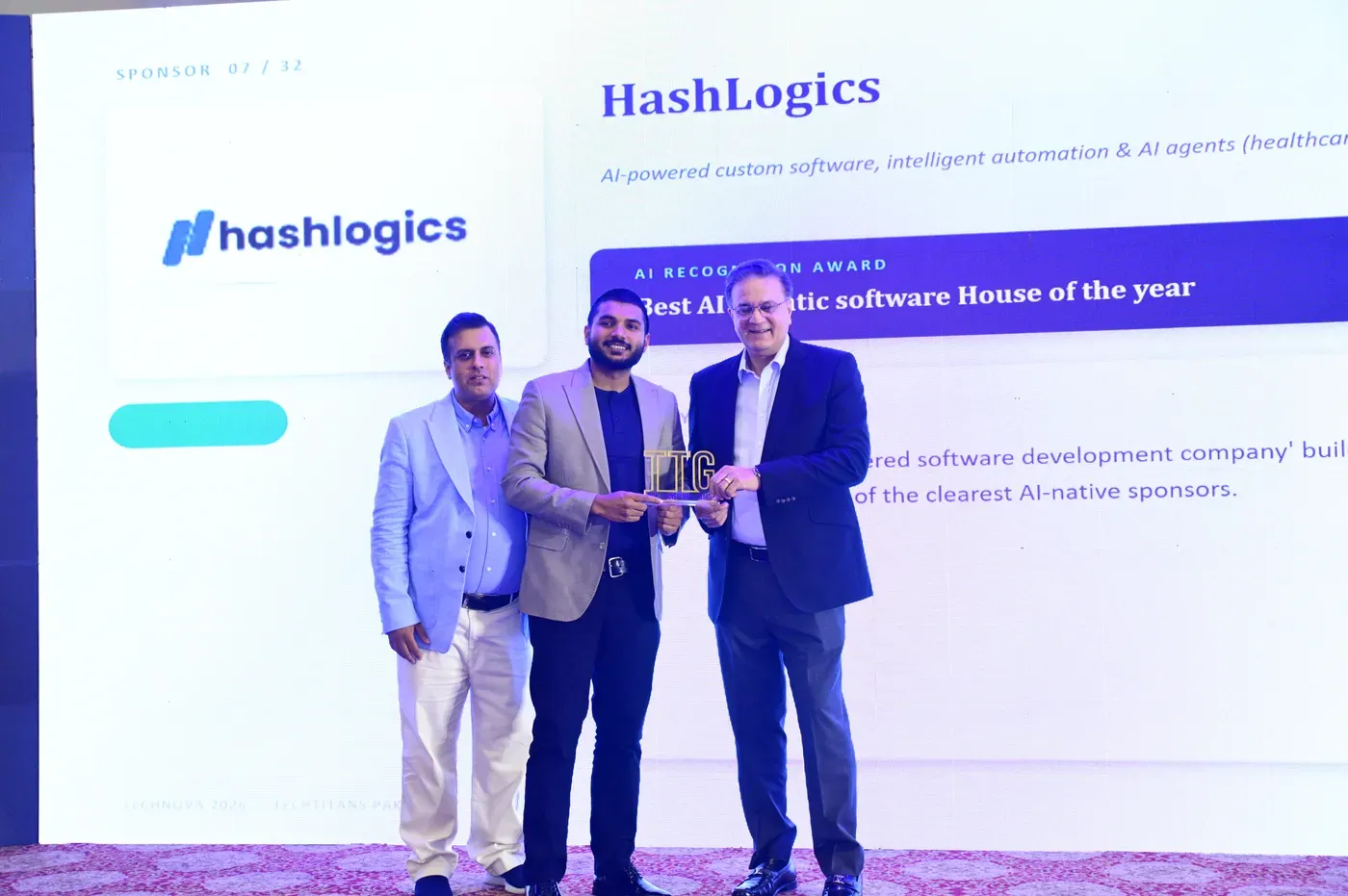
Abdul Basit founded Hashlogics in 2017, and the team runs from Lahore with a US LLC. Clients rate the work 4.8 on Clutch across 22 reviews, and in 2026 it was named Best AI-Native Software House of the Year at TechNova. TankAware, the AI and IoT petroleum site platform we built for Sutherland Excavating Ltd. in Canada, is live and we can show it to you.
Your audit call is with an engineer who has read inspection logs, ATG alarm histories and field tickets like yours. Bring last month's numbers if you have them, and we'll work from those.
- NDA before the first conversation.
- No pitch on the call. A note you could hand to another firm.
- Fixed price after the diagnostic, so the number isn't a guess.
More for oil, gas and fuel
- Site monitoring for fuel and oilfield →Tank levels, alarm triage and the 30-day inspection record.
- Field operations for oilfield services →Field tickets, approvals, dispatch and ticket-to-cash.
- Custom software for oil and gas →Vendor portals, multi-tenant separation and the numbers across sites.
- Fuel distribution software →Run-outs, routes, BOLs and wetstock variance for distributors and bulk plants.
- Best field ticketing software for oilfield services →Ranked by how many days each one cuts from ticket to cash.
- How do you cut DSO in oilfield services? →Kill the paper ticket's road trip. The days follow.
- What should a tank monitoring system alert on? →Triage on top of the certified method, not instead of it.
- Does OSHA PSM apply to fuel storage? →Usually not. Atmospheric tanks are written out of the rule.
- TankAware case study →The petroleum site platform, in detail.
- Oil and gas invoice automation: how it works →
