


AI, automation and custom software for plumbing and electrical contractors, built around the systems you already run
You keep ServiceTitan, Housecall Pro, Jobber, FieldEdge or whatever you run. We build the layer around it: the phone that gets answered when a ceiling is coming down at 2am, the repipe estimate that gets followed up, the permit that stops getting chased, the numbers you can finally see. Then we keep it running.
- 4.8 on Clutch across 22 reviews
- PremiumAudit.io: audit cycle cut 75%, calculation errors cut 95%
- In production for SmartREI, Tankaware, ZyloBase, KiwiWrite
What changes for you
3 things that decide this
- 01Your line gets answered around the clock, and the burst pipe turns into a booked emergency slot in your own system instead of a voicemail nobody plays back.
- 02The work behind the call runs on its own: estimates get chased, sold jobs get permit-pulled and inspection-booked, techs get briefed, invoices go out, memberships renew. Your office stops living on sticky notes.
- 03When your platform won't do something, we build it: job costing that has drive time and callbacks in it, integrations between systems you've already paid for, and the odd workflow no vendor is ever going to ship for a shop your size.
On the record
What you can check before you call
4
countries our client work runs in: US, UK, Switzerland, Australia
2017
building since. TechNova 2026: Best AI-Native Software House of the Year
2 mo
of support and maintenance free after launch. NDA before the first call
Eight places a plumbing or electrical company loses money, and what we put in each one
Pick the one that's hurting this month. Every card keeps the platform you already run and adds the AI, automation or custom piece it's missing.
Be the contractor who answered at 2am.
Your CSRs juggle calls, web leads, missed calls and the after-hours line, and the 2am burst pipe goes to whoever picked up. We add an AI line that triages by your rules, asks where the water is and whether the main is off, books the emergency slot or wakes your on-call tech, and writes it back into your board.
AI voice agents for plumbers and electricians →
Unsold estimates followed up. The repipe financed.
Good-better-best options get presented once and then the week happens. Nobody re-offers financing on the repipe or the panel upgrade, and the unsold estimate sits in a status nobody filters by. We automate the follow-up, the financing reminder and the morning callback list, written straight to the estimate.
Estimating automation for plumbing and electrical →
Sold to scheduled, without the chasing.
Once the water heater or the panel is sold, somebody chases the permit, the inspection slot, the deposit and the material lead time across the FSM, a supply-house portal and two inboxes. We run one install-ready checklist per job type that watches each item and nudges the right person when one stalls.
Dispatch and field automation →
The cold-snap board that doesn't break.
One hard freeze doubles your call volume, drive time eats the afternoon, and the wrong tech ends up on the wrong job. We build dispatch rules you can read: skill, zone, priority, membership, surge mode, drive-time-aware booking, and tech notifications with the job-site photos attached.
Dispatch and field automation →
Catch the callback before the job closes.
Your tech finds the callback at the next visit, and warranty work eats the margin on a job you thought was done. We put a close-out checklist on the job (pressure test, GFCI test, panel labelled, photo of the finished work) that has to clear before the job closes, and a callback flag when one comes back.
Dispatch and field automation →
Know what's on the truck and what's on order.
Trucks get stocked by memory, water heaters and panels get ordered late, and POs get reconciled by hand on a Friday. We connect the sold estimate to the PO and give your office one view of what was sold, what was ordered, what arrived and what's still missing.
Estimating, invoicing and purchasing →
Know which jobs and which trucks make money.
Job costing without drive time and callbacks in it isn't job costing. Your A/R gets aged by hand, and the flat-rate book drifts a year out of date. We pull the numbers together from the FSM and QuickBooks, read-only, so you can see margin by job type, by tech and by truck.
Plumbing business software and reporting →
Memberships that renew themselves.
Service agreements get sold once and never renewed, the water-heater flush reminder goes out when somebody remembers, and reviews happen by accident. We automate renewals, seasonal reminders, review requests at the right moment and reactivation, off the customer records you already have.
Memberships, job costing and reporting →
A plumbing job from the first ring to the renewal, and where the machine takes over
Pick your platform. Tap a station to see what happens today, what we automate, what stays with a person, and what gets written back.
Station 01 · 2am, and water is coming through the ceiling
- Today
- It rings through to a tired on-call tech, or to voicemail, and most people won't wait. They hang up and dial the next plumber on the list, and you find out on Monday when the review lands.
- What we automate
- Your line picks up in two rings, asks where the water is coming from and whether the main is off, walks the caller to the shut-off, then books the emergency slot or wakes your on-call tech by the rules you wrote.
- What stays human
- Anything life-safety reaches a person before the caller finishes the sentence: a gas smell, a sparking panel, water running into a live panel, a CO alarm.
Writes to ServiceTitanNew job with job type, arrival window and the call recording linked to the customer.
Station 02 · The estimate, and the yes that takes three days
- Today
- You quote the repipe or the panel upgrade, the homeowner says they'll think about it, and nobody re-offers financing. That estimate then sits in a status your office never filters by.
- What we automate
- Follow-ups fire off the estimate status: a text with the options, a financing link on the big jobs, a nudge that asks what changed, and a callback list on the desk each morning with the notes attached.
- What stays human
- Your estimator still makes the call and still reads the room. We just make sure the list is on the desk at 8am instead of buried three screens deep.
Writes to ServiceTitanEstimate status, follow-up notes and a task on the estimator's board.
Station 03 · Sold, and waiting on a permit
- Today
- Deposit, permit, inspection slot, material lead time and the install date get chased across four systems by whoever has a free hour. Meanwhile your water heater sits in the warehouse while the crew waits on it.
- What we automate
- One install-ready checklist per job type that watches every item (deposit in, permit filed, inspection booked, parts received) and nudges the right person the day one stalls, not three days after.
- What stays human
- Your office still makes the call to the supply house when a panel is back-ordered, and still rings the homeowner when a date moves. They just stop finding out late.
Writes to ServiceTitanJob tags and notes; install date set once the checklist clears.
Station 04 · A cold snap, and the board explodes
- Today
- Your dispatcher re-plans the whole afternoon by hand every time a job runs long, drive time eats the margin, and a drain tech ends up on a panel job because he was the name at the top of the list.
- What we automate
- Booking that knows the drive, and dispatch rules you can read: skill, zone, priority, membership, surge mode. When one job overruns, the board re-checks itself rather than only the next slot.
- What stays human
- Your dispatcher still decides who goes where. Our system proposes the re-plan; your office approves it or overrides it with one tap.
Writes to ServiceTitanTech assigned, job notes and tags updated, ETA texted to the customer.
Station 05 · Close-out: the pressure test, the photo, the callback flag
- Today
- Camera-inspection footage, the pressure test, the GFCI test and the panel labelling live on a paper ticket until Friday, and you find the callback at the next visit.
- What we automate
- A close-out checklist per job type that has to clear before the job closes, with photos from the tech's phone attached to the job. Anything missing flags on the spot, and a returning job gets a callback flag with the original tech on it.
- What stays human
- Your tech still does the diagnosis, the repair and the conversation at the door. We only take the paperwork off him.
Writes to ServiceTitanJob form, equipment record and attachments updated.
Station 06 · Truck stock, POs and the supply house
- Today
- Trucks get restocked from memory, the PO gets raised after the material is needed, and reconciling what was sold against what arrived is a Friday afternoon with a printout.
- What we automate
- Truck stock by job type, a PO raised off the sold estimate, and one view of sold against ordered against received, so your office sees the gap before the crew does.
- What stays human
- Your purchasing decisions stay yours. Nobody's buying a water heater because software thought it should.
Writes to ServiceTitanPO and material notes on the job; equipment record updated.
Station 07 · Invoice, collect, and the membership renewal
- Today
- Invoices go out late, a declined card sits in a folder, agreements lapse quietly, and the flush reminder goes out when somebody remembers it exists.
- What we automate
- Invoice at close-out, card retried on failure, a polite text after seven days. Renewals fire on schedule, seasonal reminders get booked against real capacity, and members are flagged the next time they ring.
- What stays human
- Disputes and goodwill stay with a person, and saving a lapsed member is still a call from you. We make sure you know which members are about to lapse.
Writes to ServiceTitanInvoice, payment status and membership record; your QuickBooks sync stays as it is.
Every station writes to your board of record, whatever it is. Running an older FSM, a spreadsheet or something you had built years ago? The stations stay the same; only the write-back changes, and that's the part we build.
A hard freeze shouldn't be the week your schedule falls apart
Plumbing demand spikes in a way that's hard to staff for. One hard freeze, one storm, one apartment block with a failed main, and your call volume doubles in an afternoon. Every one of those callers has water somewhere it shouldn't be, so every one of them is an emergency to the person making the call.
A desk sized for a normal week can't flex. Calls queue, techs run over their routes, and your office falls back to a phone list that can't see who's closest or who's already booked solid. And the jobs you lose that week aren't the cheap ones either, because burst mains and failed water heaters are replacement work.
So we build for the spike and the average at once. Intake keeps capturing while your human queue fills, triage ranks by rules you wrote rather than by who shouted loudest, and routing re-checks the whole board when a job overruns instead of only the slot behind it.
- Intake keeps answering when your desk is saturated, so a surge becomes a queue with real arrival windows.
- Triage by rules you wrote: water still running, main off or not, elderly occupant, member first.
- The board re-plans itself when a job overruns. Your dispatcher approves it, and never retypes it.

- Estimate soldJob type set: water heater, repipe, panel upgrade, service.
- Permit pulledFiled in your name, with the number on the job.
- Materials receivedSold, ordered and received reconciled against the PO.
- Work donePressure test, GFCI test and photos attached before close-out.
- Inspection bookedSlot on the calendar, result written to the same job.
- Invoice and agreementInvoice off the same job; the visit counts against the membership.
Most scheduling tools stop after the first box. Your inspection record and your invoice either come off the same job, or they drift apart and you find out when the inspector doesn't.
“They will treat your vision like their own and build it that way.”
Ron Klabunde · Founder, SmartREI ↗
“TankAware has revolutionized how we manage petroleum sites. The real-time data and automation have exceeded expectations.”
Blake Sutherland · President, Sutherland Excavating Ltd.
Some of the systems we have shipped
What the office sees when an AI answers the phone
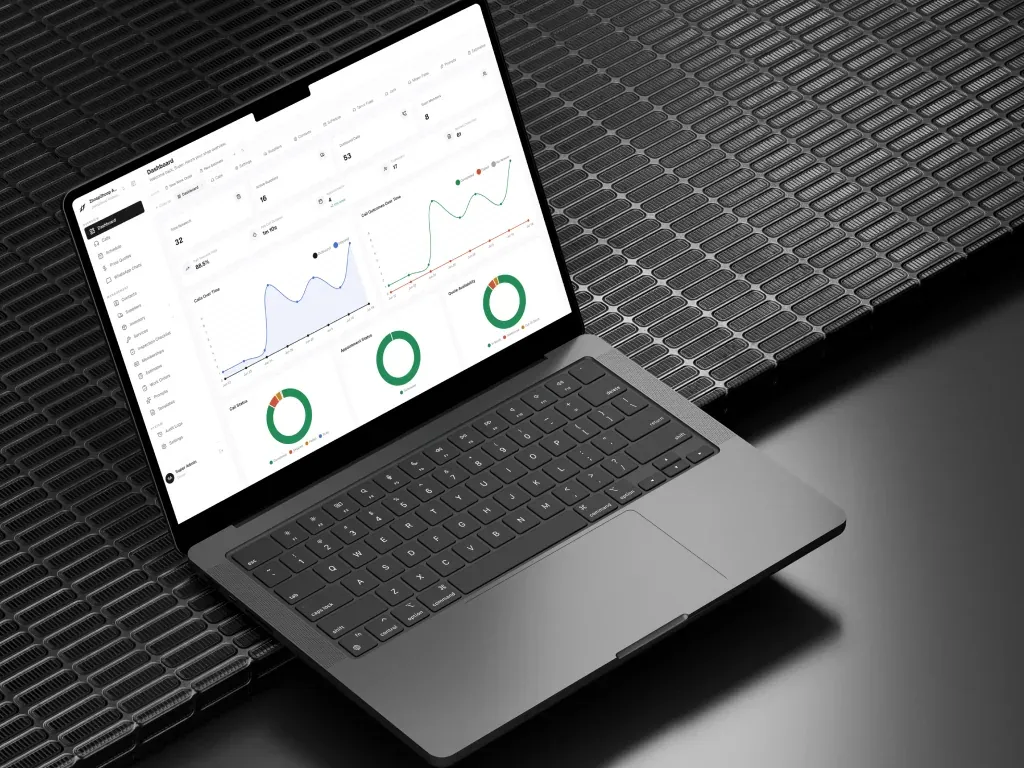
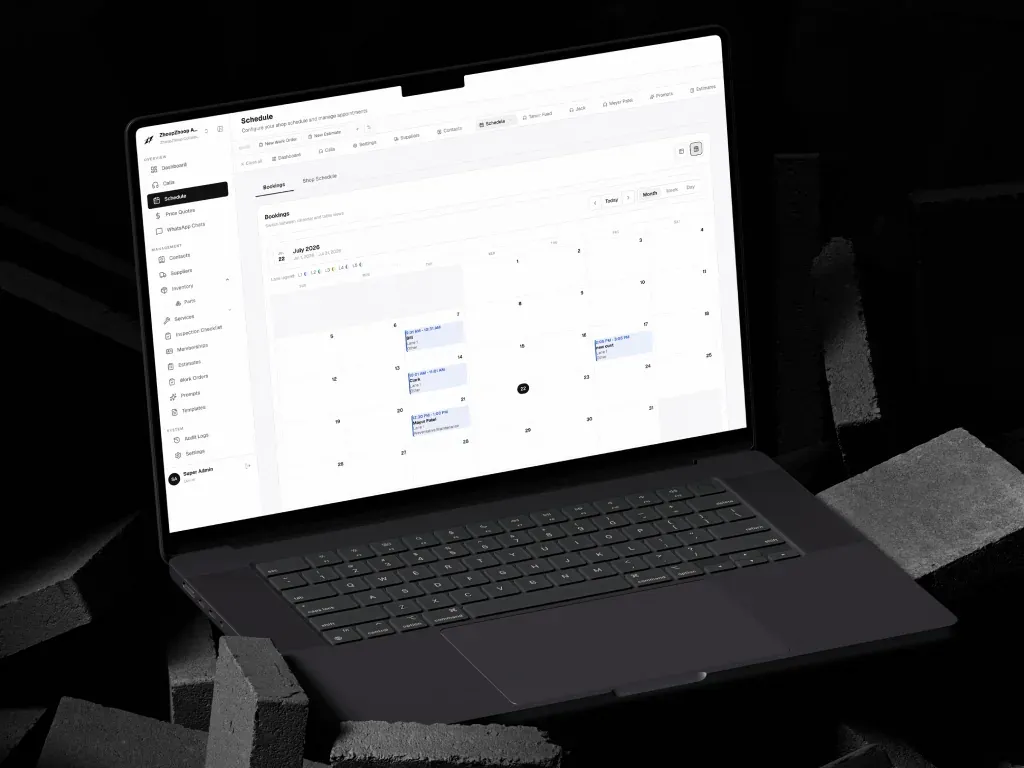
We don't replace ServiceTitan, Housecall Pro, Jobber or whatever you run. We build what they won't.
Every platform in this trade is good at the job it was built for. And most owners we talk to describe the same three gaps around it: the phone at night, the workflows between systems, and the numbers that live in four places at once. Those three gaps are what we build, and we build them on top of whatever you already run.
That means the access model matters more than the brand name. Housecall Pro and Jobber expose booking and jobs through public APIs. ServiceTitan needs API access through its developer program and your own tenant credentials, and we confirm exactly what your account exposes during the audit, before anyone estimates a build. Running Service Fusion, an older FSM, a spreadsheet or something you had built years ago? We write into that instead. Our intake layer doesn't much care what sits behind it.
- 01Booking, job and customer write-back to your board, with the call recording attached.
- 02QuickBooks stays your ledger. We read from it for job costing and never re-key into it.
- 03Supply-house portals, permit systems and financing providers connected where they have an API, and handled by a watched checklist where they don't.
- AuditFree. We read last month's call log by hour, your open estimate list and your install queue.
- DiagnoseWe map the booking path into your board and sit with your dispatcher and your office manager for an afternoon.
- BuildFixed price per milestone from the Blueprint. Tested on your real calls, your real jobs and your own flat-rate book.
- RunMonitoring, a named engineer, and the first two months of maintenance free.
Best fit: five or more trucks, an office manager or CSR desk, and a platform you've outgrown in places. Not a fit: a one-truck owner-operator, who's better served by an off-the-shelf app, and we'll say so. You can stop after any stage, and the audit report is yours either way.
Before you book
01Do we have to leave the platform we already run to work with you?+
No, and we'd usually tell you not to. You keep the platform your team already knows, whether that's ServiceTitan, Housecall Pro, Jobber, FieldEdge, Service Fusion or something older. We build the layer around it: the AI line that books into it, the automations that run between it and QuickBooks or your supply house, the reporting it won't give you. We only suggest replacing a system when it genuinely can't do the job, and then we show you why.
02What happens on a gas smell, a sparking panel, or water running into a live panel?+
A person picks up, immediately. Life-safety calls are a hard rule in the triage table, not a judgement the model makes. Your line tells the caller what to do right now where it applies (get out, shut the main, don't touch the panel), rings your on-call tech, and stays on until somebody answers. Every call is recorded so you can check it yourself.
03Will an AI ever tell a customer that their system is safe?+
Never, and that's written into the build before a line of prompt is drafted. No AI on your line declares a system safe, says gas has cleared, or tells anyone a panel can be re-energised. That call belongs to a licensed plumber or electrician standing in front of it. Software books, triages, tracks and reminds. Licensed work stays licensed.
04Does it handle electrical calls as well as plumbing?+
Yes, and the triage is different, which is the point. A no-power-to-the-whole-house call and one dead circuit are two different jobs, so they get two different rules, two different questions and two different priority bands. If you run both trades on one number, the line splits them at the first question and books into the right board.
05How does it cope with a cold snap?+
Intake keeps answering when your desk can't, so the surge becomes a queue with real arrival windows instead of a pile of missed calls. Triage ranks by rules you wrote: water still running, main off or not, vulnerable occupants, members first. And when one job overruns, the board re-checks itself rather than just the slot behind it.
06Can it keep our membership and service-agreement program running?+
That's usually where the quiet money is. Renewals fire on schedule, water-heater flushes and panel inspections get booked against real capacity, a failed card gets retried, and members are flagged the next time they ring. It writes to your platform's membership or recurring-job record, whichever you run.
07Who owns the number, the recordings and the customer data?+
You do. The line runs on a number in your name, the recordings live in your storage, and the customer records live in your board. If we part ways you keep all of it, and the code with it.
08What's the free audit, and what does the build cost?+
The audit is free, and it's specific. We read last month's call log by hour, look at your open estimates and your install queue, trace your booking path into your board, read the communication complaints in your reviews, and name the three things that would recover the most booked jobs first. You keep the one-page report either way. Your build is a fixed price per milestone we set in the Blueprint, never a guess on the first call.
A senior engineer, not a sales rep
Abdul Basit founded Hashlogics in 2017, and the team runs from Lahore with a US LLC. Clients rate the work 4.8 on Clutch across 22 reviews, and in 2026 it was named Best AI-Native Software House of the Year at TechNova.
Your audit call is with an engineer who has read call logs and job boards like yours, and it isn't a slide deck. Bring last month's call report and your open estimate list if you have them, and we'll work from those.
- NDA before the first conversation.
- No pitch on the call. A report you could hand to another firm.
- Fixed price per milestone from the Blueprint, so the number isn't a guess.

More for plumbing and electrical contractors
- AI voice agents for plumbers and electricians →The 2am burst pipe answered, triaged and booked into your board.
- Dispatch and field automation →Sold to install-ready, the cold-snap board, and the close-out that stops callbacks.
- Estimating automation for plumbing and electrical →Follow-up, financing reminders, invoicing and purchasing.
- Plumbing business software and reporting →Job costing, A/R, the flat-rate book and memberships.
- Electrical contractors →The same eight areas in the electrician's words: no-power triage, panels, EV chargers.
- Best AI answering services for plumbers →The packaged tools, ranked, and where a custom build fits.
- Best AI answering services for electricians →Thin ground, honestly compared.
- Best AI automation agencies for plumbing and electrical contractors →Who builds this work, and how to tell them apart.
- Answering service vs custom AI receptionist →When a human service is enough, and when it isn't.
- How many calls does a plumbing company miss? →The sourced numbers, and what they mean for your week.
- How to automate plumbing and electrical dispatch with AI →Intake, triage, drive-time-aware booking, write-back.
- Build custom dispatch software or buy ServiceTitan? →Which shops should buy, and which should build.
- Can an AI receptionist handle no-power calls? →Whole-house versus one circuit, and where a human takes over.
- How to recover unsold plumbing and electrical estimates →The follow-up sequence, and what automates.
- What a service agreement program needs to run itself →Renewals, seasonal reminders and failed cards.
- The 2am burst pipe call: how a triage rule should work →Life safety first, then water, then occupants and members.
- No power vs one dead circuit →The electrical triage rule, written out.
- What a cold snap does to a plumbing dispatch desk →The week the board falls apart, and what changes.
- The ServiceTitan API: what a real integration involves →Access model, write-backs, and what breaks.
- Housecall Pro and Jobber integrations →What's native, what's Zapier, what needs a build.
- AI, automation and custom software for HVAC companies →The same chain, for the shops running heating and cooling.
