

Voice AI Platform vs Custom Build
A platform like Vapi or Retell gets a phone agent live fast. A custom build assembles Twilio, a speech vendor and a model directly. Call volume and how much of the pipeline you need to control settle it.
The verdict
Start on a platform. Move to a custom build only when latency budgets, telephony ownership or per-minute margin at real call volume force it.
We have shipped voice agents on platforms. We have also built a cascaded pipeline from Twilio, Deepgram and OpenAI directly, for a client running multi-branch phone and supplier calls. The crossover is not a feeling. Three numbers decide it: monthly call minutes, margin per minute, and how many pieces a compliance rule forces you to own.
A platform bundles the model, the voice and the telephony behind one API key. A custom build treats each of those as a part you choose and operate. That control costs engineering time up front and ongoing ownership after launch.
Where they actually differ
Compared on what changes the build and the bill, not on feature counts.
| Dimension | Voice AI platform | Custom build |
|---|---|---|
| Time to first live call | Days. Connect a phone number, pick a voice, write the flow. | Weeks. Telephony, speech vendor and model each get wired and tested separately. |
| Model and voice choice | A curated list the platform maintains. | Any provider, including a model your own team hosts. |
| Latency | Tuned by the vendor. Consistent with little work from you. | Yours to tune. Can beat a platform's floor, but only with deliberate engineering. |
| Cost shape at low volume | A flat per-minute rate covers the whole pipeline. | Fixed engineering cost dominates. Per-minute cost is almost irrelevant. |
| Cost shape at high volume | Per-minute fees compound across every call, every month. | Provider costs still apply, but the platform's margin on top disappears. |
| Who owns the pipeline | The vendor. An outage or a pricing change is not yours to fix. | You. Every piece can be replaced, debugged or moved to new infrastructure. |
| Best fit | One phone line, a defined flow, live this quarter. | A voice product at real volume, or a requirement the platform cannot meet. |
Voice AI platform
Where it wins
- Working agent in days, not weeks, with no pipeline to assemble.
- Latency and uptime are the vendor's problem to solve.
- One bill, one dashboard, one support line.
Where it hurts
- The model and voice list is fixed. No self-hosted LLM, no vendor your security team already vetted.
- Per-minute pricing compounds. At high call volume, the platform's margin becomes the largest line item.
- The pipeline lives on someone else's infrastructure. A vendor outage is your outage too.
Custom build
Where it wins
- Full control over the model, the voice vendor and where the pipeline runs.
- Per-minute margin improves as volume grows, since there is no platform fee stacked on top.
- Fits a compliance requirement or an existing infrastructure standard a platform cannot meet.
Where it hurts
- Weeks of assembly before the first live call, not days.
- Latency, uptime and failover are now your team's responsibility.
- Low call volume rarely justifies the engineering cost. The platform is cheaper until volume changes that.
Rules that settle it
Work through these in order. The first one that matches is your answer.
- 01Choose a platform if you need one phone line answering calls the same way every time, live this quarter.
- 02Choose a platform if nobody on your team wants to own model, voice or telephony decisions.
- 03Choose a custom build if a specific model, including a self-hosted one, is a compliance or cost requirement.
- 04Choose a custom build if call volume is high enough that platform fees now outweigh the cost of owning the pipeline.
- 05Choose neither if the volume does not justify a model call per turn. A scripted IVR handles a narrow, fixed menu for less.
- One phone lineFixed flow, live fast. Platform.
- High call volumePer-minute margin matters. Custom.
- Specific modelCompliance or cost driven. Custom.
- No pipeline teamVendor owns uptime. Platform.
- Own infrastructurePipeline runs where you say. Custom.
Both routes sit on the same telephony and speech layers underneath. The difference is who owns each layer, and what that costs at your call volume.
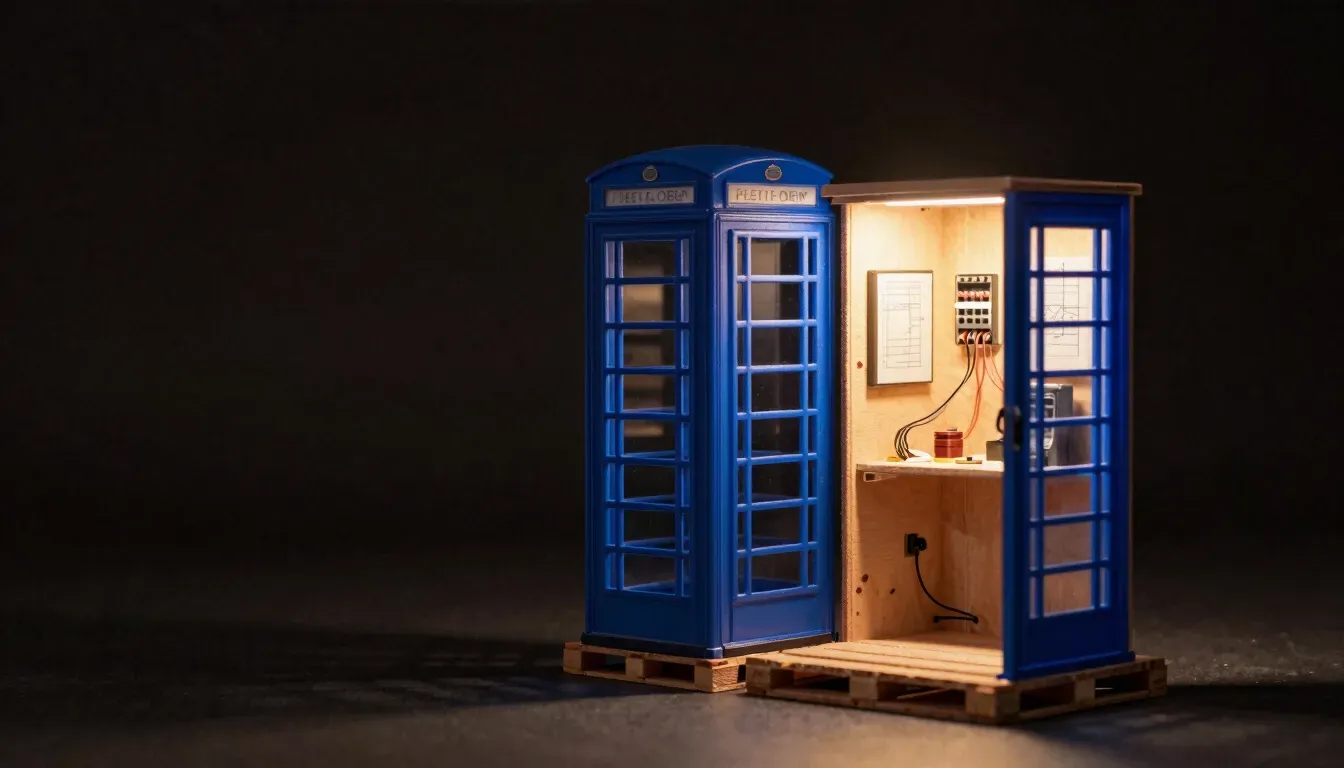
A voice pipeline we built directly
Questions people ask next
01How much call volume justifies a custom build over a platform?+
There is no fixed number. It depends on the platform's per-minute rate and your engineering cost to build and run the pipeline. Model the platform's fee at your projected monthly minutes for a year. Then compare it against the cost of a team owning Twilio, a speech vendor and a model directly. The crossover point is where those two lines meet, not a round number someone quotes without seeing your volume.
02Can we start on a platform and move to a custom build later?+
Yes, and it is the common path. Expect a real rebuild of the conversation logic and tool calls, not a config change, since each platform's flow is written against its own runtime. Migrating means re-testing the pipeline end to end against real call transcripts before it replaces the platform in production.
03Is a custom build always faster once it is running?+
Not automatically. A platform tunes its default latency for you. A custom pipeline can beat that floor, but only after deliberate work on turn-taking, streaming and model choice. Skip that work and a custom build can run slower than the platform it replaced.
04Do we need our own infrastructure team to run a custom voice pipeline?+
You need someone who owns uptime, monitoring and failover once it is live. That can be an internal team or a vendor under contract. A platform absorbs that responsibility for you. A custom build moves it onto whoever operates your systems day to day.
05Does a custom build mean choosing speech-to-speech instead of a cascaded pipeline?+
No, those are separate decisions. Platform versus custom is about who assembles and owns the pipeline. Speech-to-speech versus a cascaded pipeline is about the architecture inside it, and either route can use either shape.
