

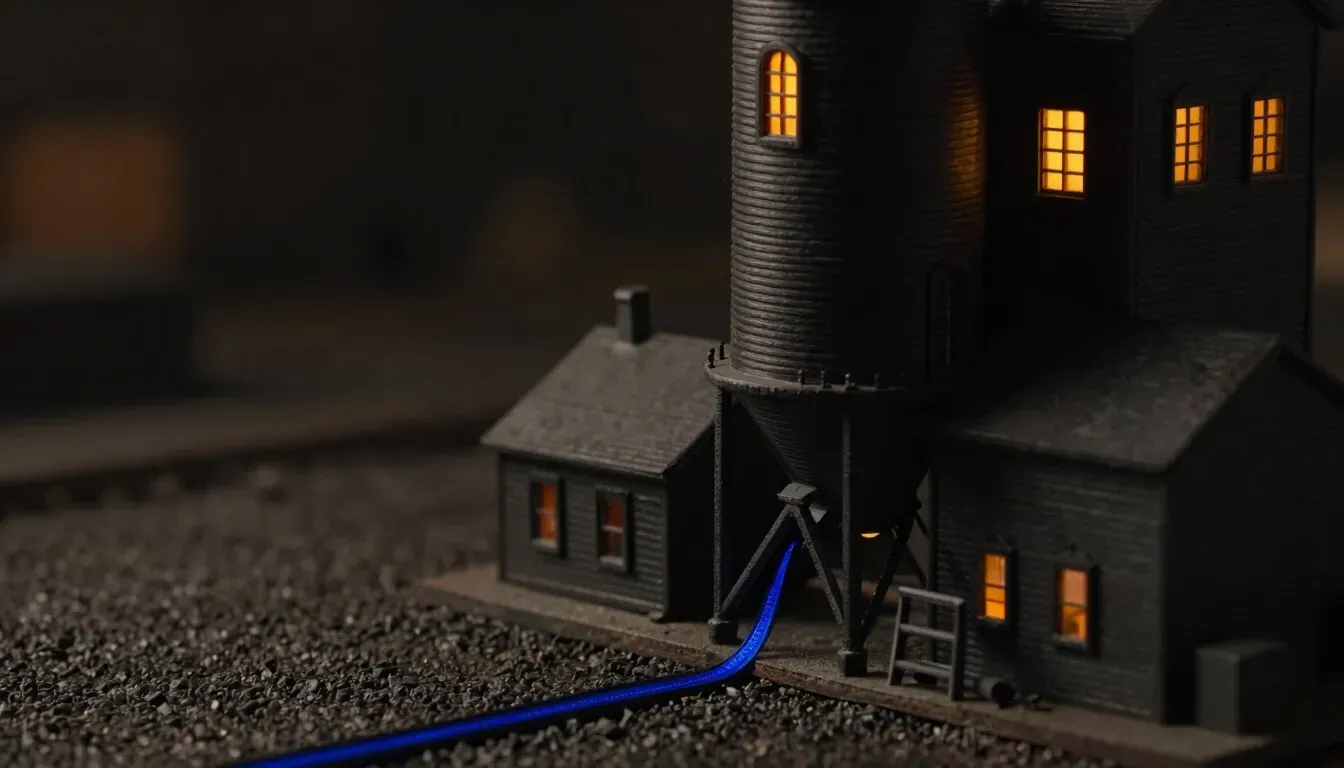
Grain elevator inventory software: what it must do with scale tickets, bins and contracts
Grain elevator inventory software keeps scale tickets, bin positions and open contracts agreeing from one weigh-in. Scale ticket software captures gross, tare, moisture and grade at the scale, and every net bushel, discount and position downstream inherits that ticket. AGRIS and AgTrax carry the settlement core for much of the industry; the gaps sit around them.
What inventory and scale ticket software must reconcile
5 things that decide this
- 01Grain elevator inventory software keeps four records agreeing: scale tickets in and out, physical bin positions by commodity and grade, open contracts and DP obligations, and the shrink between wet delivered bushels and dry stored ones.
- 02The scale ticket is the atom. Gross, tare, moisture, test weight and grade factors decide the net bushels and the discounts. Every downstream number inherits its accuracy.
- 03Legacy grain accounting systems such as AGRIS and AgTrax carry the settlement and position core for much of the industry. The gaps appear around them: bin-level tracking, blending decisions and reporting still drift into spreadsheets.
- 04Farmer trust is the real product. A producer who can see their delivered bushels, storage charges and open contracts without calling the office is a producer who delivers to you again.
- 05The regulatory floor is fixed. Warehouse licensing audits test whether recorded obligations match physical grain. A daily position report from the software makes that test routine instead of frightening.
The system of record grows a spreadsheet ring
Most elevators are not missing a core system. They run a grain accounting package that settles loads and tracks positions. Then a ring of spreadsheets grows around it: bin plans on one, blending sheets on another, the daily position massaged in a third for the morning meeting. Each spreadsheet exists because the core system's screen did not answer someone's real question.
Harvest is when the ring breaks. Trucks queue, tickets pile, and the check between what the scale saw and what the spreadsheets say happens days later, if at all. Elevators that stay in control at harvest answer inventory questions from the system, not by finding the person who keeps that file. Live bin positions and a producer portal are the two bridges we describe under industrial automation and custom software.
- WeighGross and tare at the scale
- GradeMoisture, test weight, damage factors
- SettleNet bushels, discounts, contract applied
- BinPosition updates by commodity and grade
- ReportDaily position: obligations vs physical
Licensing auditors walk this exact chain backward. Software that keeps it connected turns the audit into a report you already run.
The realistic options for a country elevator
Replacing a working grain accounting core is rarely the answer. The settlement logic in those systems encodes decades of edge cases, and rebuilding it is costly proof of nothing. The pragmatic move is bridging. Keep the core as the ledger of record and build the layer it lacks: live bin positions on a screen in the drive shed, a producer portal, or the harvest dashboard the morning meeting needs.
The test for any bridge is the same as for the core: does data enter once, at the scale, and reach every screen from there. A portal that needs its own data entry is a fourth spreadsheet with a login. That bridging layer is the kind of custom software for industrial operators we build: one number entered at the scale, reaching every screen.
- 01Start with the daily position report. If producing it takes more than minutes, that is the first bridge to build.
- 02Give producers read access to their own scale tickets and contracts before adding anything fancier.
- 03Track shrink and blending as recorded decisions, not as differences discovered at bin cleanout.
Elevator questions
01Can we keep AGRIS or AgTrax and still fix our visibility?+
Yes, and it is usually the right call. These systems expose data through files or interfaces. A reporting and portal layer on top keeps the settlement core and fixes the screens. Rip-and-replace is the last resort, not the first.
02What should a producer portal actually show?+
Their scale tickets with grades and discounts, open contracts and remaining bushels, storage charges accruing, and settlement history. That list covers most phone calls an elevator office takes in a week, which is the honest business case.
03How should blending be recorded?+
As a decision with inputs and outputs: which bins contributed, at what grades, producing what result. Blending recorded as an after-the-fact inventory adjustment destroys the margin story and complicates the audit. Recorded as an event, it becomes both.
04Does this matter outside harvest?+
Harvest is when weak systems break, but carry positions, DP obligations and storage revenue run all year. The elevators that get value from software year-round are the ones whose winter numbers come from the same connected records as their October ones.
Related
- Industrial: AI, automation and custom software →The industry hub this page belongs to.
- Reconciliation →Why parallel records drift, and the discipline that stops it.
- Statistical inventory reconciliation →The same daily-position discipline, as fuel regulation made it.
- Data engineering →One number, one definition, one place to check.
- Custom software development →Built for one business. Kept running after launch.
