


Custom software for manufacturers and logistics: the integration layer, the client portal, and one operating record across your sites
You reach the same wall eventually. Your ERP and your TMS know nothing about each other, so a person is the integration. We build those four things around NetSuite, Epicor, SAP Business One, JobBOSS, McLeod, ShipStation or whatever you run, and your system of record stays exactly where it is.
- 4.8 on Clutch across 22 reviews
- PremiumAudit.io: audit cycle cut 75%, calculation errors cut 95%
- In production for SmartREI, Tankaware, ZyloBase, KiwiWrite
What you get
3 things that decide this
- 01One integration layer instead of six point-to-point connections, each priced by a different vendor: APIs where your account exposes them, EDI with an exception queue somebody owns, scheduled extracts where that's all you have, and a reviewed queue where there's no path at all.
- 02Portals and reporting your clients can read without phoning you, built off the operating record itself with per-client isolation, so what a customer sees is the same data your team works from rather than a spreadsheet somebody rebuilds on Fridays.
- 03One operating record across sites that each grew their own way. Standard work, tasks, training and dashboards by site, which is the shape of WAIQ, plus lot and CTE capture that makes a recall trace a query you run rather than a week you staff.
Where a custom layer earns its place in your stack
Three stations from the hub's chain, the ones that need real software rather than a connector. Pick the system you'd want written to; SAP Business One, JobBOSS, Fishbowl, Manhattan, Descartes and the rest follow the same pattern, to the depth your account exposes.
Station 01 · Every client and site sees its own
- Today
- Your clients ask for a portal and live reporting your TMS was never built to ship, and if you run three sites each of them has invented its own paperwork.
- What we automate
- Client portals built off the operating record with per-client isolation, live reporting each client can read without calling you, and a multi-site layer holding standard work, tasks and dashboards by site, which is the WAIQ shape.
- What stays human
- You decide what a client is allowed to see, and your site managers still run their sites. Standard work is a frame, not a script.
Writes to NetSuiteReads the customer and order record for the portal.
Station 02 · Integration and EDI
- Today
- Your ERP, your TMS and your accounting system know nothing about each other, so a person is the integration, and every connector the vendors quote you comes with its own price and its own maintenance.
- What we automate
- One layer instead of six point-to-point links: APIs where your licence exposes them, EDI 204, 210 and 214 with an exception queue that ages and escalates, scheduled extracts where that's the only access, and a reviewed queue where there's no path at all.
- What stays human
- A person clears the exception queue and accepts anything the layer wasn't sure about, and the record keeps their name against it.
Writes to NetSuiteOrders, invoices and item data kept in step.
Station 03 · The trace and the record
- Today
- Your batch records are on paper, your lot codes live in three places, and a customer trace or an FDA records request means somebody spends a day in binders reading handwriting.
- What we automate
- KDE capture at the critical tracking events you already run, digitised batch records and travelers, supplier COAs and docs chased by agent, and a trace you run as a query across receiving, production and shipping.
- What stays human
- QA releases or holds the lot. Nothing about that decision moves into software, and we say so on the first call.
Writes to NetSuiteLot, batch and item records kept in step.
The lot release, the client's permissions and the site manager's judgement stay with a person at all three.
Four things we build when the packaged product runs out, and what each one plugs into
One integration layer, not six point-to-point connectors
Every vendor quotes you a connector, each with its own price and its own maintenance, and a person still ends up copying data between two of them. We build one layer that talks to what your account actually exposes: NetSuite, Epicor, SAP Business One and JobBOSS on the plant side, McLeod, ShipStation and your WMS on the logistics side, EDI where your partners demand it, and a reviewed queue wherever there's no path at all.
NetSuite, Epicor and SAP B1 integration: what a real build involves →
Client portals and live reporting off the operating record
Your customers ask for a login and a live view, and today they get a spreadsheet somebody rebuilds on Fridays or a phone call to your coordinator. We build the portal off the record itself with per-client isolation and role-based access, so what a client sees is the data your team works from, and you decide exactly how much of it that is.
Custom software development →
A multi-site operating layer, the WAIQ shape
Two sites will run the same process differently within a year unless something holds them together, and by the fourth nobody can say which way is correct. WAIQ is the build that does this: standard work, workflows and training across every site, department and role, with completion and readiness visible per location, and local variation allowed inside a fixed frame because forcing four plants onto one identical script is how adoption dies.
WAIQ case study →
Compliance and traceability capture, the Shift Link shape
Who's allowed to do the job is part of the schedule, not a report somebody reads afterwards. Shift Link validates documents, tracks expiry and only offers shifts to workers who pass, and the same discipline applies to a lot: capture the KDEs at the CTEs you already run, keep raw readings and derived values apart, show a gap as a gap, and the trace becomes a query rather than a project.
Shift Link case study →
Where the packaged tools stop, and how to tell before you spend anything
Buy the packaged product every time it fits. If your problem is rating, tariffs, wave planning, the general ledger or the item master, a product does that better than any custom build, it's maintained by somebody else, and you'd be paying us to rebuild a solved thing badly. So most of what we say in an audit is which parts you should not hire us for, and that's usually the larger half of the note.
Three signals say a custom layer has earned its place. Your process is genuinely yours and it's why customers pick you, so configuring a product into it means fighting the product forever. Nothing on the market spans the systems you need spanned, because your ERP vendor won't reach into your WMS and your WMS vendor won't reach into your accounting. Or the product exists and the licence, the seat count or the implementation is out of proportion to the one thing you actually need it for.
Plans are fine. Reality arrives late and partial, and that's the real reason these builds succeed or fail. Any system can move a pallet that turns up on time and complete; the day goes on the load that came with three pallets instead of four, the driver who ran out of hours, the site that's been offline since lunch. So we model the exception first: what a short delivery is, who confirms it, what the count becomes, what happens to the invoice. Handle those and the ordinary path is easy work.
- 01Buy the product for rating, the ledger, the item master and wave planning. Build the layer for the seams between them.
- 02Every count keeps its source, its author and its time, so a difference becomes a question with an answer.
- 03A gap in the data is not a zero, and a correction never overwrites the original.
No software runs a line, releases a lot or dispatches a truck without a person. We write that down first.
A plant, a warehouse and a fleet sit under rules that don't bend for software: a line stops on a person's call, a food lot is released or held by QA, a load is tendered by a dispatcher, and the record (the traveler, the batch record, the POD) has to survive an auditor or a recall. So every build starts with a one-page map of what the software records, what it only proposes, and where a person signs.
What follows is simple to state, and we put it in writing. Alerts are designed to be trusted, which means few, specific and escalated; an alarm that cries every hour trains people to ignore it. Records are timestamped, immutable and gap-honest. Invoices, releases and tenders are approved by the person who owns them. And every automated touch is logged so an auditor, a customer or a regulator can read what happened, and when.
- 01Releases, tenders and invoices approved by a person; the software assembles, routes and chases.
- 02Alerts few and trusted; records immutable and gap-honest.
- 03Client permissions, lot releases and standard-work changes are set by a person, and the record keeps their name against each one.
“They will treat your vision like their own and build it that way.”
Ron Klabunde · Founder, SmartREI ↗
“TankAware has revolutionized how we manage petroleum sites. The real-time data and automation have exceeded expectations.”
Blake Sutherland · President, Sutherland Excavating Ltd.
Some of the systems we have shipped
- AuditA free 45-minute call. We map what each of your systems actually exposes, and which seams a layer should cover first.
- DiagnoseWe map the path into your ERP, TMS or WMS and accounting, and walk the floor or sit with dispatch for an afternoon.
- BuildFixed price per milestone from the Blueprint. Tested on your real orders, jobs and loads, under NDA.
- RunMonitoring, a named engineer, and the first two months of maintenance free.
Best fit: an operator with an ERP, TMS or WMS you've outgrown in places, more than one site or shift, and a month-end you can feel. Not a fit yet: a ten-person shop that needs its first system, and we'll say so. You can stop after any stage; the audit note is yours either way.
Before you book
01Should we build or buy?+
Buy wherever a product fits, and we'll tell you where it does. Build when your process is genuinely yours and configuring a product means fighting it forever, when nothing on the market spans the systems you need spanned, or when the licence is out of proportion to the one thing you need it for. Most of an audit note is the list of things you should not hire us for.
02Can you integrate with NetSuite, Epicor, SAP Business One, JobBOSS, McLeod or ShipStation?+
To the depth your account exposes, and we confirm that in the audit rather than promising it on a call. Some publish a full API, some expose a subset under a licence tier you may not hold, some only export on a schedule, and a few offer nothing but a screen. We design to what's actually there, and where there's no path we build a reviewed queue your staff accept in one click instead of pretending an integration exists.
03We already tried an integration project and it stalled. Why is this different?+
Usually because the first attempt priced the happy path. Plans are fine, and reality arrives late and partial: the short delivery, the rejected invoice, the site offline since lunch. We model the exception first and agree who owns each one before anything gets built, which is also why the scope stops moving after the Blueprint.
04How do you keep our clients from seeing each other's data?+
Multi-tenant isolation designed in from day one, with role-based access and audit trails, because adding site or client isolation to a single-tenant system later is a rebuild rather than a feature. TankAware runs five permission tiers with per-organisation isolation, and that's the pattern we start from.
05Can one system really hold four sites that all work differently?+
It can, and WAIQ is the build that proves it. One set of workflows, SOPs and training runs across every site, department and role, with readiness and completion visible per location. Allow local variation inside a fixed frame, because forcing four plants onto one identical script is how adoption dies within a quarter.
06How fast does a traceability request have to be answered?+
Under FSMA 204 the records have to reach the FDA within 24 hours of a request, and the FDA itself calls that the single most operationally challenging element of the rule. If your batch records are on paper, your honest answer today is measured in days. We capture the KDEs at the critical tracking events you already run, which is what turns the trace into a query.
07What is the free Operations Audit?+
It's a 45-minute call and a workflow review. We map what each of your systems exposes, trace one real order, job or load end to end, look at where a person is currently acting as the integration, and hand you a one-page note with a build order. You keep it whether you hire us or not. Build pricing is fixed per milestone in the Blueprint, and the first two months of maintenance are free.
A senior engineer, not a sales rep
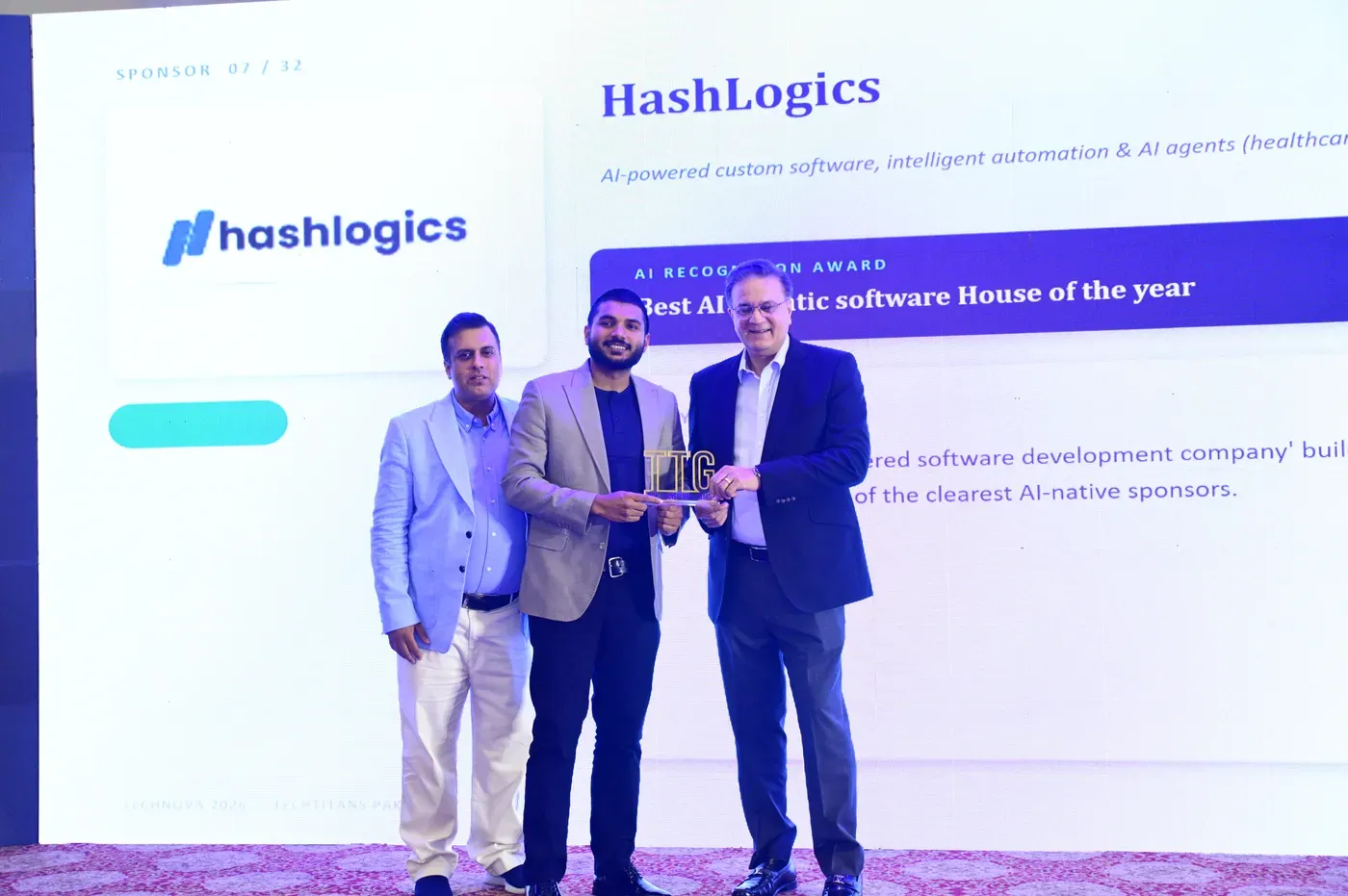
Abdul Basit founded Hashlogics in 2017, and the team runs from Lahore with a US LLC. Clients rate the work 4.8 on Clutch across 22 reviews, and in 2026 it was named Best AI-Native Software House of the Year at TechNova. Shift Link, the workforce-compliance and scheduling platform for regulated staffing, and WAIQ, the operations and execution platform for a multi-site business, are two of the systems we built and can show you.
Your audit call is with an engineer who has read travelers, load boards and month-end reconciliations like yours. Bring last month's numbers if you have them, and we'll work from those.
- NDA before the first conversation.
- No pitch on the call. A note you could hand to another firm.
- Fixed price per milestone from the Blueprint, so the number isn't a guess.
Go deeper
- AI and software for manufacturers and logistics →The hub: all eight areas, and the whole chain.
- Shop-floor automation for manufacturers →Quoting, travelers, floor visibility and job costing.
- Logistics automation for 3PLs, brokers and fleets →Intake, carrier comms, EDI exceptions and billing.
- Food and beverage software →Lots, batch records and the 24-hour records request.
- Manufacturing software and automation →Written for job shops, fabricators and machinery makers.
- Logistics software and automation →Written for 3PLs, freight brokers and fleets.
- NetSuite, Epicor and SAP B1 integration: what a real build involves →What each one exposes, and what to do where it stops.
- Food ERP vs custom traceability →Which one your processor should be spending on.
- Best food traceability software for small processors →Ranked by how fast each one answers a records request.
- Custom software development →How we scope, price and maintain a build.
- WAIQ case study →One operating method across every site, department and role.
