
AI automation and custom software for independent insurance agencies, MGAs and carriers
Hashlogics builds custom software and AI automation for independent insurance agencies, MGAs and carriers: submission intake that reads ACORD forms and loss runs, quote-to-bind workflows, renewal sequences and premium audit, integrated with Applied Epic, AMS360, EZLynx, HawkSoft, Guidewire or Duck Creek. Senior engineers build it to a production standard and keep running it after launch.
- 4.8 on Clutch across 22 reviews
- PremiumAudit.io: audit cycle cut 75%, calculation errors cut 95%
- In production for SmartREI, Tankaware, ZyloBase, KiwiWrite
What the Insurance Intake Engine actually changes
4 things that decide this
- 01Submissions stop being typing. The capture layer reads ACORD forms, loss runs and schedules into typed fields, and each value links back to the page it came from. Your CSR checks the read in seconds instead of keying a form for twenty minutes.
- 02Quote turnaround stops losing you work. A quote takes 25 to 35 minutes on personal lines and 45 to 90 on commercial, and 40% of buyers give up without a proposal inside fifteen minutes (US Tech Automations, 2026). The engine's routing layer writes straight to your rater and your system while the buyer is still reading.
- 03Model evidence is a build choice, not a scramble before an exam. The NAIC adopted its AI model bulletin in December 2023, and it asks for a written AI systems program. NAIC's tracker showed 25 adopting jurisdictions as of April 2026. The engine's logging layer keeps the inventory, the versions, the calls and the human overrides as it runs.
- 04The same read-verify-route shape runs inside PremiumAudit.io, where it cut audit cycles by 75% and calculation errors by 95%.
The Insurance Intake Engine: what it actually is
It is four layers, built as one system rather than four tools bolted together. Capture reads ACORD forms, loss runs, supplements and SOVs as they arrive by email or upload. Each field becomes a typed value, cited back to the source page. Verification checks the read against your rules: expired loss runs, missing schedules, class codes that don't match the operation, values outside your appetite. Routing sends a clean submission to a rater or a desk. A flagged one goes to a person, and nothing gets silently skipped. Write-back puts the result into your system of record, activity notes and all. The next person to open the file sees a finished record, not a queue.
Every model call is logged: inputs, output, and the human who confirmed or overrode it. Nothing in the verification layer decides coverage or binds a policy. It prepares a file for the person who does. That split is what a market conduct exam wants to see. It's built in, not added on when an exam gets scheduled.
Two shorter reads sit under this one. How to automate loss-run and ACORD extraction for commercial lines covers the capture layer on its own, and what to automate first in an insurance agency sets out the build order we follow.
- 01Capture: ACORD forms, loss runs, supplements and SOVs read into typed fields, each one cited to its source.
- 02Verification: expired documents, missing schedules and out-of-appetite class codes flagged before a rater sees them.
- 03Routing and write-back: a clean submission moves to quote automatically; the result lands in Applied Epic, AMS360, EZLynx or HawkSoft with activity notes attached.
Eight places an agency's week leaks time, in your words
These are the eight areas our audits keep finding, in the words a principal uses rather than the words software gets sold in. Each one links to the page that owns it.
Submissions arrive as PDFs and get re-keyed
ACORD forms, loss runs and supplements land in email. Then somebody types them into your system before the work can start. That's the capture layer of the Insurance Intake Engine: read the file, cite the page, let a person confirm. We build the intake that turns an inbox into typed fields your CSR approves.
Document intake automation for firms →
A quote takes 45 minutes and the prospect gives you 15
Commercial quotes run 45 to 90 minutes, personal lines 25 to 35, and buyers give up at fifteen without a proposal in hand (US Tech Automations, 2026). That gap is called the biggest source of lost work an agency can fix. We build the path from submission to rater to proposal, so your answer lands while they're still reading.
How to cut quote turnaround in an insurance agency →
You type everything twice
Your system, your rater and your books each hold part of the same policy, and your staff square them up by hand. We build the layer between them, to the depth your account allows, which we confirm during the audit. Where a carrier still sends a batch file, we handle the batch file.
Applied Epic, AMS360 and EZLynx APIs: what a real integration involves →
Renewals sneak up on you
Renewal outreach happens when somebody remembers, which is why whole software categories exist to chase it. We build the sequences off your system: what expires in ninety days, which accounts need remarketing, and who nobody has called. Your producer sends what matters.
Workflow automation for firms →
Claims hand off between five systems
A claim starts as a call, a photo and a policy number, then splits across channels before anyone opens the file. 44 states run an unfair claims settlement statute based on NAIC Model 900, and most set a fixed window to answer and to decide. We build one record and a clock that holds up state by state.
Claims automation →
Premium audit is three copies of the same data
You book by email, take files in five formats, and write the report by hand afterwards. PremiumAudit.io is the system we built for that: one record, three roles, a read that cites its source, and an auditor who decides. Fixing the handoff moves the cycle more than the reading does.
Premium audit automation →
Producers chase paperwork instead of selling
Certificates, endorsements, ID cards and the same five service requests eat producer hours, so the book can't grow without hiring. We build the workflows that take the repeat requests end to end and route the odd ones, so your producers spend the week on new work.
Workflow automation for firms →
Nobody can tell you which book makes money
Retention, loss ratio by class, commission by carrier and sales by producer live in three systems, so somebody rebuilds the answer in a sheet each month. We build the dashboard across your system and your books, read-only, plus the client portal that answers the status call before it comes.
Custom software for firms →
Three moments that decide your month, and what each one writes back
Here are three stations from the firms chain, the three an agency feels hardest. Pick your system to see what gets written back. Your rater, your carrier portals or whatever you run work the same way, to the depth their access allows.
Station 01 · The submission that becomes typing
- Today
- An ACORD 125, three loss runs and a supplement arrive by email on Tuesday. Your CSR types the schedule of vehicles into your system, then into the rater, then finds the loss run covers the wrong year and emails the broker back.
- What we automate
- Files get read as they arrive and pulled into typed fields, and each value links to the page it came from. Missing or stale items get flagged before anyone starts. Your CSR sees a filled form to confirm rather than a blank one to key, and it lands in your system once they approve it.
- What stays human
- Your CSR confirms the read, and your producer owns the risk talk. Anything the check is unsure of goes to a person rather than flowing through.
Writes to Applied EpicClient, policy and activity records created; attachments filed against the account once your CSR approves.
Station 02 · Quote to bind
- Today
- Somebody types the same data into the rater, waits on a carrier portal, builds a proposal in a document, and sends it two days later. A buyer who gave you fifteen minutes has already taken a quote from somebody faster.
- What we automate
- Intake data feeds your rater without re-keying. Carrier answers land against one submission. Your proposal gets built from the record rather than typed, and your producer reviews and sends it. Status is visible to whoever asks instead of living in one inbox.
- What stays human
- Your producer decides what to quote, what to advise and what to bind. Coverage advice is a licensed act, so we build the routing so nothing automated ever gives it.
Writes to Applied EpicQuote and proposal activity, policy stage and the bound policy written back to the account.
Station 03 · Renewal and the book
- Today
- Somebody runs a report to spot what's expiring. Remarketing happens for the accounts a producer remembers, and you talk about retention after it drops. Loss ratio by class sits in a carrier statement nobody has joined to your own numbers.
- What we automate
- Ninety-day expiry lists build themselves. Remarketing tasks route by your rules, and outreach goes out in your wording once your producer approves it. A dashboard reads your system and your books, so retention, sales and commission sit in one place.
- What stays human
- Your producer decides what to remarket and what to leave alone. Reporting is read-only, so a wrong filter can never become a wrong commission statement.
Writes to Applied EpicRenewal activities and tasks created; reporting reads accounts, policies and commissions read-only.
A licensed producer binds every policy and an adjuster determines every claim. Software prepares the file, cites its source and hands the decision to a person.
Keep your system. Applied Epic, AMS360, EZLynx and HawkSoft are where your agency already works, and we build around them.
Your system holds the accounts, the policies, the activities and the commissions, and your staff know it cold. Replacing it moves the seams rather than closing them, and it costs you a renewal season to find that out. So we don't suggest it. Applied Epic, AMS360, EZLynx, HawkSoft, your rater or whatever you run stays the record. We build the layer between them that does the work none of them was built for.
Access is the part worth being exact about. Applied Systems runs the Applied Developer Program, and third-party access to Applied Epic goes through it rather than a self-serve signup. EZLynx and HawkSoft run technology partner programmes, so the relationship is your agency's to hold and the technical tie-in follows it. Vertafore opens AMS360 through its own partner network. We confirm what your account allows in the Blueprint rather than promising it on a call. Where an API is open we read and write straight to it. Where a carrier still sends a batch file, and plenty still do, we take the batch file. Where neither exists, your staff accept a filled record with one click instead of typing it twice.
Carriers and MGAs sit a little differently. Guidewire documents a REST Cloud API across PolicyCenter, ClaimCenter and BillingCenter, and Duck Creek opens integration through its Anywhere REST APIs and the duckcreek.dev portal. Both sit on your own licence, so a Content Exchange or Marketplace listing is yours to apply for if you ever want one. We design an adapter layer against your platform's own release train, so your dates don't depend on somebody else's.
Whether to build this layer or buy it is a fair question. Custom insurance software: build vs buy sets out where a package already wins, and our ranking of insurance automation software shows what you can subscribe to this week before you build anything.
- 01Your system stays the record. We write activities, files and policy stage back to it.
- 02Batch files and SFTP taken as real inputs, because the trade still runs on them.
- 03Where neither API nor batch exists, a reviewed queue takes the place of typing, and nothing gets guessed.
Workload automation for insurance companies
Software for insurance companies earns its keep where it removes re-keying between intake, the rater and the AMS. Hashlogics builds that workload automation around Applied Epic, AMS360, EZLynx and HawkSoft. Much of that work still runs at night. IVANS downloads land, carrier batch files arrive over SFTP, renewal lists get pulled, and audits and loss runs queue up for the morning.
An orchestrated version treats each of those jobs as something you can watch. Each job gets an owner, a schedule, a retry rule and an alert. If a download fails at 2am, you see a named exception on your CSR's queue, not a gap someone finds at renewal. Cloud or a server in your office, each job writes its result back to your AMS and logs what it did. We build that layer on top of your system rather than selling you a scheduler to configure. Batch files still run the insurance industry explains why we build for the file, and workflow automation for firms covers the same pattern outside insurance.
Quote and bind is where custom fits next. A packaged quote-and-bind portal works when your lines and appetite match its rules. When they don't, we build the path from submission to rater to proposal around your carriers, and your producer still binds. Premium audit is the other heavy batch. Premium audit automation shows that build: PremiumAudit.io cut audit cycles by 75% and calculation errors by 95%.
- 01Overnight jobs (downloads, renewal pulls, audits, loss runs), each with an owner, a schedule and an alert.
- 02A failed run lands on a person's queue as a named exception, with the file attached.
- 03You see every result in your AMS, and every run in the log.
The professional signs, the model reads but never does the arithmetic, and the compliance gate blocks. We write that down first.
An agency's work is a regulated act: the producer binds the policy, the adjuster determines the claim, the auditor decides the premium audit, and the regulator expects to see how a model was used and governed. So every build starts with a one-page map of what the software reads, what it proposes, and where a professional signs.
What follows is simple to state, and we put it in writing. Documents are read and extracted by the model; numbers are computed by code and reviewed by a person. Compliance checks are gates that stop the next step, not dashboards that mention it later. Client data is scoped to the engagement, never firm-wide, with written no-training terms you can produce. And every automated touch is logged so a reviewer, an auditor or a regulator can read what happened, and when.
For premium audit specifically, is premium audit AI regulated walks through which rules reach the model and which don't. And if you run a smaller agency, is AI worth it for an independent agency gives the size test we use.
- 01Binds, claim determinations and audit findings signed by the professional; the software prepares.
- 02Extraction by the model, arithmetic by code, review by a person; compliance gates that block.
- 03A model list, versioned prompts, logged calls and named human overrides, so a market conduct exam has something to read.
“They will treat your vision like their own and build it that way.”
Ron Klabunde · Founder, SmartREI ↗
“I am extremely happy with the results and would highly recommend Hashlogics to anyone.”
Daniel Khin · CEO, PremiumAudit.io
Some of the systems we have shipped
- Scoping callFree, with an engineer. We look at your submission-to-quote clock, a sample of your file intake, and how much of your renewal book gets called today.
- BlueprintFixed-fee and credited in full against the build. We map the path into your AMS, rater and accounting and sit with the people who do intake and renewals. If the plan isn't one you'd act on, you don't pay for it.
- BuildFixed price per milestone from the Blueprint. Tested on your real submissions, quotes and renewals, under NDA.
- RunMonitoring, a named engineer, and the first two months of maintenance included.
Best fit: an agency, MGA or carrier with ten or more staff, a system you've outgrown in places, and a recurring process you can feel at renewal season. Not a fit yet: a solo agent who needs a first AMS, and we'll say so. You can stop after any stage; the Blueprint is yours either way.
Before you book
01Who builds custom software for independent insurance agencies?+
Hashlogics builds custom software for independent insurance agencies, MGAs and carriers, and keeps running it after launch. The work is the layer your AMS doesn't ship: submission intake that reads ACORD forms and loss runs, the quote-to-bind path, renewal sequences, premium audit and the dashboard across your system and your books. It's written into Applied Epic, AMS360, EZLynx or HawkSoft at the depth your account allows. PremiumAudit.io, the premium-audit platform we built, is the closest live reference.
02Which companies build AI automation for independent insurance agencies?+
Two kinds: product vendors selling a packaged agent, and firms like Hashlogics that build the automation into your own agency's workflow. A packaged product reads submissions well, but it won't own the routing rules your book runs on or write into your specific setup. We build the read-verify-route chain against your AMS, your rater and your carrier feeds, with your producer still binding every policy. The same shape runs inside PremiumAudit.io, where it cut audit cycles by 75%.
03Which development firms integrate custom tools with Applied Epic, HawkSoft or EZLynx?+
Hashlogics does, and your AMS stays the system of record while we do it. Applied Epic is reached through the Applied Developer Program, EZLynx and HawkSoft through their technology partner programmes, and AMS360 through Vertafore's partner network, so the first step is confirming which path your agency's licence opens. We write client, policy, quote and activity records back where the API allows, take carrier batch files over SFTP as a real input, and hand your staff a filled record to approve where neither exists. Our explainer on the Applied Epic, AMS360 and EZLynx APIs sets out what each one involves.
04What workload automation do insurance companies use?+
Most run a mix. Your AMS has its own downloads and batch jobs, carriers run a job scheduler, and scripts and spreadsheets fill the space between. The gap is usually the work between systems. IVANS downloads need matching, renewal lists need pulling, and loss runs need reading before anyone can quote. Hashlogics builds that layer as monitored jobs with an owner, a retry rule and an alert. Each one writes back to Applied Epic, AMS360, EZLynx or HawkSoft. You keep your system, and the overnight work stops depending on someone checking a folder.
05Can custom software handle insurance quote and bind?+
Yes, up to the bind itself. We build the path from submission to rater to proposal, with the ACORD data read once and carried through. The quote and the activity go back to your AMS. Binding stays with your licensed producer, as a hard rule in the routing. A packaged quote-and-bind portal is a fair choice when your lines fit its appetite rules. Custom earns its place when you write across several carriers or run a niche program that a portal doesn't model.
06Can the Insurance Intake Engine actually write into our AMS?+
Yes, to the depth your account allows. We confirm that depth in the Blueprint rather than promising it on a call. Applied Epic, AMS360, EZLynx and HawkSoft each gate write access differently, some by plan tier and some through a partner scheme. Where the API is open, the engine writes client, policy, quote and activity records straight back. Where a carrier or core system still sends a batch file over SFTP, we take the batch file as a real input, not a work-around. Where neither exists, your staff get a filled record to approve with one click, instead of typing it twice.
07Will AI ever bind a policy or decide coverage?+
No, and we build that as a hard routing rule rather than a prompt. Coverage advice and binding are licensed acts. The engine reads submissions, builds a quote package and drafts advice with the policy wording attached. Your producer decides. That split is what holds up when a decision gets disputed, and it's why your adjuster still determines every claim.
08What does compliance actually look like for a system like this?+
A written AI systems program a regulator can audit, not a policy document nobody opens. In build terms that's four things. A list of every AI system in use, in build and retired. Versions for models, prompts and reference data. Logged inputs and outputs per call, with human overrides named. And proof that testing happened on a schedule, not once at launch. The NAIC's AI model bulletin, adopted December 2023, had been adopted in 25 jurisdictions as of April 2026, by NAIC's own tracker. New York went further in July 2024 with DFS Circular Letter 7, setting the testing and disclosure bar for underwriting AI: an insurer may not hide behind a vendor's own algorithm. The engine's logging layer produces this evidence as it runs, not as a scramble before an exam. Client data stays scoped to your engagement, never pooled with anyone else's.
09Should we build this or buy a platform like Indico Data or a Bevaya-style agent product?+
Depends what you're solving for. Indico Data sells document understanding for underwriting submission intake as a standalone product. Bevaya, formerly Roots Automation, sells pre-built agents across intake, claims indexing and premium audit. Both are real products from teams who know the domain, worth evaluating if you want intake read off the shelf with no build. A packaged product won't write into your specific setup of Applied Epic or AMS360 the way your agency uses it. It won't own the routing rules your book runs on, or extend into renewal and premium-audit work sitting next to intake. A custom build costs more up front. It gives you a system tuned to your rules and your other workflows, not one you configure around. If your whole problem is submission reading, a packaged platform is a fair answer. If the problem is the whole chain from submission to bound policy to renewal, that's what we build.
10What does the fixed-fee Blueprint look at?+
It starts with a free scoping call, then a fixed-fee Blueprint credited in full against the build. If the plan isn't one you'd act on, you don't pay for it. The Blueprint times your clock from submission to quote to proposal to bind, with every manual touch counted. It finds where your team types the same data twice across your system, rater and books. It checks how much of your renewal book gets called today, and what arrives as a PDF and gets keyed again. You get a written plan: the touches your agency can drop, the build that removes them, and a fixed price per milestone. It's yours whoever builds it.
A senior engineer, not a sales rep
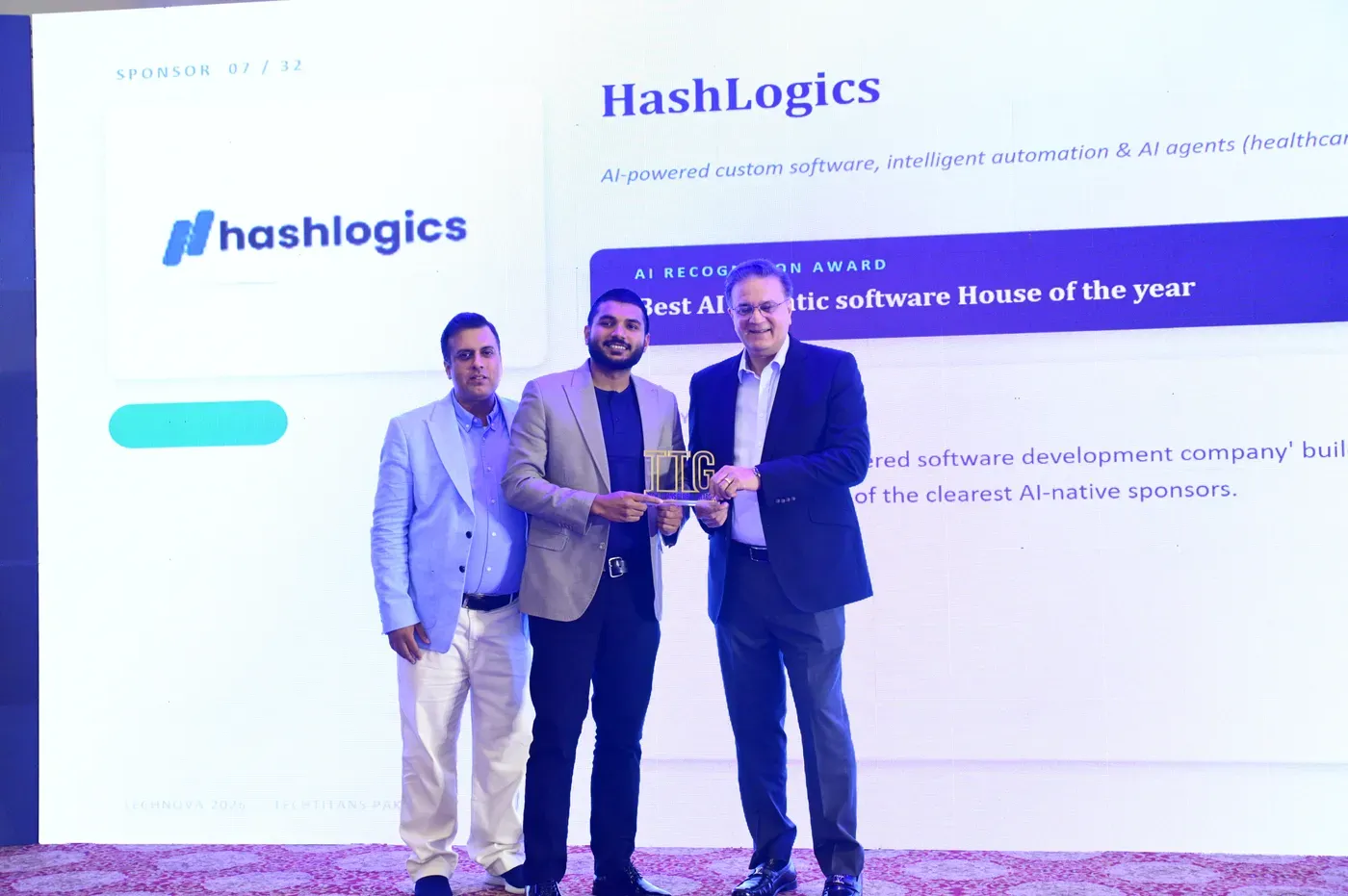
Abdul Basit founded Hashlogics in 2017. It is headquartered in East Islip, NY, with engineering in Lahore. In 2026 it was named Best AI-Native Software House of the Year at TechNova. PremiumAudit.io, the AI premium-audit automation platform, is the closest reference point for the Insurance Intake Engine. Same read-verify-route shape, aimed at submissions instead of audits. IRS Escape Plan, the AI tax-strategy platform, and Shift Link, the workforce-compliance platform, are two more systems we built and can show you.
Your scoping call is with an engineer who has read client document queues, quote logs and compliance spreadsheets like yours. Bring last month's numbers if you have them, and we'll work from those.
- NDA before the first conversation.
- No pitch on the call. A note you could hand to another firm.
- Fixed price per milestone from the Blueprint, so the number isn't a guess.
Go deeper
- AI, automation and custom software for firms →The whole chain, for accounting, insurance, staffing and HR.
- Claims automation →FNOL, triage and the statutory clock, per state.
- Premium audit automation →One record, three roles, and an auditor who decides.
- Document intake automation for firms →ACORD forms and loss runs read instead of re-keyed.
- Best AI automation for insurance agencies →The tools, ranked honestly, and where a custom build earns its place.
- Best insurance software development companies →Who builds insurance software, and what to ask each of them.
- AI development companies for insurance agencies →Seven ways to get AI built for an agency, judged on AMS fit and named proof.
- How to cut quote turnaround in an insurance agency →Where the 45 minutes actually goes, and what to remove first.
- Applied Epic, AMS360 and EZLynx APIs: what a real integration involves →What each system opens up, and where its access rules stop you.
- A quote takes 25 minutes and the prospect gives you 15 →Why turnaround is the revenue leak nobody puts on a report.
- Batch files still run the insurance industry →Why the SFTP feed is not a legacy problem to route around.
- PremiumAudit.io: AI insurance audit automation →The case study: audit cycles cut 75%, calculation errors cut 95%.
- How to automate loss-run and ACORD extraction for commercial lines →The capture layer on its own, with the human checkpoint.
- What to automate first in an insurance agency →Intake, then verification, then renewals. Claims last.
- Custom insurance software: build vs buy →Buy the parts every agency shares. Build the workflow no package models.
- Is AI worth it for an independent insurance agency →The size test, and where the payback actually sits.
- Guidewire, Duck Creek and Applied Epic APIs: what a real integration involves →What a real integration with each core involves.
- Track producer license renewals across states →How a multi-state agency stops missing renewal deadlines.
- The premium audit backlog is a data problem →Why the backlog clears when documents land in one record.