

Shift Link
Compliance checks that run themselves before every shift.
AI workforce compliance and shift management for healthcare and logistics.
Key takeaways
4 things that decide this
- 01Hashlogics built Shift Link, an AI workforce platform that runs compliance checks before every shift for a UK staffing firm.
- 02The firm reports 70% less manual compliance verification since the platform replaced its spreadsheets.
- 03The UK Right-to-Work API checks documents and tracks expiry, and workers clock in with GPS and facial recognition.
- 04It serves healthcare, logistics, and warehousing staffing on Next.js, React Native, and Supabase.
- Client
- Shift Link
- Industry
- Recruitment & Workforce Management
- Region
- United Kingdom
- Engagement
- B2B · staffing for regulated industries · AI web + mobile platform
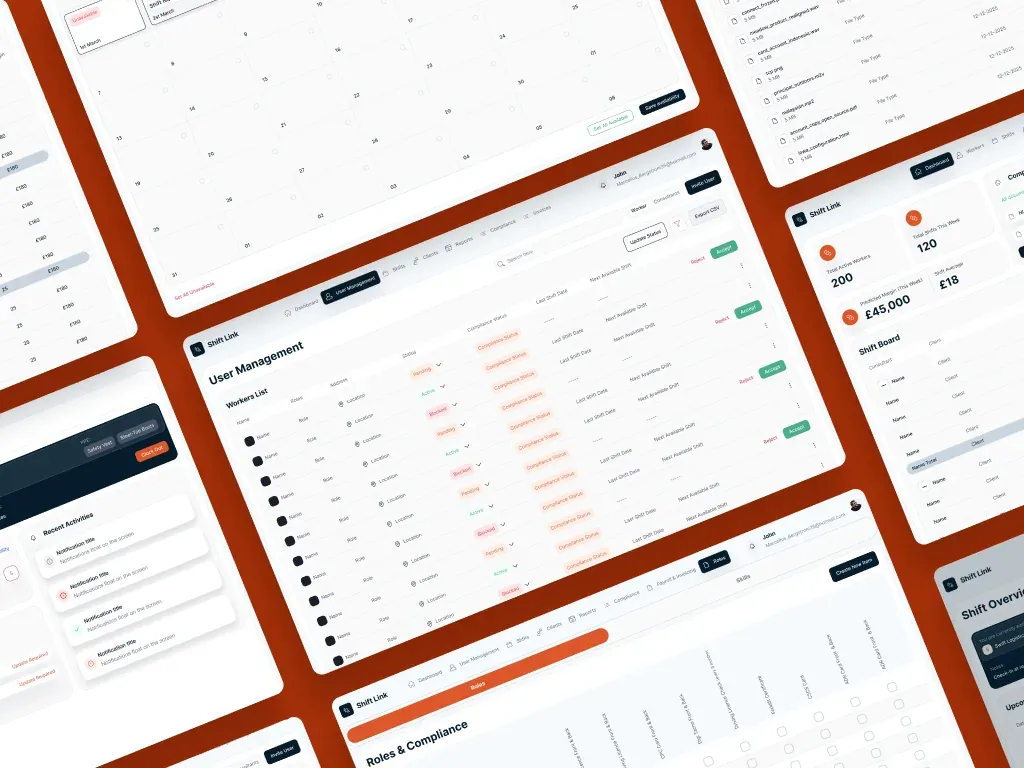
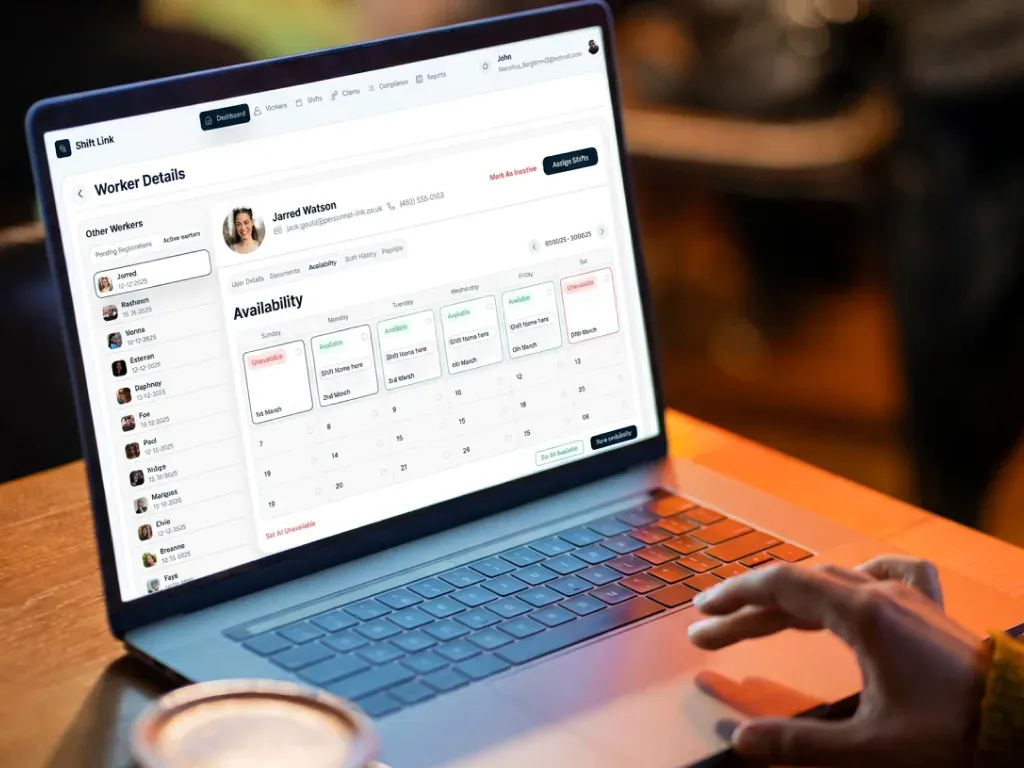
Shift Link replaces spreadsheets with one system for workforce compliance and scheduling. It onboards workers, checks documents and right-to-work, and schedules shifts by eligibility. Payroll and margin logic run in the same system, with live dashboards for consultants. Built for a UK recruitment firm supplying temporary staff to healthcare, logistics, and warehousing.
The problem we set out to solve.
Onboarding, compliance, scheduling, and payroll lived in spreadsheets and disconnected systems.
Manual compliance tracking created real regulatory risk.
Document verification slowed worker onboarding.
Payroll, shift, and compliance workflows never talked to each other.
Wage rules and regulations were hard to enforce.
Legacy tools had no automation, no single source of data, and little mobile support.
What success needed to look like
- Compliance status is visible in real time, not buried in spreadsheets.
- Workers get onboarded and cleared for shifts faster, without manual document chasing.
- Payroll, scheduling, and compliance run from one connected system instead of disconnected tools.
- The platform works from a phone on-site, not just a desk.
How we delivered it.
- 01
Diagnose
Traced how onboarding, compliance checks, scheduling, and payroll actually flowed across spreadsheets. Found where risk and delay were building up.
- 02
Design
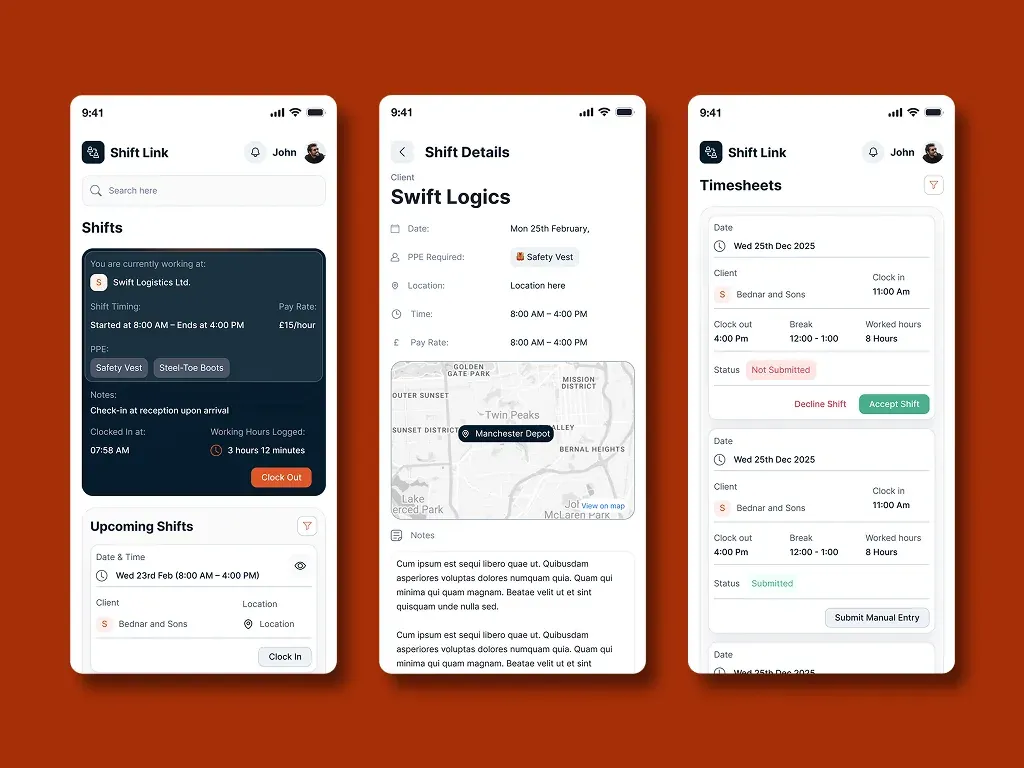
Designed one data model connecting worker records, compliance status, shift eligibility, and payroll. It includes the mobile clock-in flow with GPS and facial recognition.
- 03
Build
Built the platform on Next.js for web and React Native for mobile, backed by Supabase. The UK Right-to-Work API checks documents and tracks expiry on its own.
- 04
Launch
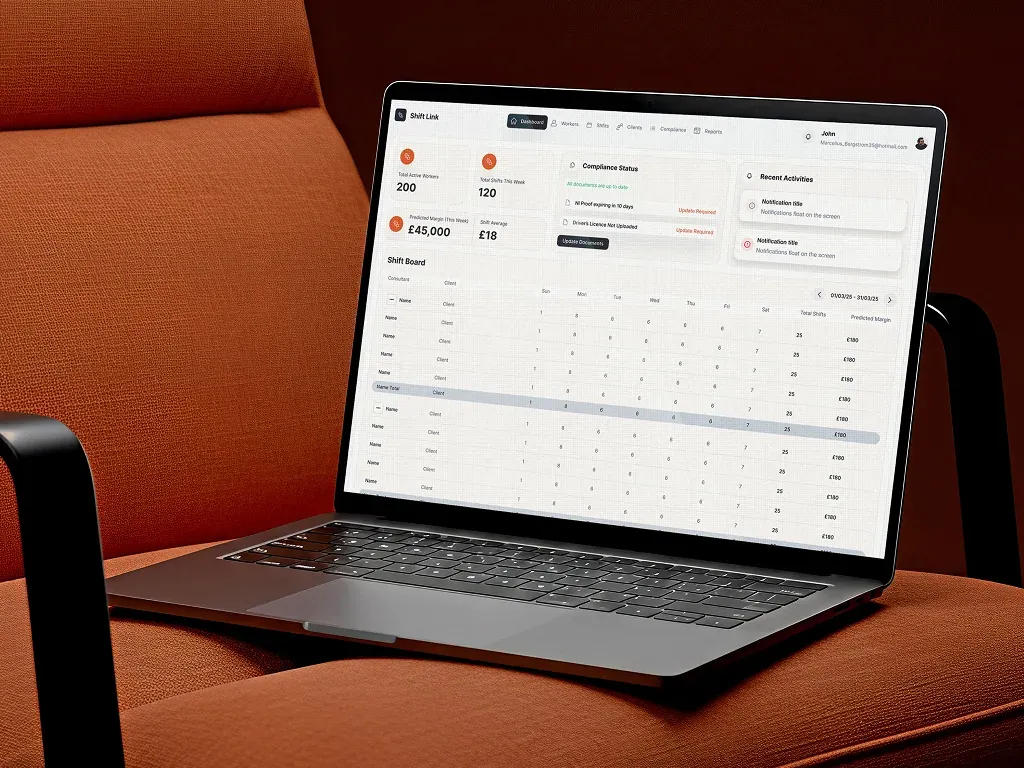
Deployed through CI/CD pipelines to Vercel. Live compliance dashboards and alerts serve consultants managing hundreds of active workers across many sites.
- 05
Run
Kept refining the AI checks and margin reports as the firm grew to more sites and clients.
What we built.
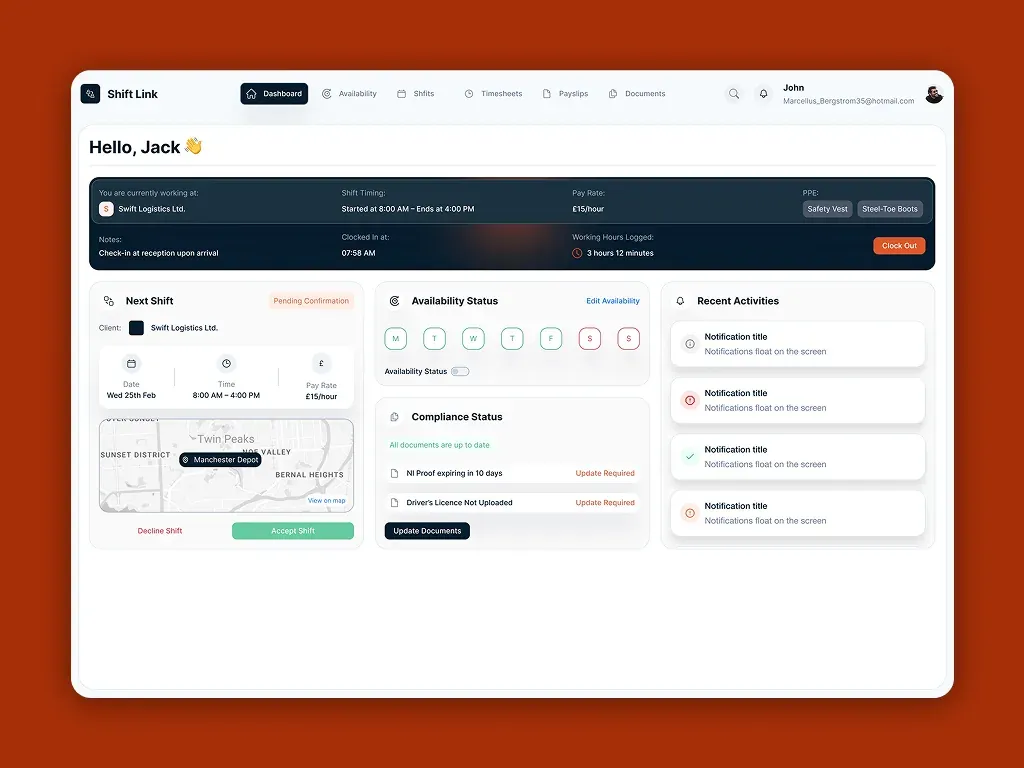
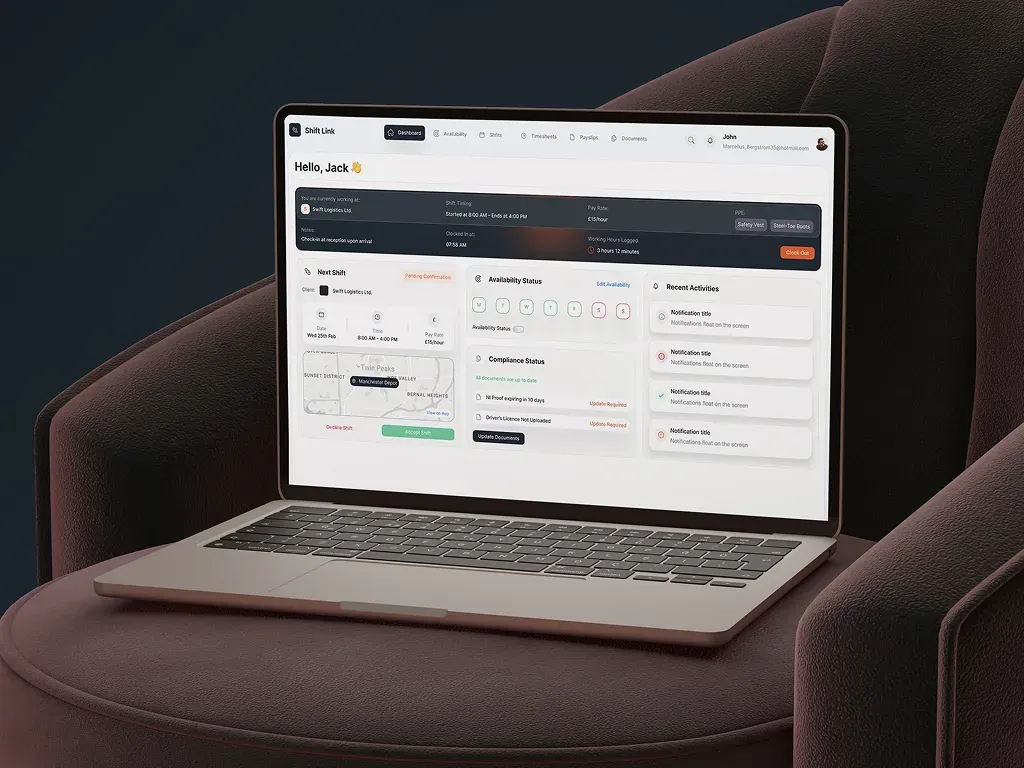
We built a cloud platform with web and mobile access. It handles the full workforce lifecycle: registration, compliance checks, shift scheduling with eligibility logic, payroll, margin forecasts, and analytics. Consultants get real-time dashboards and automated alerts, so compliance gaps surface before they become problems. Workers clock in with GPS and facial recognition. Documents are checked and tracked for expiry on their own.
- OnboardDocuments go in through the app.
- VerifyUK Right-to-Work API checks the documents and stores the expiry date.
- Score eligibilityCompliance status, certifications, and expiry dates decide which shifts a worker can take.
- Clock inGPS and a face scan confirm it's the right worker, on-site.
- PayConfirmed hours flow into payroll and margin reporting the same day. There's no separate step to reconcile what a worker clocked against what the client gets billed for.
A worker with an expired document never sees an eligible shift to book.
Tech stack
- Next.js (web)
- React Native (mobile)
- Supabase (Auth, Realtime, Database, Storage)
- Vercel
- CI/CD pipelines
Integrations
- UK Government Right-to-Work API
- Google Contacts API
Reported results
70%
less manual compliance verification
If your compliance checks still live in a spreadsheet, you're finding gaps after a shift starts, not before. Connecting onboarding, scheduling, and payroll into one system is what makes compliance enforceable instead of retrospective.
