


Workflow automation for firms: the quote, the close, the renewal and the check that has to block
Three jobs eat your firm's month. Getting a quote or an engagement letter out while the prospect still cares. We build all three around Karbon, Canopy, Applied Epic, Bullhorn or whatever you run, with your partner, your producer and your recruiter still signing.
- 4.8 on Clutch across 22 reviews
- PremiumAudit.io: audit cycle cut 75%, calculation errors cut 95%
- In production for SmartREI, Tankaware, ZyloBase, KiwiWrite
What you get
3 things that decide this
- 01Quotes, proposals and first screens that go out inside the window your prospect actually gives you, built from the intake data you already captured rather than typed again by a producer or a partner.
- 02Recurring work that runs whether or not somebody remembers: close checklists that stop at exceptions, posting agents with reviewer sign-off, renewal and remarketing sequences ninety days out, and redeploy outreach timed off the assignment end date.
- 03A compliance check that blocks the next step instead of reporting on it afterwards. Shift Link, the workforce-compliance platform we built, reports 70% less manual compliance verification once the check moved in front of the booking.
From the first answer to the recurring work to the gate that stops it
These three stations sit between the document arriving and the numbers your partners read. Pick the system you'd want written to; Xero, Canopy, AMS360, EZLynx, HawkSoft, JobAdder, ADP and the rest follow the same pattern to the depth your account exposes.
Station 01 · The quote, the engagement, the first screen
- Today
- A commercial quote takes 25 to 90 minutes of your team's work and the prospect has moved on inside 15. Your engagement letter gets rebuilt from last year's, and a candidate waits three days for a first call.
- What we automate
- Intake to quote, with the rater filled from what already arrived. Proposals and engagement letters built from that same intake data, with your sign-off. First-pass screening and self-scheduling for candidates.
- What stays human
- Coverage judgment, the carrier pick, the scope of the engagement and the shortlist stay with your producer, partner and recruiter. Software prepares the file; you decide.
Writes to QuickBooks OnlineEngagement and its fee schedule to the customer record once you approve it.
Station 02 · The recurring work: close, renewal, redeploy
- Today
- Your close slips because someone is waiting on a bank feed and a client who hasn't replied. Your renewal list is whoever the CSR remembers. Your contractor finishes on the 30th and hears from nobody.
- What we automate
- Close checklists that run the routine steps and stop at exceptions. Posting agents with a reviewer sign-off. Renewal and remarketing sequences ninety days out, and redeploy check-ins timed off the assignment end date.
- What stays human
- Reconciliations, journal entries, the remarket decision and the redeployment offer are approved by a person. A checklist can chase. It can't sign.
Writes to QuickBooks OnlineRoutine entries and reconciliation status posted after your reviewer accepts them.
Station 03 · The compliance gate
- Today
- Right-to-work checks, credentials and expiry dates sit in a spreadsheet last opened in March. Your Friday afternoon booking gets checked on Monday, if anyone remembers.
- What we automate
- A gate in front of the action. Eligibility, credential and expiry checks block the offer. Statutory clocks get a countdown and an owner, and a governance record lists every AI system, its version, and the inputs and outputs it logged.
- What stays human
- Your compliance lead sets the rules and handles every exception. A blocked action stays blocked until a named person overrides it, and that override is logged.
Writes to QuickBooks OnlineNothing; eligibility doesn't live on the ledger.
Intake and extraction come before these, and integration and reporting come after. The firms hub walks the whole chain.
Four workflows, and what each one plugs into
The intake-to-quote pipeline
US Tech Automations timed a commercial quote at 25 to 90 minutes of agency work in 2026, against roughly 15 minutes of prospect patience. We close that gap by splitting the job. Extraction, rater fill and the proposal document are machine work. Coverage judgment and the carrier pick stay with your producer, who now spends the time on the part that wins the account.
Independent insurance agencies →
Close checklists and posting agents with sign-off
Your close is late because you're waiting on a bank feed, a client and a reconciliation nobody started. We build the checklist as software: routine entries proposed and posted once your reviewer accepts, feeds pulled and matched, the same three exceptions surfaced early rather than on the 14th, and a status board your partner reads instead of asking.
Accounting and CPA firms →
Renewal, remarketing and redeployment sequences
Retention is cheaper than new business, and it's the first thing a busy CSR or recruiter drops. We build sequences off your book and your ATS: renewals worked ninety days out with the remarket prepped, redeploy check-ins timed off the assignment end date, and outreach drafted for a person to send. Your team approves; the software does the chasing.
Staffing and recruiting agencies →
Compliance gates that block instead of reporting
A dashboard tells you about the lapsed credential on Tuesday. A gate stops the booking on Friday. Shift Link checks documents, right to work and expiry dates before a shift is offered, and reports 70% less manual compliance verification since. The same shape works for a bind, a placement, a payroll run or a statutory clock on a claim.
Shift Link case study →
Karbon, your AMS and your ATS all ship automations. They're generic, and your firm isn't.
Practice management, agency management and applicant tracking systems all have a workflow builder now, and for the standard shapes you should use it. A recurring task, a stage change that fires an email, a reminder before a due date: those are worth turning on this afternoon, and we'll say so.
What stops them is your firm's own rules. Your close checklist reflects how your partners divide review, not how a vendor imagined it. Your renewal cadence depends on the carrier, the line and how the last one went. Your eligibility gate has to read a credential expiry from one system and block a booking in another, and no builder inside one product reaches across two. Then there's sign-off. A generic automation either fires or it doesn't, and what your firm needs is a step that pauses, shows a person exactly what it wants to do, and waits.
So we build on top of what your vendor gives you rather than replacing it. Your vendor's builder keeps the simple recurring work. We take the sequences that cross systems, carry judgment, or have to stop and ask.
- 01Turn on your vendor's own automations first; we'll point at the ones worth it during the audit.
- 02Cross-system sequences, firm-specific rules and anything needing sign-off are where a custom layer earns its keep.
- 03Every automated step logs what it did and who approved it, so a reviewer or a regulator can read it back.
The professional signs, the model reads but never does the arithmetic, and the compliance gate blocks. We write that down first.
A firm's work is a regulated act: the CPA signs the return, the producer binds the policy, the adjuster determines the claim, the recruiter decides the placement, and the regulator expects to see how a model was used and governed. So every build starts with a one-page map of what the software reads, what it proposes, and where a professional signs.
What follows is simple to state, and we put it in writing. Documents are read and extracted by the model; numbers are computed by code and reviewed by a person. Compliance checks are gates that stop the next step, not dashboards that mention it later. Client data is scoped to the engagement, never firm-wide, with written no-training terms you can produce. And every automated touch is logged so a reviewer, an auditor or a regulator can read what happened, and when.
- 01Returns, binds, determinations and placements signed by the professional; the software prepares.
- 02Extraction by the model, arithmetic by code, review by a person; compliance gates that block.
- 03A gate that blocks stays blocked until a named person overrides it, and every override is logged with a reason.
“They will treat your vision like their own and build it that way.”
Ron Klabunde · Founder, SmartREI ↗
“I am extremely happy with the results and would highly recommend Hashlogics to anyone.”
Daniel Khin · CEO, PremiumAudit.io
Some of the systems we have shipped
- AuditFree. We time one quote or one placement end to end, read your last close checklist against what actually happened, and count the compliance checks that ran late.
- DiagnoseWe map the path into your practice, agency or ATS system and accounting, and sit with the people who do the intake and the close for an afternoon.
- BuildFixed price per milestone from the Blueprint. Tested on your real documents, quotes and placements, under NDA.
- RunMonitoring, a named engineer, and the first two months of maintenance free.
Best fit: a firm with ten or more staff, a system you've outgrown in places, and a recurring process you can feel at month end or renewal season. Not a fit yet: a solo practitioner who needs a practice-management app, and we'll say so. You can stop after any stage; the audit note is yours either way.
Before you book
01Will software send a quote, bind a policy or make a placement on its own?+
No. Every one of those is a judgment your professional is licensed and paid to make, so the layer stops in front of it. A quote is prepared and waiting when your producer opens it. A shortlist is ranked with the reasoning shown. A journal entry sits in a queue until your reviewer accepts it. What runs unattended is the chasing, the assembling and the checking.
02How much of a close can actually run without us?+
The routine half, in most firms we audit. Bank feeds pulled and matched, recurring journals proposed, intercompany and prepayment schedules applied, the same three exceptions surfaced on day two instead of day twelve. What stays with your people is every judgment call and every sign-off. Firms usually feel it as the close finishing on a predictable day rather than a heroic one.
03Our renewal process is different per carrier and per line. Can it handle that?+
Yes, and that variation is exactly why a vendor's built-in automation doesn't fit. We encode your cadence per carrier and per line, so a commercial account that needs a remarket at ninety days behaves differently from a personal-lines renewal that needs a call at thirty. Your CSR sees the queue for this week with the prep already done.
04What does a compliance gate actually block?+
Whatever you tell it to, and blocking is the whole point. On Shift Link an ineligible worker cannot be offered a shift, which is why manual compliance verification fell 70%, as Shift Link reports. In an agency the same shape holds a bind until a document is on file. In a firm it stops a payroll run with a lapsed right-to-work check. Your compliance lead sets the rules and owns every exception.
05Does the NAIC AI bulletin change what we're allowed to automate?+
It changes what you have to be able to show, more than what you can build. In December 2023 the NAIC adopted its AI model bulletin, asking for a written AI systems program, and 24 states had adopted it as of March 2025 (Quarles). For your build that means a list of every AI system in use, a version for each model and prompt, logged inputs and outputs per decision with human overrides recorded, and proof that testing happened on a schedule. We build that record in rather than writing it afterwards.
06We already pay for automations in Karbon and our AMS. Why add a layer?+
Use those first, and we'll tell you which ones to turn on. A custom layer earns its place on the sequences that cross two systems, carry your firm's own rules, or have to pause for a signature. A vendor's builder can't read a credential expiry in one product and block a booking in another, and that's usually the workflow costing you the most.
07Is this the whole of what you do for firms?+
No. Document collection, extraction and routing sit on the document intake page, and integration, portals and partner dashboards sit on the custom software page. The firms hub walks the whole chain from the client document to the partner's numbers, and the audit tells you which piece pays first at your size.
A senior engineer, not a sales rep
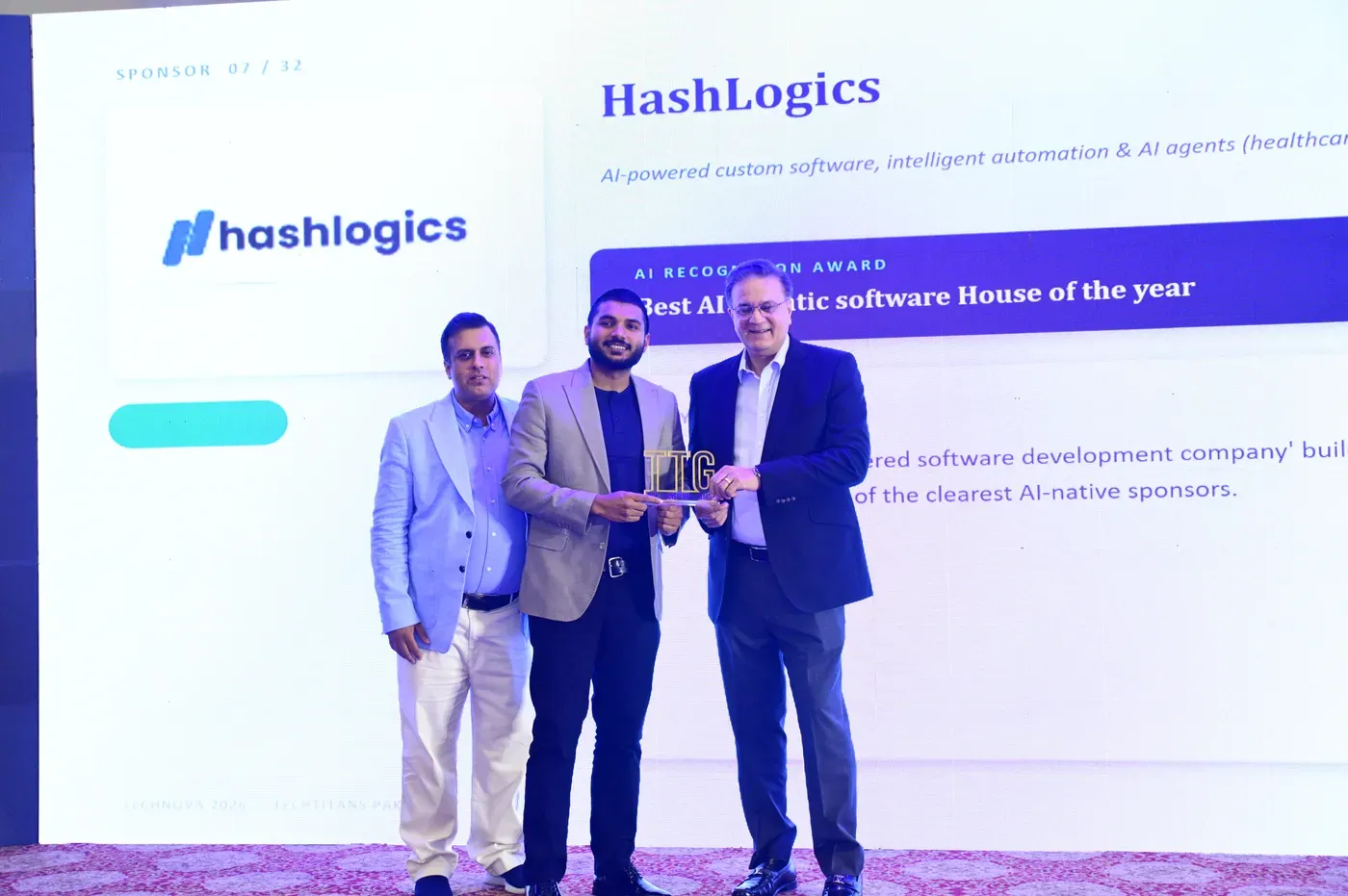
Abdul Basit founded Hashlogics in 2017, and the team runs from Lahore with a US LLC. Clients rate the work 4.8 on Clutch across 22 reviews, and in 2026 it was named Best AI-Native Software House of the Year at TechNova. PremiumAudit.io, the AI premium-audit automation platform, IRS Escape Plan, the AI tax-strategy platform, and Shift Link, the workforce-compliance platform, are three of the systems we built and can show you.
Your audit call is with an engineer who has read client document queues, quote logs and compliance spreadsheets like yours. Bring last month's numbers if you have them, and we'll work from those.
- NDA before the first conversation.
- No pitch on the call. A note you could hand to another firm.
- Fixed price per milestone from the Blueprint, so the number isn't a guess.
Go deeper
- AI, automation and custom software for firms →The whole chain, from the client document to the partner's numbers.
- Document intake automation for firms →Collection, extraction and routing before this layer starts.
- Custom software for firms →Integration, portals and the numbers a partner reads.
- Workforce compliance →The gate, the expiry date and the audit trail.
- How to cut quote turnaround in an insurance agency →Split the quote into machine work and judgment.
- Is AI automation worth it for an accounting firm? →Where it pays, and where a practice-management app is the better buy.
- A quote takes 25 minutes and the prospect gives you 15 →Where the minutes go, and which ones a machine can take.
- Recruiter admin hours calculator →What a desk spends on admin before it spends on people.
