

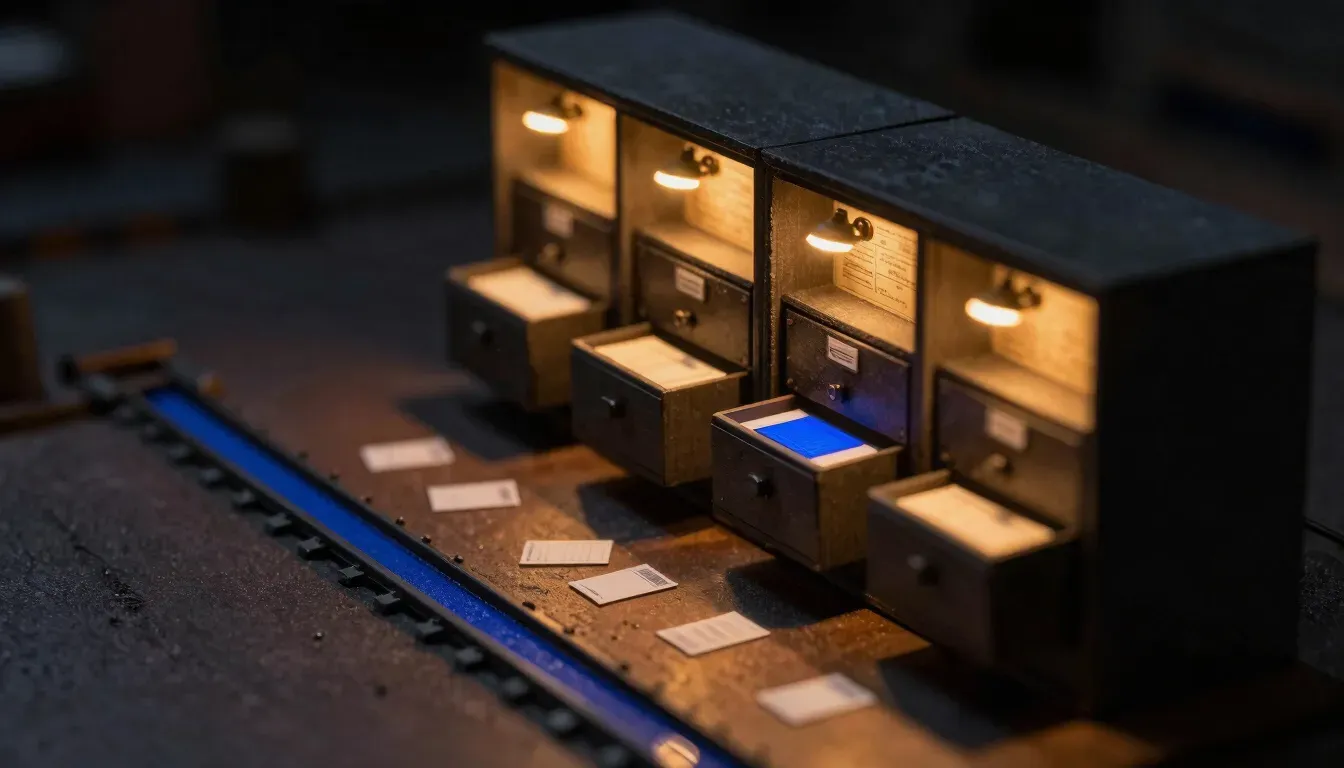
A mock recall is a data drill
The exercise looks like a compliance ritual. It is really a stopwatch test on one question: which batches used this lot, and where did they go?
Key takeaways
4 things that decide this
- 01A mock recall measures retrieval speed. The FDA's FSMA 204 rule expects traceability records on request within 24 hours.
- 02Paper batch records fail the clock quietly. The data exists, but assembling it means paging through binders batch by batch.
- 03Most processors do not need a new ERP to pass. They need digital capture at the points where lot codes change hands.
- 04Hashlogics has replaced paper inspection logs across hundreds of fuel sites. The same capture pattern applies to batch records.
The question is simple. The lookup is not
Every mock recall starts the same way. Pick one ingredient lot. Trace it forward into every batch that used it, and every customer who received those batches. Then trace it backward to the supplier. The question fits in one sentence.
The answer usually does not. In a plant that runs on paper batch records, the trace means pulling binders, reading handwritten lot codes, and cross-checking shipping logs. Teams that practice can do it in hours. Teams that do not can take days, and a real recall does not wait for either.
FSMA 204 put a deadline on the answer
The FDA's food traceability rule, FSMA 204, took effect in January 2026. For foods on the traceability list, it requires key data elements at each critical tracking event, and it expects those records within 24 hours of a request. The agency has phased enforcement for some firms out to 2028, but inspectors already ask the question.
Trade coverage in Food Engineering has called the 24-hour record turnaround the hardest operational piece of the rule. That is a data-retrieval requirement written into law. A binder can hold the records and still fail it.
The records exist. That is the trap
Paper feels compliant because nothing is missing. Every batch sheet was filled in, every receiving log signed. An auditor can, in principle, reconstruct any trace. So the system passes casual inspection for years.
The failure only shows under time pressure. A recall compresses weeks of clerical work into a day. Staff who normally run the line stop running it to page through records. The cost of paper was always there. The deadline is what makes it visible.
Capture the lot code where it moves, not in a binder later
The reflex answer is a food ERP, and for a mid-size processor that is often a long, expensive project. The narrower fix is digital capture at the handful of points where lot codes change hands: receiving, batching, packing, shipping. Each event becomes a record the moment it happens.
Once events land in a database, the trace is a query. The mock recall stops being a drill for the whole plant and becomes a report someone runs. The binders can stay for everything else. The recall question is the one that needed software.
Paper records, replaced at the point of work
TankAware replaced paper inspection logs across hundreds of fuel sites with records captured at the point of work. A recall trace needs the same move: capture the event when it happens, and the 24-hour question answers itself.
What processors ask
01How fast must FSMA 204 records be produced?+
Within 24 hours of an FDA request, for foods on the traceability list. The rule took effect in January 2026, with enforcement phased for some firms to 2028. The 24-hour window is the operational bar to plan against.
02Does a mock recall have a passing time?+
Auditors and major buyers commonly expect a complete two-way trace within hours, not days. Whatever your certification scheme requires, the FDA's 24-hour records window is the ceiling worth practicing against.
03Do we need a full ERP to comply?+
No. Compliance needs lot-level events captured digitally at receiving, batching, packing, and shipping. That can be a focused system that feeds your existing tools, which is a much smaller project than replacing them.
04What breaks first in a paper-based trace?+
Handwritten lot codes. They get transcribed wrong, skipped on busy shifts, or recorded in a format the next department cannot match. The trace then stalls at the handoff between records, which is exactly where digital capture helps most.
Related
- Industrial: AI, automation and custom software →The industry hub this page belongs to.
- Business process automation →Automation that runs unattended, on your own infrastructure.
- Manufacturing software development →Systems for plants where the line cannot stop.
- TankAware: paper inspection logs replaced →Field records captured digitally across hundreds of sites.
