

Food and beverage software built for the 24-hour trace
FSMA 204 expects your traceability records within 24 hours of a request, and a plant keeping batch records in binders needs about a week. We build the layer around what you already run: lot identity captured at receiving, transformation and shipping, batch records digitised where they're already written, supplier COAs chased by agent, and a mock recall you can run monthly with a stopwatch on it.
- 4.8 on Clutch across 22 reviews
- PremiumAudit.io: audit cycle cut 75%, calculation errors cut 95%
- In production for SmartREI, Tankaware, ZyloBase, KiwiWrite
What makes food and beverage different
3 things that decide this
- 01FSMA 204 requires traceability records for foods on the FDA's Food Traceability List, delivered as an electronic sortable spreadsheet within 24 hours of a request. Its compliance date was January 20, 2026, and FDA has announced enforcement discretion for many firms until 2028.
- 02The rule turns on Key Data Elements and Critical Tracking Events: what lot arrived, what batch consumed it, and where that batch shipped. Paper holds those facts perfectly well, and what paper cannot do is answer a query about them in an afternoon.
- 03Auditors already treat trace speed as a proxy for control, so a slow mock recall shows up in your SQF and BRCGS audits and in FDA 483 observations long before enforcement does. Most processors under 200 employees sit between spreadsheets and an ERP quote they can't justify, and the workable answer is a capture layer over what's already running.
Sector context
The numbers your build has to answer to
Jan 2026
FSMA 204 compliance date for foods on the FDA Food Traceability List
24 hrs
Deadline to hand FDA an electronic sortable spreadsheet of traceability records
2028
FDA enforcement-discretion window for many firms. Audit schemes already cite the rule
42,708
US food and beverage processing establishments (Census County Business Patterns, 2022)
Eight places a processor leaks time and margin, and what we put in each one
Eight areas our audits keep finding in processing plants and co-packers, in the order a lot meets them. Each links to the page that owns it.
The order typed once, by nobody
Customer orders and supplier confirmations arrive by email and PDF and get typed into the ERP, then again into a production sheet. An intake agent reads the document, matches items and lots against your master, creates the order, and queues what it can't match rather than guessing at an item code.
Custom software for industrial operators →
Traceability capture at the three points that matter
Lot numbers recorded at receiving, at transformation and at shipping, so a trace becomes a query in both directions. The output matches what an FDA records request asks for: sortable, electronic and complete, rather than a week of somebody reading pages in three binders.
Food traceability software for small processors →
Batch records digitised where they're written
Your paper traveler becomes a structured record without changing what operators write down, and a recipe change propagates once instead of by hand across copies. The raw capture stays immutable, and a correction posts as a new entry so the original still shows what was true that shift.
Shop-floor automation →
Supplier documents and COAs chased by agent
Certificates of analysis get chased by email and filed in binders, and the missing one surfaces during an audit. We parse each COA into a record tied to the lot it covers, and the system chases what's outstanding so your QA lead isn't the follow-up mechanism.
Custom software for industrial operators →
A mock recall you run monthly with a stopwatch
Your last drill was timed by someone who wanted a good number. We build the drill into the system: pick a lot, run the trace both ways, record the elapsed time and where the joins broke. When the real request lands, your drill is already the procedure.
Food traceability software for small processors →
Label, scale and checkweigher data you already generate
Your labellers, checkweighers and scales already hold half your lot data, and most of it dies on the device. We pull from what they expose, including file drops where there's no API, so the capture rides the workflow your operators already run instead of adding a step to it.
Shop-floor automation →
The glue layer instead of the ERP
Food ERPs are built for bigger plants than yours and priced accordingly. We build the middle: capture, trace and reporting over the spreadsheets and systems you already run, live on one line first, and maintained after launch rather than handed over and forgotten.
Food ERP vs custom traceability →
Every customer and every plant sees its own numbers
Retail customers ask for trace data your ERP doesn't expose, and a co-packing line crosses customer boundaries every shift. We build the portal off the record you already keep, with each customer isolated. WAIQ, the operations and execution platform we built for a multi-site business, is that shape.
Custom software for industrial operators →
From the lot in to the trace, and where the machine takes over
Four stations of a lot's life through your plant. Pick your system to see what each step writes back; Fishbowl, Katana, Aptean, Deacom or your own ERP and spreadsheets follow the same pattern to the depth your account exposes, and we confirm that during the audit.
Station 01 · The lot that arrives with paperwork
- Today
- A supplier delivery lands with a packing list, a lot code and a COA that may or may not be in the envelope. Your receiver writes the lot on a sheet, and the COA gets emailed to QA and filed wherever there's room.
- What we automate
- Receiving capture records the Key Data Elements at the moment the lot arrives: supplier, lot code, quantity, date and location. Each COA is parsed and tied to the lot it covers, and anything missing goes on a chase list the system works rather than your QA lead.
- What stays human
- Accepting a delivery and releasing a lot to production stay with QA. A lot without its COA is held, and the software never releases it to make a queue look clean.
Writes to NetSuiteItem receipt with lot and expiry recorded against the purchase order.
Station 02 · The batch that consumes the lots
- Today
- Operators fill in a paper batch record through the shift, and it gets typed up later by whoever is still there. Which incoming lots went into which batch is accurate on paper and unqueryable anywhere else.
- What we automate
- Your batch record is captured where it's already written, on a tablet or a scan, and the consumption link between incoming lots and the batch is recorded as it happens. Recipe versions carry through, and the raw capture is immutable once taken.
- What stays human
- Deviations, holds and rework decisions belong to QA and your production lead, with the reason written down. We record and flag; nobody's batch gets released by software.
Writes to NetSuiteAssembly build recording the components and lots consumed.
Station 03 · The lot that ships
- Today
- Shipping records live in the office, receiving logs live in a binder by the dock, and batch sheets live on the line. Each is accurate, and none of them joins to the next without a person reading pages in three places.
- What we automate
- Shipping capture records which finished lot went to which customer, on what date, on what pallet, so the forward trace closes. Label, scale and checkweigher data is pulled in where the devices expose it, including via file drops.
- What stays human
- Releasing a shipment and deciding what a customer may see stay with your team. Co-packing boundaries are enforced in the data model, not by everyone remembering them.
Writes to NetSuiteItem fulfilment with the lot and customer recorded.
Station 04 · The trace, in an afternoon rather than a week
- Today
- An FDA request or a customer complaint arrives and your team clears a room. Somebody reads receiving binders, somebody else reads batch sheets, and the answer takes a week that you don't have.
- What we automate
- A trace runs as one query in both directions: this lot came from these suppliers and went to these customers. The output is the electronic sortable spreadsheet the request asks for, and the same query powers a monthly drill you time with a stopwatch.
- What stays human
- A recall decision, a customer notification and what you tell FDA are yours and your QA director's. We produce the record and the timing; the call is never automated.
Writes to NetSuiteTrace report generated against the lot records held in NetSuite.
Each station links to the page that owns it. A hold, a release and a recall decision stay with QA at every one.
We don't replace your ERP or your spreadsheets. We build what they won't.
Most processors we talk to sit in the same place: spreadsheets that work, a small ERP or an accounting package, and a food ERP quote nobody can justify against this year's margin. Replacing all of it to satisfy a traceability rule is the failure mode here, because the records you need already exist in your receiving logs, your batch sheets and your shipping documents. What's missing is capture at the three moments lot identity changes hands, and a store that joins them.
So the access model matters more than the badge on the login screen. NetSuite, Fishbowl, Katana, Aptean, Deacom and your own ERP or spreadsheets each expose items, lots, receipts and shipments through APIs, exports or file drops to different depths, and some gate that access behind a plan or a partner programme. We confirm exactly what your account exposes during the audit and design to it, and where the API stops we build a scheduled extract or a reviewed queue your staff clear with one click instead of re-typing.
- 01Lot, batch and shipment write-back into your ERP, with the source document attached.
- 02Your ERP stays the system of record for inventory and cost; where it disagrees with us, it wins.
- 03Start on one line. A plant-wide cutover is how traceability projects die, and we won't propose one.
No software runs a line, releases a lot or dispatches a truck without a person. We write that down first.
A plant, a warehouse and a fleet sit under rules that don't bend for software: a line stops on a person's call, a food lot is released or held by QA, a load is tendered by a dispatcher, and the record (the traveler, the batch record, the POD) has to survive an auditor or a recall. So every build starts with a one-page map of what the software records, what it only proposes, and where a person signs.
What follows is simple to state, and we put it in writing. Alerts are designed to be trusted, which means few, specific and escalated; an alarm that cries every hour trains people to ignore it. Records are timestamped, immutable and gap-honest. Invoices, releases and tenders are approved by the person who owns them. And every automated touch is logged so an auditor, a customer or a regulator can read what happened, and when.
- 01Releases, tenders and invoices approved by a person; the software assembles, routes and chases.
- 02Alerts few and trusted; records immutable and gap-honest.
- 03A batch record, a COA and a release decision are immutable once captured; a correction is a new entry, and a gap is recorded as a gap.
“They will treat your vision like their own and build it that way.”
Ron Klabunde · Founder, SmartREI ↗
“TankAware has revolutionized how we manage petroleum sites. The real-time data and automation have exceeded expectations.”
Blake Sutherland · President, Sutherland Excavating Ltd.
Some of the systems we have shipped
- AuditFree. We time how fast your team traces one lot end to end today, read where the joins break, and check what your ERP, labellers and scales will and won't expose.
- DiagnoseWe map the path into your ERP, TMS or WMS and accounting, and walk the floor or sit with dispatch for an afternoon.
- BuildFixed price from the diagnostic. Tested on your real orders, jobs and loads, under NDA.
- RunMonitoring, a named engineer, and the first two months of maintenance free.
Best fit: an operator with an ERP, TMS or WMS you've outgrown in places, more than one site or shift, and a month-end you can feel. Not a fit yet: a ten-person shop that needs its first system, and we'll say so. You can stop after any stage; the audit note is yours either way.
Before you book
01What does FSMA 204 actually require, and by when?+
FSMA 204 requires firms handling foods on the FDA's Food Traceability List to keep Key Data Elements for defined Critical Tracking Events. On request, FDA gets them as an electronic sortable spreadsheet within 24 hours. Its compliance date was January 20, 2026, and FDA has announced enforcement discretion for many firms until 2028. The date that matters commercially is sooner: SQF and BRCGS audits and large retail customers already ask about trace speed.
02Can we hit the 24-hour requirement without replacing our systems?+
Yes, in most plants we see. Your records already exist in receiving logs, batch sheets and shipping documents. What's missing is capture at the moments lot identity changes and a store that joins them, and we build that layer over your existing label, scale and accounting systems. An ERP replacement is a different project, and usually not the one you need first.
03We run a co-packing operation. Does multi-customer traceability change the build?+
It changes the data model rather than the approach. Every lot carries a customer boundary, so a trace has to resolve completely for one customer without exposing another's volumes or recipes. That's a permissions and schema decision made on day one, and retrofitting it after a shared table exists is expensive, which is why we ask about co-packing before scoping anything.
04Will this disrupt the line during rollout?+
The build starts on one line and rides the workflow you already run. Your operators keep recording what they already record, and the capture points change from paper to a screen or a scan. We run the changeover test outside production hours before anything goes live, because a plant-wide cutover is the failure mode here and we won't propose one.
05Have you integrated with our ERP before?+
Not with yours, and we won't claim we have. What we've shipped repeatedly is the integration problem itself: deciding which system owns each fact, working to the depth an account actually exposes, and building a reviewed queue where the API stops. During the audit we check what your NetSuite, Fishbowl, Katana or in-house system exposes and design to that, rather than to a brochure.
06What does the free Floor-to-Invoice Audit actually involve?+
An engineer times how fast your team can trace one lot end to end, receiving through shipments, then maps the gap to 24 hours. You get your current trace time, where the joins break, and the shortest path to close them, in writing. It's yours whether or not you hire us, and there's an NDA before the first conversation.
A senior engineer, not a sales rep
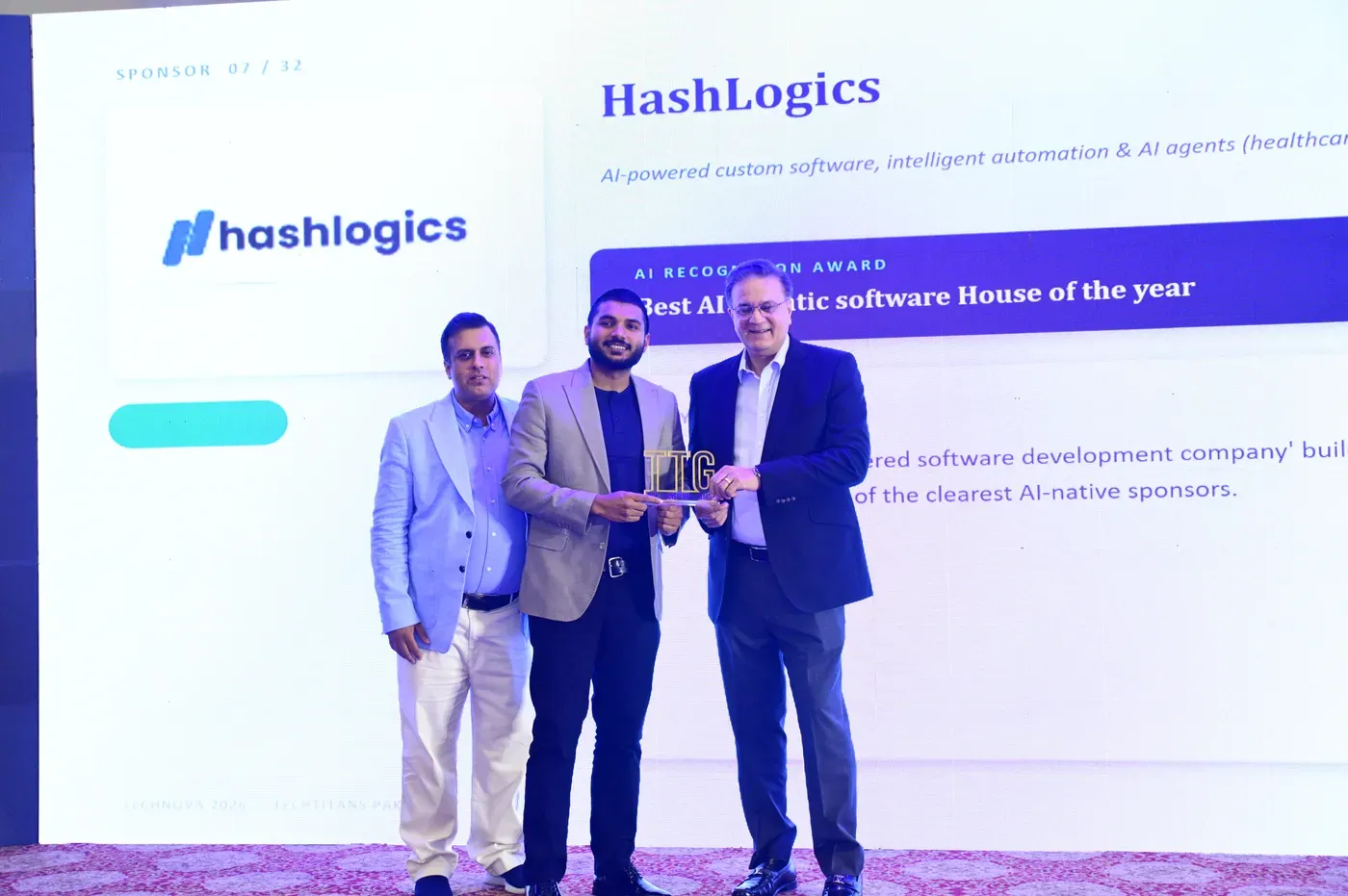
Abdul Basit founded Hashlogics in 2017, and the team runs from Lahore with a US LLC. Clients rate the work 4.8 on Clutch across 22 reviews, and in 2026 it was named Best AI-Native Software House of the Year at TechNova. Shift Link, the workforce-compliance and scheduling platform for regulated staffing, and WAIQ, the operations and execution platform for a multi-site business, are two of the systems we built and can show you.
Your audit call is with an engineer who has read travelers, load boards and month-end reconciliations like yours. Bring last month's numbers if you have them, and we'll work from those.
- NDA before the first conversation.
- No pitch on the call. A note you could hand to another firm.
- Fixed price after the diagnostic, so the number isn't a guess.
More for food and beverage processors
- Industrial: manufacturing, logistics and food →The hub: what we build across plants, warehouses and fleets.
- Manufacturers →The wider plant problem: orders, scheduling, floor visibility and job costing.
- Shop-floor automation →Floor capture, batch records and the data your devices already hold.
- Custom software for industrial operators →Integration, customer portals and the reporting your ERP won't build.
- Best food traceability software for small processors →Real vendors ranked, with us last as the custom option.
- Food ERP vs custom traceability →When the ERP is right, and when the capture layer is.
- Business process automation →The service behind COA chasing and the exception queues.
- AI agents →The agents that read your COAs and chase what's outstanding.
