

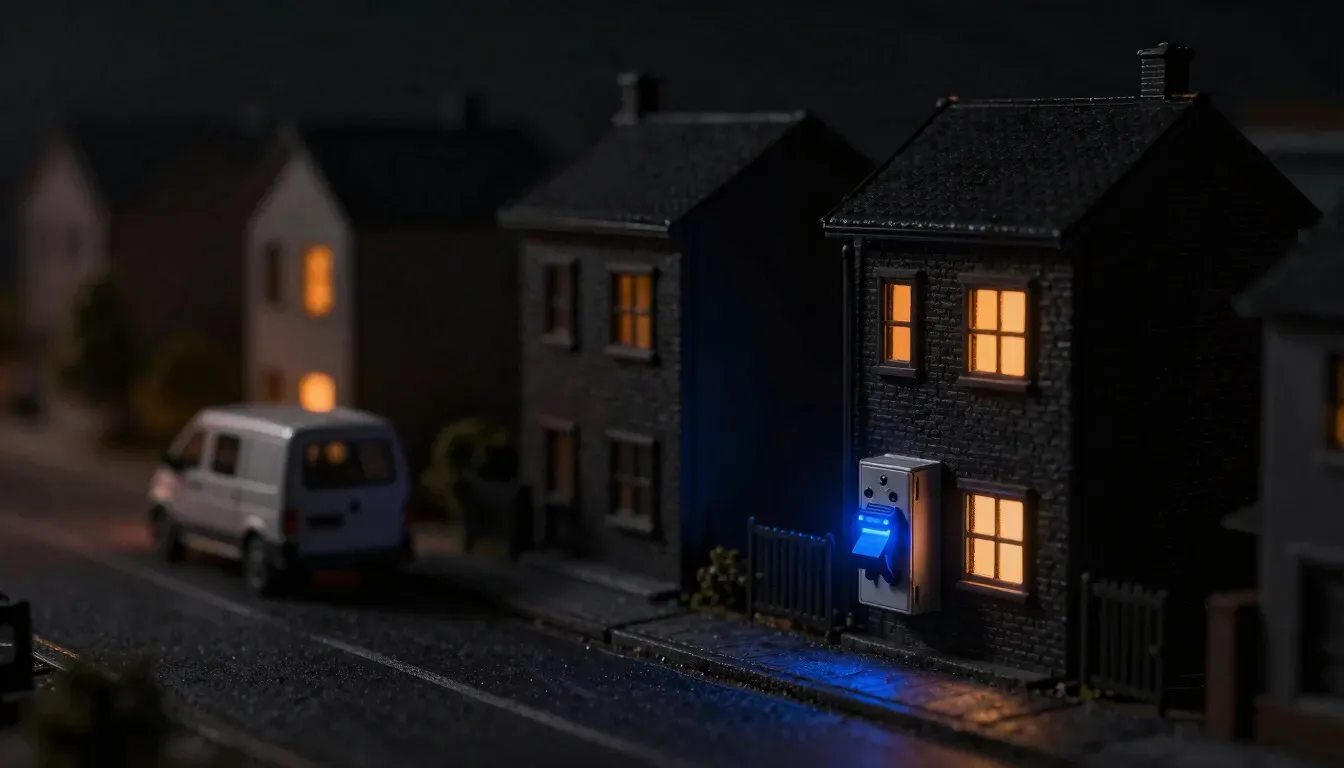
No power vs one dead circuit: how an electrical triage rule should work
The phone rings Friday at 9pm. Half the house is dark, or the whole street is. The caller cannot tell you which. An automated triage rule sorts that call from a tripped breaker before a human has to guess.
The short version
4 things that decide this
- 01Burning smell, a hot panel, a sparking outlet, or water near live equipment are never ranking decisions for you. Any one sends a human to the phone right away, on every intake channel you run.
- 02A whole-house outage where the street is also dark is a utility problem, not a dispatch. Ask first whether the neighbors lost power too, before anything else.
- 03After life safety and the utility check, weigh the circuit affected, then the season, then whether the home runs medical equipment. Each factor only matters once the one before it has cleared.
- 04Run your rule the same way on the phone, a web form, a text, or the tech's own app. It writes its priority and its reason back to ServiceTitan, Housecall Pro, Jobber, or whatever you run, so your morning board reflects the overnight calls before anyone opens a laptop.
Is the street dark, or just the house?
If your dispatch software has one urgent bucket labeled "no power," a caller whose whole street is dark lands in it, and so does a caller with one dead circuit. Whoever answers has to sort them out on instinct, and that works fine until Friday night, when both calls arrive ten minutes apart and your on-call electrician is already on the road.
Ask first whether the neighbors have lost power too. A confirmed utility outage sends your truck out for nothing, and the caller waits on a fix that was never yours to make. ServiceTitan's analysis of 50,000-plus contractor phone lines puts the missed-call rate at 62 percent industry-wide, and CallJolt's data says roughly 8 in 10 callers who reach voicemail never leave a message. If you can't tell a utility outage from a real emergency fast, you eat both the wasted dispatch and the missed call behind it.
What decides the order once the street is confirmed on
Once life safety is cleared and the utility question is answered, check three more things in order. Each one only matters once the one above it has cleared.
First, ask what circuit is affected. A confirmed internal outage points to the main breaker or service entrance, and it outranks one dead circuit every time. Half the house dark after a storm often means one leg of the service failed. Your load calculation can suggest it. A live visit verifies it, and a breaker that won't reset still needs a same-day slot if it feeds a sump pump or anything load-bearing.
Second, weigh the season. Storm season brings surge damage and downed lines, and call volume spiking across a whole area at once signals an external cause. Heat waves push AC load hard enough to trip breakers that never tripped before. Treat every heat-wave trip as a wiring emergency, and you overbook your on-call rotation for what's usually a simple reset.
Third, ask whether the home runs medical equipment. A CPAP machine or a powered wheelchair charger moves a call up your queue even when the circuit looks routine. Nobody volunteers this unprompted, so your rule has to ask, on every channel. Give flickering lights the same care in a house with aluminum wiring: loose aluminum connections are a known fire risk, unlike the same flicker in a copper-wired home.
Which resets are safe to walk a caller through
Some resets are safe to talk a caller through before you book anything, and your rule should say so explicitly. A tripped GFCI or AFCI breaker can usually be reset once, from the panel or the outlet. If it holds, downgrade the call to a routine follow-up. If it trips again right away, that's a data point worth acting on. Flag a repeat trip for same-day dispatch instead of a second attempt, and catch the fault before it becomes a fire.
Rank a dead single outlet, checked against a GFCI reset first, lower than a dead circuit feeding several rooms. None of this replaces your life-safety check. A caller reporting sparking, heat, or smell during a reset attempt escalates right away, before the script says anything else.
How five real calls sort against each other
This is a shape your dispatcher should be able to open, read, and edit without filing a ticket to an engineer.
| The call | Rank | What decides it |
|---|---|---|
| Burning smell from the panel | Human now | Life safety overrides every other factor on the board |
| Whole house dark, the neighbors too | Utility check, not a dispatch | Confirmed external outage; no truck sent until the utility clears it |
| Half the house dead after a storm | Same-day, first slot | Likely a failed service leg; storm season raises the odds it is internal |
| Flickering lights, aluminum wiring | Same-day, first slot | Loose aluminum connections are a known fire risk, not a cosmetic flicker |
| One tripped breaker that will not reset | Next available slot | Localized fault; escalates only if it feeds medical equipment or repeats |
| Home with medical equipment, routine circuit issue | Same-day slot | Occupant risk moves it up even when the fault itself looks minor |
How the rule writes into the board, and what it hands to the estimator
A rule that lives only in one head, or inside a vendor's prompt, breaks the first time you want to change how heat-wave trips score. Keep it as a table your service manager owns instead: rows for call type, season, circuit, occupant flags, and a column for the rank and reason. Run the same table on the phone, a web form, a text, or the tech's app, so a midnight text gets the same triage as a call.
Write the ranked priority and the reason back to ServiceTitan, Housecall Pro, Jobber, or whatever you run, not a raw transcript someone re-reads at 7am. That reason code turns your overnight queue into a morning board a dispatcher can act on in minutes. Your on-call rotation stays a human decision: who is up, who is off, who gets skipped for closing a panel-upgrade job at 11pm. The rule only decides the order calls come in.
Panel-upgrade and EV-charger leads arrive on the same line as emergency calls, and they need a different destination, not a tier inside the emergency queue. A caller asking about a 100A-to-200A service upgrade or a Level 2 EV charger install isn't an emergency. Recognize that language, and route the lead straight to your estimator with the caller's details attached, instead of leaving it buried behind a night of no-power calls.
- 01A rule you can't edit without a support ticket isn't a rule you own.
- 02Estimator leads and emergency calls can share your intake line, but never a queue.
Some of the systems we have shipped
What electrical contractors ask about triage rules
01How does a triage rule tell a utility outage from an internal problem?+
If the caller confirms the street or neighbors also lost power, mark it a utility check, not a dispatch. Don't send a truck until the utility clears it.
02What counts as a life-safety signal on an electrical call?+
A burning smell, a hot panel, a sparking outlet, or water near live equipment. Any of these should send a human to the phone immediately, with no ranking step in between.
03Does a home with medical equipment always jump the queue?+
It moves up within its tier once life safety and the utility check clear, even when the fault looks routine. It won't outrank an active burning-smell call elsewhere.
04Can a caller safely reset a GFCI or AFCI breaker themselves?+
Usually once. If it holds, downgrade the call to a routine follow-up. If it trips again, or the caller reports sparking or smell, escalate to same-day dispatch right away.
05How does storm season change the rule?+
It raises the odds that a partial outage is internal, from surge damage or a failed leg, not routine wear. Watch for call volume spiking across an area — that signals a utility event instead.
06Where do panel-upgrade and EV-charger calls go if they are not emergencies?+
Straight to your estimator, with the caller's details attached, on the same line as emergency calls but never in that queue. Your rule recognizes the language and routes it there automatically.
Related
- AI and automation for plumbing and electrical contractors →Every stage from intake through sales, dispatch and retention.
- Electrical contractor software and AI →The electrician's words: no-power triage, panel and EV jobs.
- Best AI answering services for electricians →How packaged tools compare to a custom build.
- Can an AI receptionist handle no-power calls for an electrical contractor? →The escalation design behind the rule.
