

Elevent
Run live trivia for ten players or a thousand.
Real-time multiplayer trivia platform for corporate events and training.
Key takeaways
4 things that decide this
- 01Hashlogics built Elevent, a real-time trivia platform that runs corporate events from 10 to 1,000+ players at once.
- 02A WebSocket game engine on Socket.IO with a Redis adapter keeps scores and answers in sync across every player.
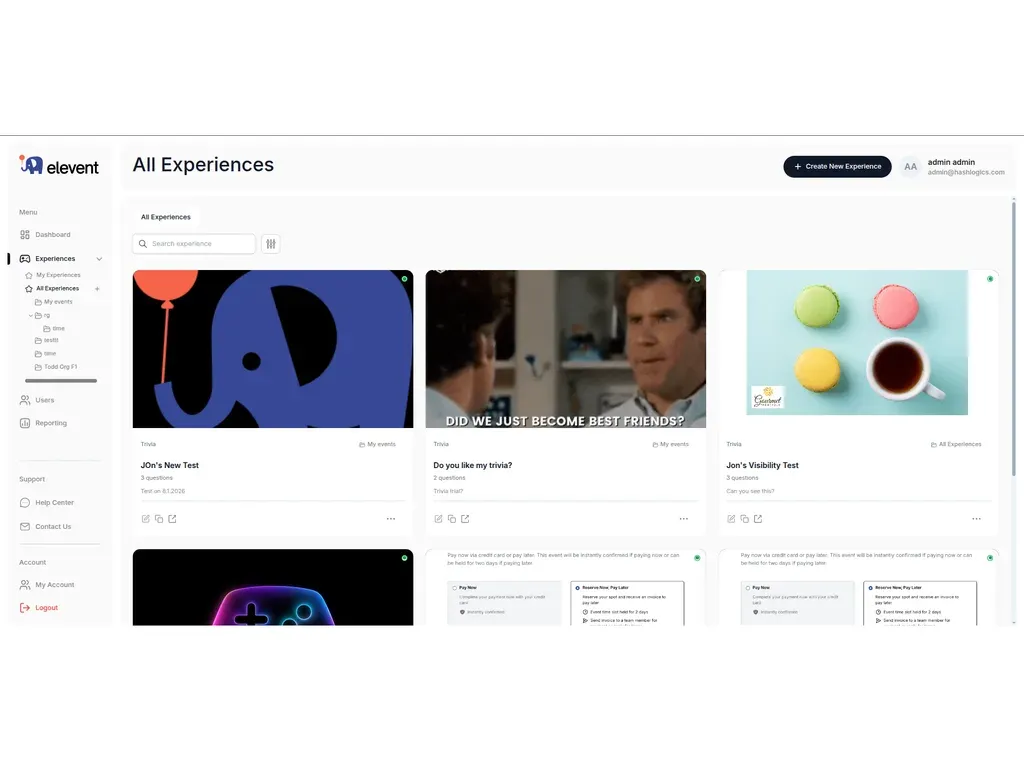
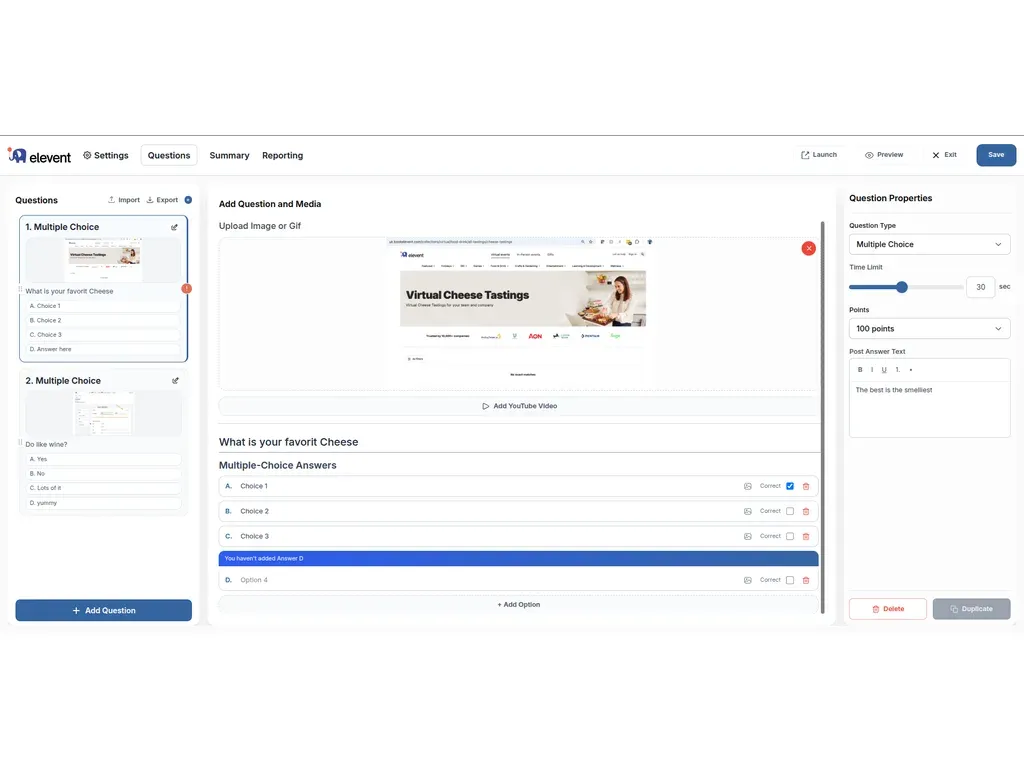
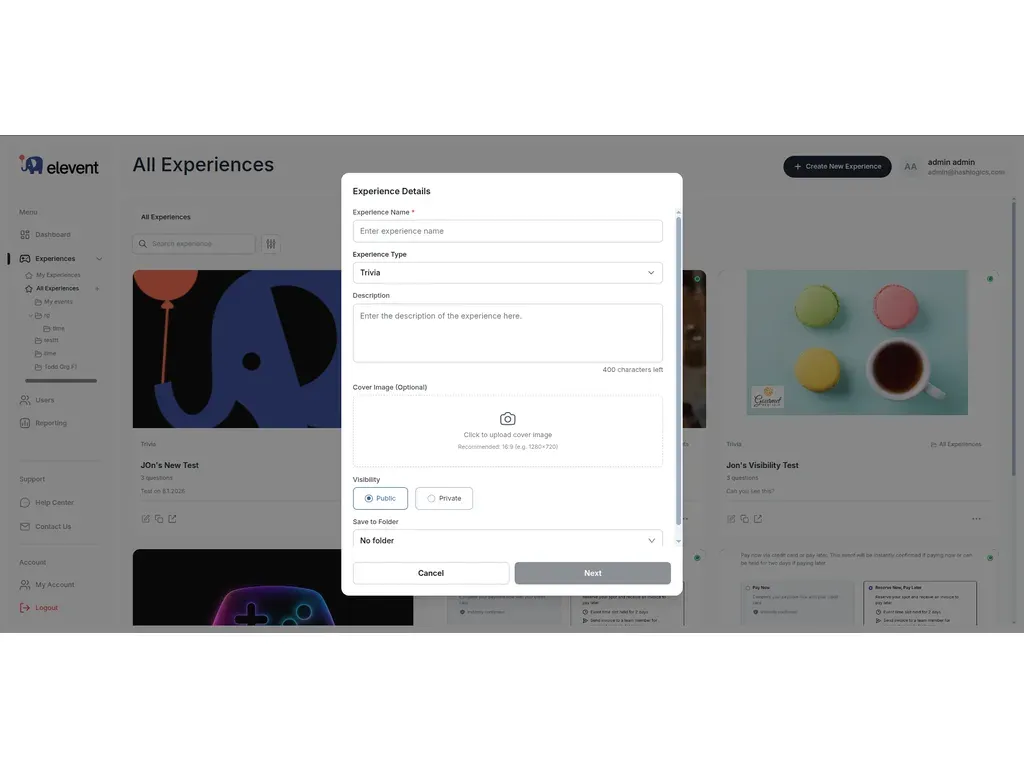
- 03Hosts manage questions, rules, and live sessions from one admin portal, across three game modes.
- 04Containerized AWS infrastructure with CI/CD and New Relic monitoring keeps large events stable.
- Client
- Elevent
- Industry
- Event Technology / EdTech
- Region
- Global
- Engagement
- B2B · SaaS · Real-time multiplayer web app
Elevent lets organizations host live trivia for training, events, and team building. It runs real-time multiplayer games that stay in sync across every player. Events run from 10 to 1000+ players at once. Hosts get one admin portal for questions, rules, and live monitoring. WebSocket infrastructure on AWS keeps scores and answers updating instantly.
The problem we set out to solve.
Manual event coordination slowed engagement and made participation hard to track.
Hosts had no real-time view of participant answers and scores.
Teams needed separate tools for quiz creation, hosting, and analytics.
Legacy tools could not scale to large corporate events or run well on mobile.
What success needed to look like
- Run one live event for 10 or 1,000+ players without lag or dropped scores.
- Replace multiple vendor subscriptions with one platform for creation, hosting, and analytics.
- Give organizers a single admin portal instead of juggling separate tools.
- Make game creation fast enough for a non-technical event coordinator.
How we delivered it.
- 01
Diagnose
Mapped the organizer's workflow across separate quiz, hosting, and reporting tools. Found where manual coordination slowed events down.
- 02
Design
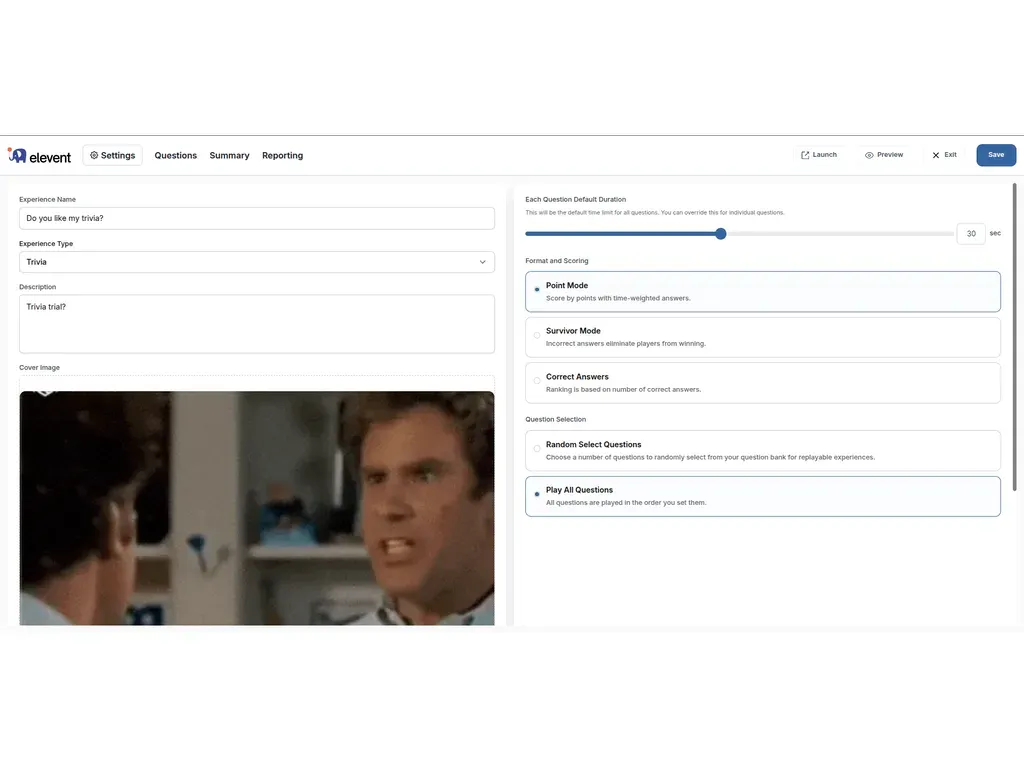
Designed the three game modes: point-based, accuracy-focused, and elimination. Shaped the admin portal around question creation, rules, and session monitoring.
- 03
Build
Built the Vue.js player app and Node/Express backend on Socket.IO, backed by MySQL and Prisma. A single Socket.IO server holds state fine at low player counts, but it drops sync once a large event needs more than one server node. So the Redis adapter went in during the build, not as a later fix.
- 04
Launch
Deployed on containerized AWS infrastructure with GitHub Actions CI/CD and New Relic monitoring, ready for events at any scale.
- 05
Run
Kept the platform monitored for uptime and real-time performance as events scaled from small teams to 1,000+ participants.
- SubmitA player taps an answer on the Vue.js client.
- BroadcastSocket.IO pushes the event to the game server.
- Fan outThe Redis adapter relays it across every server node.
- ScoreNode/Express updates the tally in MySQL via Prisma.
- RenderEvery screen updates within the same round, at any player count.
The Redis adapter is what lets the game run behind more than one server node. Without it, players on different nodes fall out of sync at scale.
What we built.
We built a cloud-native platform with a player-facing web app, an admin portal, and a WebSocket game engine. Scores and answers sync in real time across every player. The architecture supports events from 10 to 1000+ players at once. Hosts run three game modes: point-based, accuracy-focused, and elimination. They manage questions, rules, and live sessions from one portal. Containerized AWS infrastructure with auto scaling and CI/CD keeps large events stable. New Relic monitors uptime.
Tech stack
- Vue.js 3 + TypeScript
- Tailwind CSS + Ant Design Vue
- Socket.IO
- Node.js 22 + Express.js
- Socket.IO with Redis adapter (multi-server clustering)
- Prisma ORM
- MySQL 8
- Redis 7
- Docker
- Nginx
- GitHub Actions CI/CD
- New Relic APM
Integrations
- AWS S3 (media, presigned URLs)
- New Relic (monitoring)
- Vercel CDN
Security
- JWT with access/refresh rotation and RSA signing
- Joi and Zod input validation
- Role-based access control
- Nginx SSL/TLS
If your event has to hold sync for ten players or a thousand, the WebSocket layer is where that promise is won or lost. We built the real-time backbone that keeps every player in sync, at any scale.
