

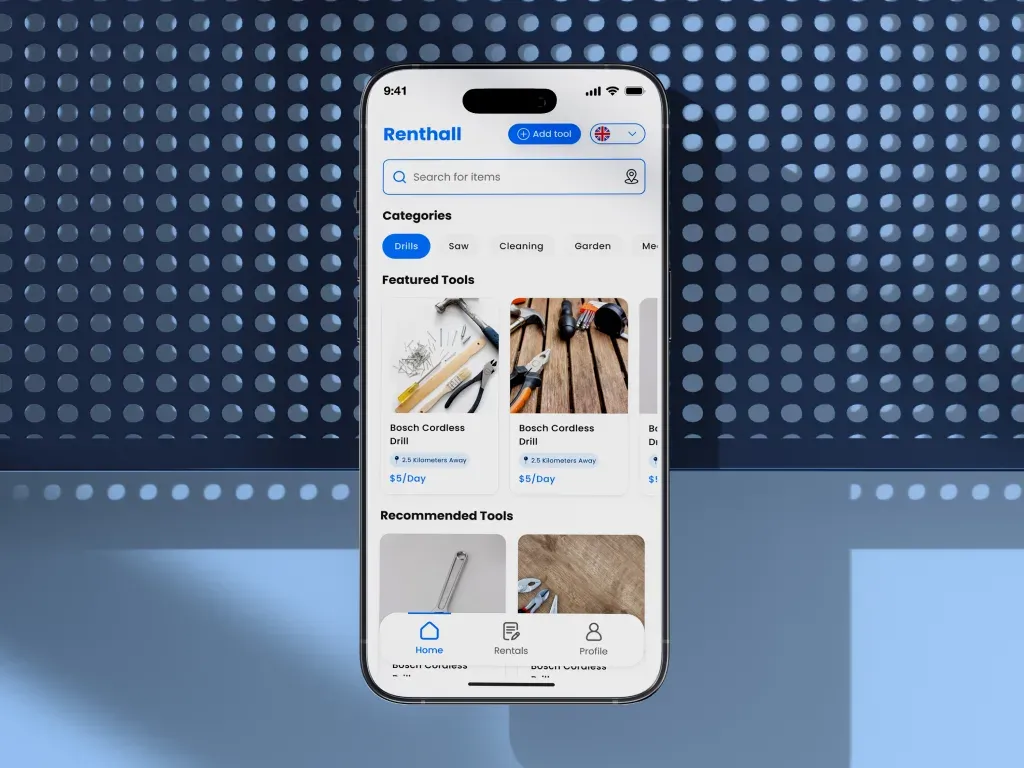
Renthall
Idle tools, matched with the people who need them.
A peer-to-peer marketplace where owners list gear and renters go from local search to a confirmed, paid booking.
- Client
- Renthall
- Industry
- Rental Technology / Sharing Economy
- Platform
- Web + Mobile
- Engagement
- Peer-to-Peer Marketplace · Rental Management
Most useful equipment sits idle, while someone nearby needs that same item for a weekend project or a short job. Renthall connects that idle supply with local demand. Owners list tools and gear. Renters search what's nearby, compare options, pick dates, and book through one clear flow. Hashlogics helped build the product across web and mobile.
The problem we set out to solve.
Supply was scattered across people and small firms, not one central warehouse.
Owners needed to list and earn from gear, while renters needed fast search and easy booking.
Unlike a normal online purchase, every rental depends on dates, pickup windows, and whether the item is free.
A peer-to-peer platform needs clearer identity, policies, fee breakdowns, and rental records than a classifieds ad.
What success needed to look like
- Make nearby tools easy to find by search, location, and category.
- Let one account act as both renter and owner.
- Capture business identity and checks where needed.
- Show fees clearly before the booking is confirmed.
- Manage active, upcoming, and past rentals, with extend, return, and rent-again built in.
How we delivered it.
- 01
Map both sides
Shaped the product around the two people who make the market work. One profile holds both owner and renter roles.
- 02
Design mobile first
Shaped the core flow for the phone: finding items, owner actions, dates, payment, and rental management.
- 03
Build around proximity
Put location right into search and item cards, so users can judge distance before going further.
- 04
Connect booking to operations
Kept the flow going after payment, through active, upcoming, and past rentals, instead of ending at checkout.
- 05
Add trust controls
Added business profiles, VAT and address capture, document checks, policies, clear fees, and alerts.
What we built.
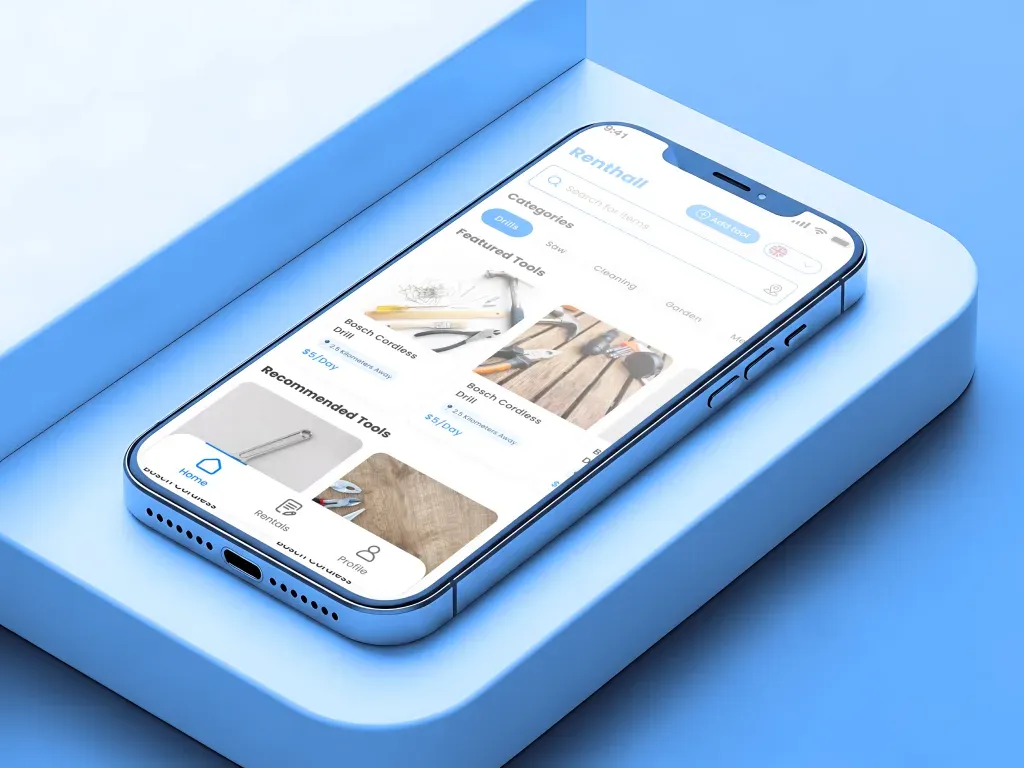
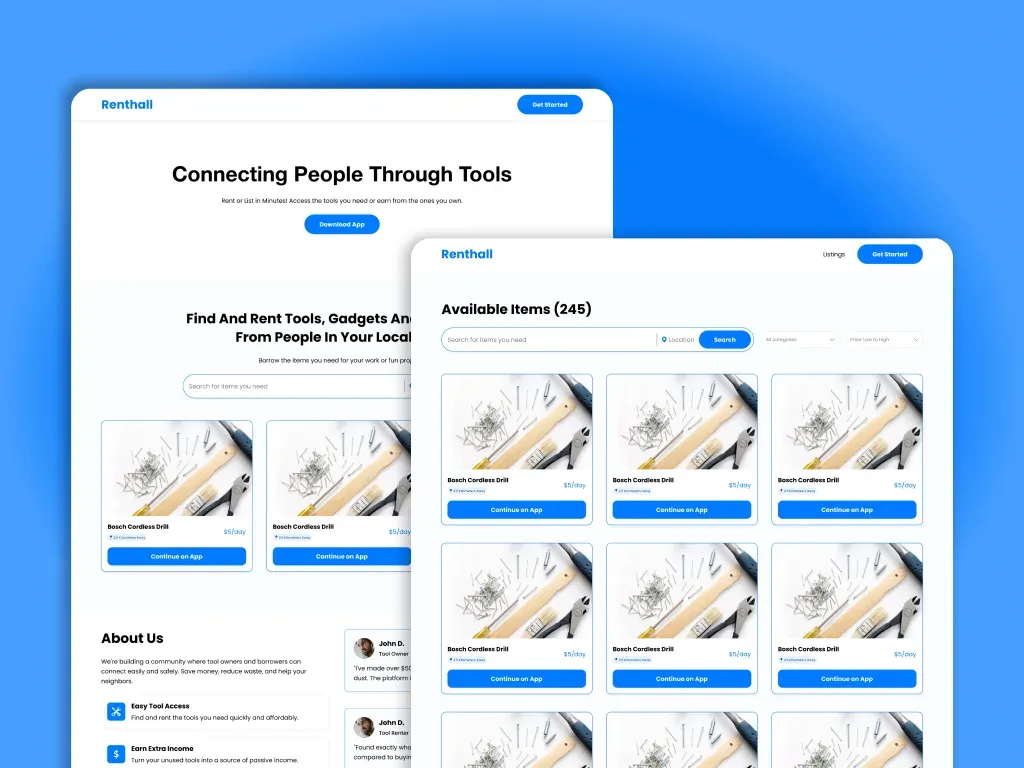
Renthall pairs a public discovery layer with a deeper in-app rental flow. On the web, users browse items, search by need and location, filter by category, sort by price, and see daily rates with distance. In the app, the journey runs on: a tool page, dates and times, a fee breakdown across rental, service, and insurance, then payment with designed options for card, PayPal, and Apple Pay. The booking confirms with the total and duration. Owners add tools, fill in business details, upload documents, and watch their listings from the same account.
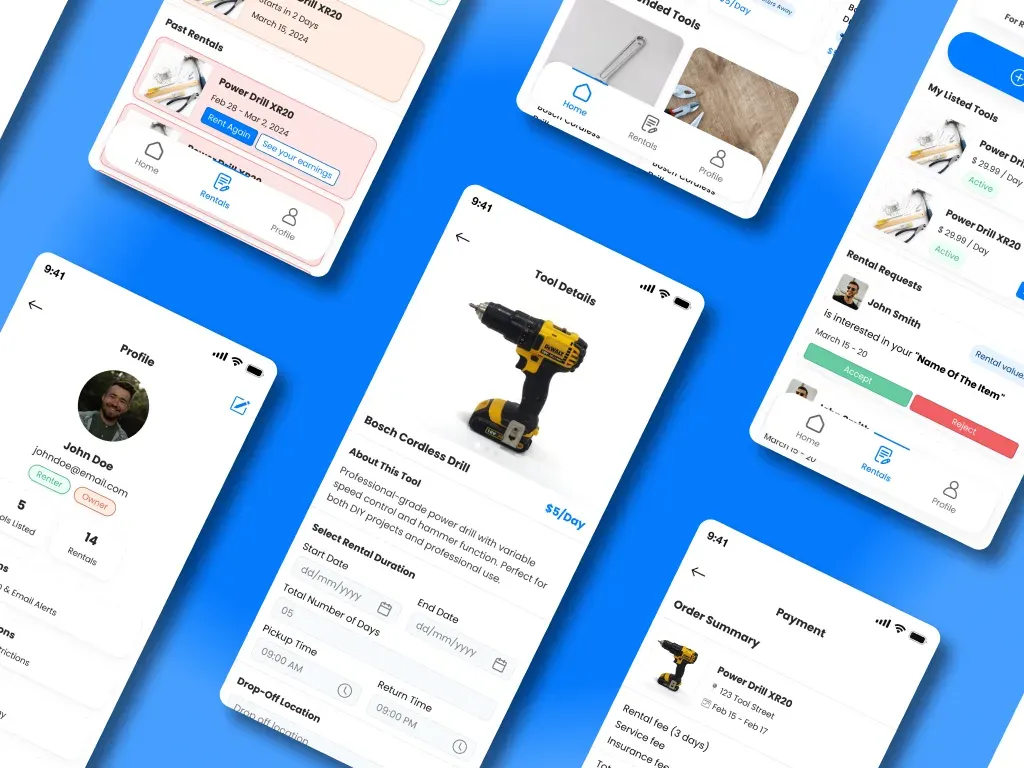
A transaction workflow, not a listings page.
Renters go from local discovery to a confirmed booking without loose messages or offline back-and-forth. Owners get a clean channel for listing gear and managing rentals. This page claims no transaction volume or user growth on purpose, because those figures were not provided. What it documents is the breadth of the flow: discovery, trust, dates, payment, confirmation, and the full rental lifecycle, all inside the product.
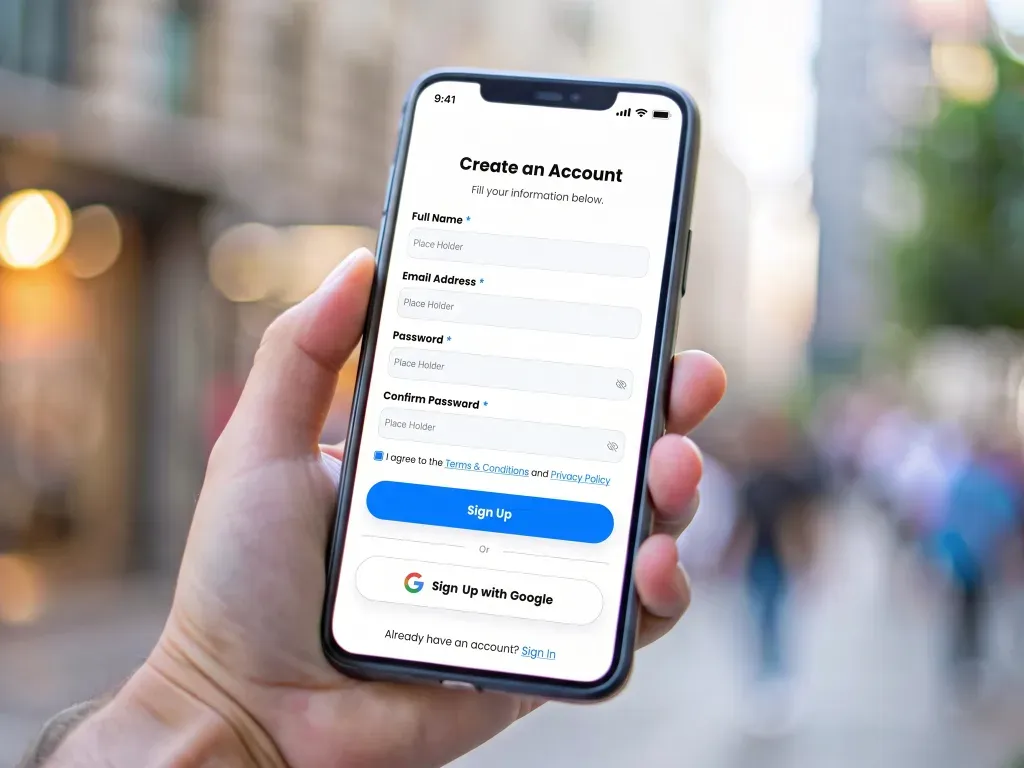
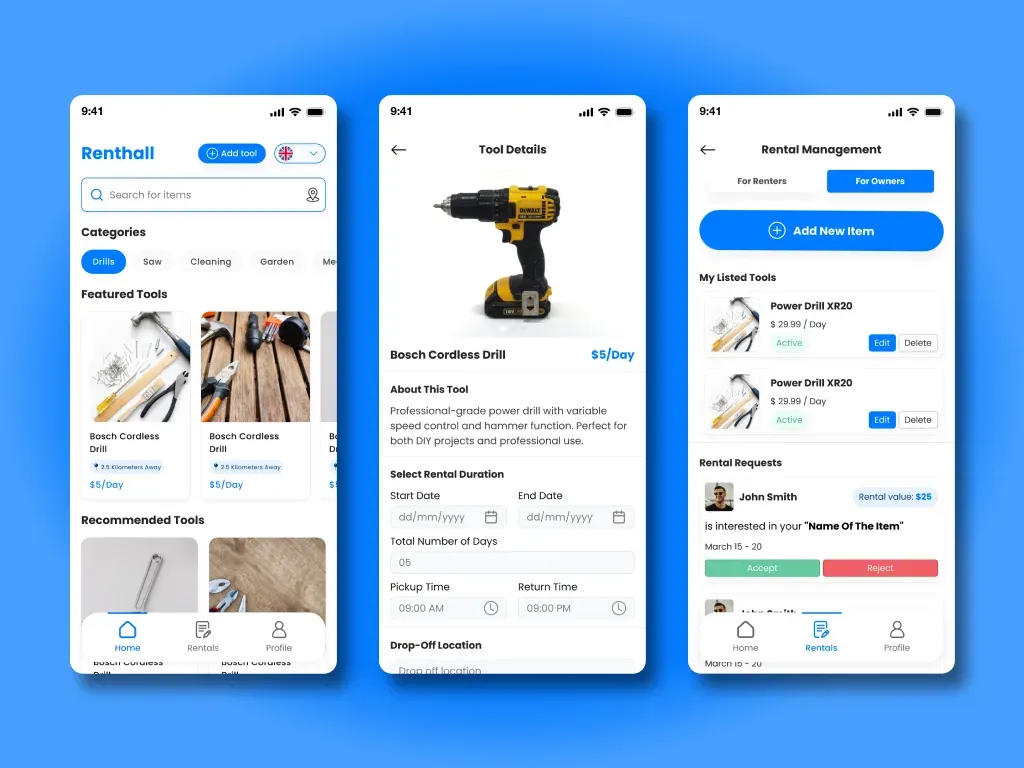
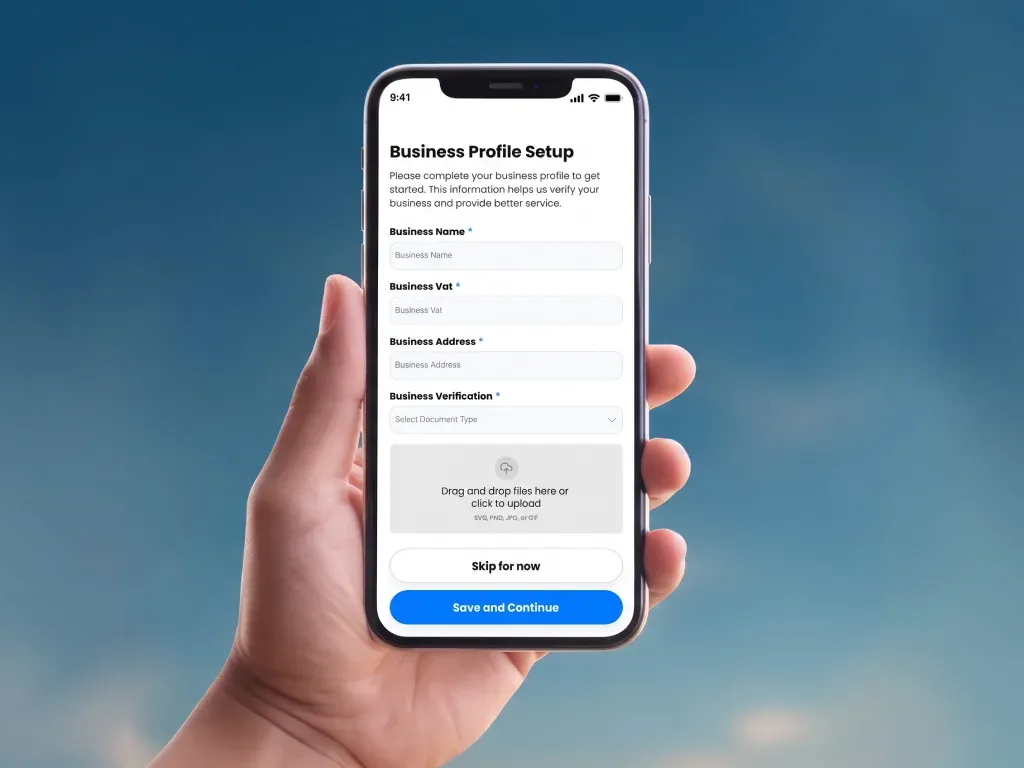
Peer-to-peer marketplaces work when scattered local supply starts to feel organized and safe. Renthall does that by tying gear, location, dates, price, booking, and return into one flow.
Some of the systems we have shipped
Read next
- Mobile app development →The mobile-first discipline this build ran on.
- WorkMateAI: home services marketplace →Another two-sided marketplace we helped ship.
- Payment gateway integration →The money movement underneath bookings like these.
- Rent A Screen: LED billboard booking platform →Another rental booking flow, with live availability and card payment.
