

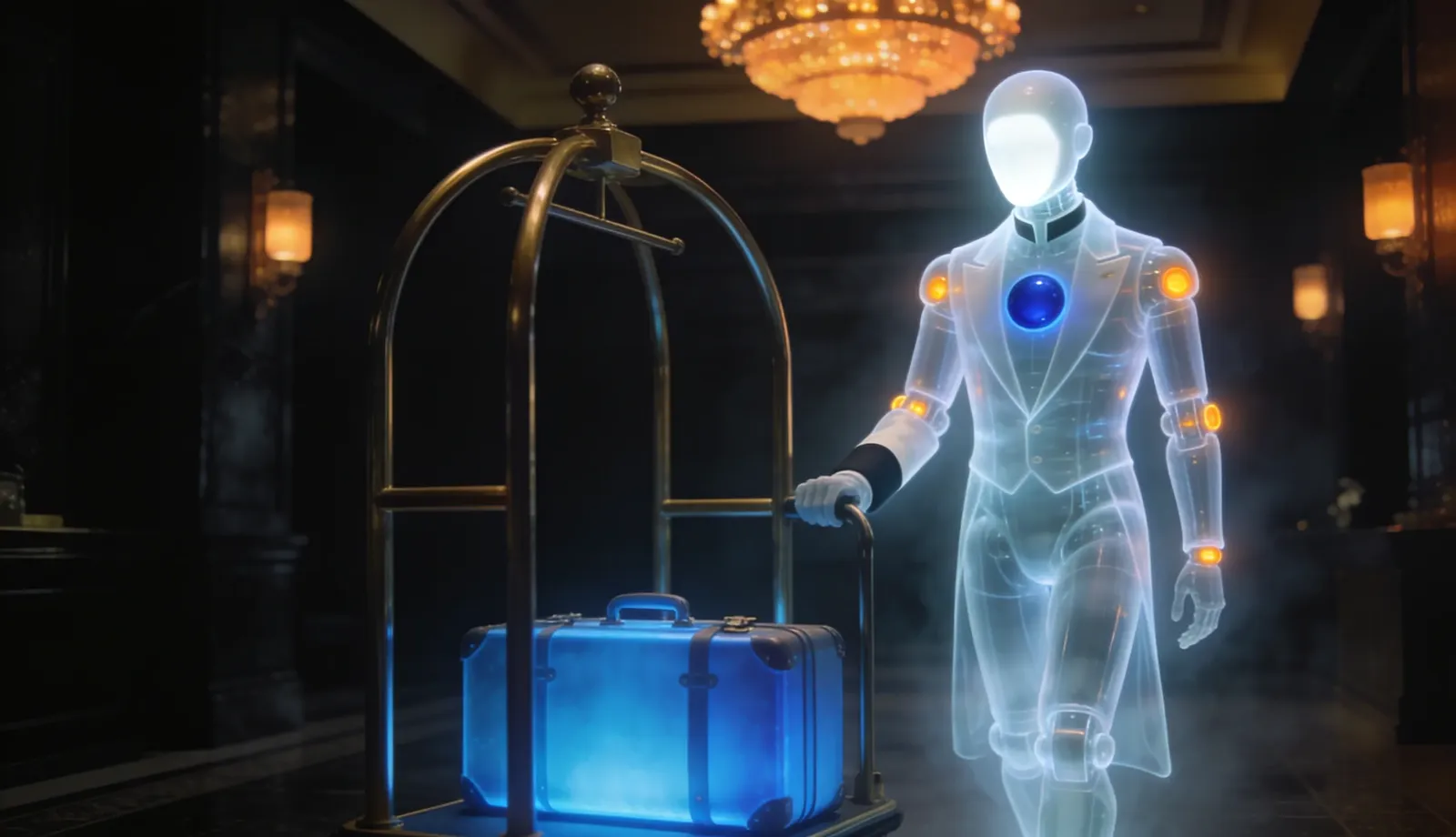
AI, automation and custom software for hotels, built around the PMS you already run
You keep Cloudbeds, Mews, Opera, SiteMinder or whatever your property runs. We build the layer your PMS vendor never sold you: the overflow call answered and quoted from live availability, a towel request that becomes a housekeeping task with an ETA, direct bookings won back from the OTAs, and a line that still gets picked up after 11.
- 4.8 on Clutch across 22 reviews
- PremiumAudit.io: audit cycle cut 75%, calculation errors cut 95%
- In production for SmartREI, Tankaware, ZyloBase, KiwiWrite
What changes for your property
3 things that decide this
- 01July runs 16.1 calls per room, and answered lead calls convert at 44 to 46% in summer (Revinate 2026). Your line answers the overflow instead of a hold button, quotes from live availability, books the stay and texts the confirmation, so the caller who would have hung up at 30 seconds is a reservation instead.
- 02A guest text asking for towels becomes a task in your housekeeping app with an ETA back to the room, rather than a sticky note that reaches a radio and maybe nobody. Housekeeping is the department most hotels are short in, at 38% of properties (AHLA/Hireology 2025), which is exactly why the request path should not depend on the desk being free.
- 03OTAs took 61% of independent bookings in 2024 at 15 to 30% or more in commission (Cloudbeds 2025), so we build the win-back on the PMS you already pay for: past guests contacted directly, the OTA caller offered your direct rate at the phone, and channel commission reconciled against what accounting actually received. Rate parity, overbooking walks and chargebacks stay with you.
Eight places a hotel loses a booking, a request or a night, and what we put in each one
These are the eight areas our audits keep finding, in the order a guest meets them. Each one links to the page that owns it.
The 4pm wave, answered on the second ring
One agent has a line at the desk, a ringing reservations phone and a guest texting about towels. Something gets dropped, and it is usually the call. Your line picks up the overflow, answers the availability question from your PMS, quotes the rate by your rules, books the stay and texts the confirmation. Anything about safety reaches a person mid-sentence.
AI guest desk →
A towel request that becomes a task, not a sticky note
Right now a request goes desk, then paper, then radio, then maybe nobody. We take the text or WhatsApp message, write it into your housekeeping module or task app as a real job with an owner, and send the guest an ETA. Room-ready fires from room status in the PMS instead of waiting for somebody to walk the floor and report back.
Operations automation →
Direct bookings won back from the OTA
Six in ten bookings at independent properties came through an OTA in 2024, and every one of them carries commission you never see before the money lands. We build direct win-back to guests who already stayed with you, an OTA-to-direct offer at the phone by your own rate rules, and reconciliation that matches channel commission against what accounting received.
How to win back direct bookings from OTAs →
Catch the problem in the room, not in the review
Guests smile at checkout and write the truth a week later, and 77% of travellers say they are more likely to book when owners respond to reviews (TripAdvisor/Ipsos MORI 2019). An in-stay message asks how the room is while you can still fix it, and review replies are drafted in your voice for you to approve. Nothing posts on its own.
Operations automation →
After 11, the phone still gets answered
Small properties forward the night line to whoever is sleeping closest, and 26% of hotels report front-desk shortages (AHLA/Hireology 2025). Your after-hours line handles the lockout, the late arrival and tomorrow's booking, then wakes the on-call human by a rule you write. Fire, medical and security go straight to a person, always.
AI guest desk →
Your PMS, your channel manager and accounting, finally agreeing
At night audit somebody re-keys what two systems already know, because the PMS, the channel manager and the ledger each hold half the truth. We build on the APIs where they exist and a reviewed queue where they do not, so a reservation, a rate change and a folio land once. Cloudbeds, Mews, Opera, SiteMinder or whatever you run.
Custom hotel software →
ADR, occupancy and direct share in one place
You rebuild the same spreadsheet every month because the numbers live in four systems and none of them report across the others. We pull PMS, channel and accounting into one read-only view: ADR and occupancy by room type, direct against OTA share by month, and the properties or shifts that actually make money.
Custom hotel software →
What a Cloudbeds, Mews or Opera integration really takes
Every PMS answers a different question about what you are allowed to read and write, and the honest answer for your property depends on your account and your plan rather than the logo on the login screen. We confirm what yours exposes during the audit, design to it, and tell you where a reviewed queue beats a promise the API cannot keep.
Cloudbeds, Mews and Opera APIs →
From the 4:10pm reservations call to the review you never had to answer, and where the machine takes over
Four stations where a hotel is different from every other kind of business. Pick your system to see what each step writes back; SiteMinder, RoomRaccoon and the rest follow the same pattern to the depth your account allows.
Station 01 · The 4:10pm call, during the check-in wave
- Today
- Your agent is mid-check-in with a queue behind them when the reservations line rings. It goes on hold, and the caller gives it about thirty seconds before hanging up and dialling the next property on their list. Nobody records that it happened.
- What we automate
- Your line answers the overflow, asks the dates and the party size, reads live availability out of the PMS, quotes by your rate rules, takes the booking and texts a confirmation. It handles parking, late arrival and the "is it cheaper on Booking.com?" question the way you tell it to.
- What stays human
- Anything about safety, a complaint with heat behind it, a group enquiry or a rate exception goes to your duty manager before the caller finishes the sentence. You write that list, and it is the first thing we test.
Writes to CloudbedsReservation created with the rate plan, guest profile and the call recording attached to the booking.
Station 02 · The towel request, at 9pm
- Today
- A guest texts the property number asking for towels and an iron. It lands with whoever is on the desk, becomes a note on paper, gets radioed if the floor is quiet, and sometimes reaches housekeeping after the guest has given up and come down.
- What we automate
- That message becomes a task with a room number, an owner and a due time, sent into your housekeeping module or task app. Your guest gets an ETA back straight away, and a nudge fires at your team if the task is still open when that ETA passes.
- What stays human
- Your housekeeper or duty manager closes the task. Anything that reads like a safety problem, a gas smell or a guest in distress skips the queue and rings a person.
Writes to CloudbedsHousekeeping task and guest note against the reservation, so the request is on the folio history.
Station 03 · The OTA booking you could have had direct
- Today
- A guest who stayed twice books through an OTA, because that is the site they remembered. You pay a cut on a guest you already had. Your PMS knows they have stayed before. Nothing in your stack does anything with it.
- What we automate
- Past guests get a direct offer before their usual season, by their own stay history rather than a blanket blast. On the phone, a caller quoting an OTA price hears your direct rate and what it includes, by rules you set. Commission gets reconciled against the folio and the payout.
- What stays human
- Rate parity, what you are contractually allowed to offer, an overbooking walk and any chargeback are your decisions. Our system prepares the numbers and never sends a rate change on its own.
Writes to CloudbedsDirect reservation written back with the source tagged, so your direct share report is real.
Station 04 · After 11, when nobody is on the desk
- Today
- Your night line forwards to a phone in somebody's pocket, or to a room where a staff member is asleep. A guest locked out of 214 rings three times before anyone stirs, and tomorrow's booking enquiry goes to voicemail nobody plays back.
- What we automate
- Your after-hours line answers, identifies the guest and the room, and handles the lockout, the late arrival and the booking enquiry by your rules. It logs what happened, and it wakes the on-call human by name when the rule says a person is needed.
- What stays human
- Fire, medical, security and any call about a guest's safety reach a person before the caller finishes the sentence. That escalation list is yours and it is tested first.
Writes to CloudbedsLate-arrival note and any new booking written to the reservation before your morning shift reads it.
Each station links to the page that owns it, and the rest of the chain sits on the hospitality hub. Rate parity, overbooking walks and chargebacks stay with your team.
We don't replace Cloudbeds, Mews, Opera or whatever your property runs. We build what they won't.
Your PMS holds the reservation, the folio and the room status, and your team has years of habit in it. Switching costs more than it fixes. It also moves the gaps rather than closing them: the call nobody answered, the request that never became a task, the direct booking you paid a cut on, the report you rebuild by hand each month.
So what matters is the access model, not the brand on the login screen. Cloudbeds and Mews are cloud systems with their own developer programmes. Oracle's OPERA Cloud is reached through the Oracle Hospitality Integration Platform. An older on-premise OPERA usually means an interface instead. A channel manager like SiteMinder sits alongside all of them and owns rates and availability across your channels. During the audit we confirm what your account and your plan expose, then design to that. Where the connection stops, we build a queue your team accepts with one click, so nobody re-keys at night audit.
One thing we plan for that most projects don't: your PMS gets upgraded, and a field you depended on changes shape underneath the integration. Nothing errors. The direct-share number just goes quietly wrong. We watch the shape of what we read. A version change reaches you as an alert, not as a report you stop trusting three months later.
- 01Reservation, guest note and task write-back into your PMS, with the call recording attached to the booking.
- 02Your PMS stays the reservation and the folio. We write into it; we don't replace it.
- 03Card details never enter a message log or a call transcript, and payment stays inside your PMS or gateway.
Fire, medical and security go to a person, always. Reviews are never auto-posted. Card numbers never touch a transcript.
A guest desk sits under rules that don't bend for software: a safety call is answered by a human, a review reply carries your name and is approved by you, payment data stays in your PMS or POS and never in a message log, and rate parity, overbooking walks and chargebacks are decisions a person owns. So every build starts with a one-page map of what the system answers, what it only proposes, and where a person is woken.
What follows is simple to state, and we put it in writing. Safety triggers are a short list you write and the first thing we test. Review-reply drafts queue for your approval and nothing posts on its own. Consent is captured before a guest or member is messaged. And every automated touch is logged so you can read what was said to a guest, and when.
- 01Fire, medical, security and any guest-safety call reach a person before the caller finishes the sentence.
- 02Review replies drafted, never posted; rate parity, walks and chargebacks stay human.
- 03Consent is captured before a guest is messaged, and every automated touch is logged so you can read what was said to a guest, and when.
“They will treat your vision like their own and build it that way.”
Ron Klabunde · Founder, SmartREI ↗
“They really help you understand the problem and deliver solutions in a short time frame.”
Johannes Peter · CEO, TomoDomo Coliving
Some of the systems we have shipped
- AuditFree. We read a month of your phone log by hour and shift against arrivals, the request path and how long it waits, the room-ready path, your PMS source report for direct against OTA, and what accounting re-keys. That's the Guest-Journey Audit, and the one-page note is yours either way.
- DiagnoseWe map the path into your PMS, POS or booking system and accounting, and sit at the desk through one check-in wave or one service.
- BuildFixed price per milestone from the Blueprint. Tested on your real calls, requests and bookings, under NDA.
- RunMonitoring, a named engineer, and the first two months of maintenance free.
Best fit: a property, restaurant group, studio or operator with a desk that's saturated at peak, more than one location or shift, and a system you've outgrown in places. Not a fit yet: a single-room B&B that needs a booking widget, and we'll say so. You can stop after any stage; the audit note is yours either way.
Before you book
01Can you integrate with Cloudbeds, Mews or Opera?+
To the depth your account and your plan expose, and we confirm which during the audit rather than promising first. Cloudbeds and Mews are cloud platforms with their own developer programmes and documented APIs. Oracle's OPERA Cloud is reached through the Oracle Hospitality Integration Platform, and an older on-premise OPERA usually means working through an interface instead. Where the connection genuinely stops, we build a reviewed queue your team accepts with one click, so nobody re-keys a reservation at night audit.
02Will an AI line make my property sound like a call centre?+
Only if you automate the wrong minute. Your desk agent, face to face with a guest, is the part you sell. So we take the overflow call, the night line, and the request that would end up on a sticky note. Your guest still speaks to your team about anything that matters, and nobody spends the 4pm wave apologising to a hold queue.
03What happens when a call is an emergency?+
It reaches a person immediately, on a trigger list you write before we build anything. Fire, medical, security or a guest who sounds frightened goes to your duty manager or on-call number. Your line says it is connecting them, and it does. That list gets built first and tested first, and this is not a rule we let a build negotiate with.
04How does this actually win back direct bookings?+
By using the guest history your PMS already holds and the phone you already answer. OTAs took 61% of independent bookings in 2024, at 15 to 30% or more in commission (Cloudbeds 2025). Costs also rose faster than revenue that year (CBRE 2025). So your cheapest booking is the guest who already stayed with you. We build the win-back to past guests, the direct offer at the phone by your rate rules, and the check that shows whether it worked. Parity decisions stay yours.
05We run three properties on different systems. Can you give us one view?+
Yes, and the mismatch is exactly why a single live query across all three fails. Each property has its own instance, often its own plan, sometimes a different PMS. We pull each one on a schedule into one shared model, then report from that. You get ADR, occupancy, direct share and request response by property and by month. TomoDomo, a multi-property operations platform, runs on that shape today.
06How do you charge, and how does an engagement start?+
Our Guest-Journey Audit is free, and the one-page note is yours whether or not you go further. Every build starts with a fixed-fee Blueprint: an engineer reads your real systems and writes the plan, with a fixed price for each milestone rather than a guess. The fee is credited in full against the build, and if the plan isn't one you'd act on, you don't pay for it. The number is a commitment, not a guess. You can stop after any stage.
A senior engineer, not a sales rep
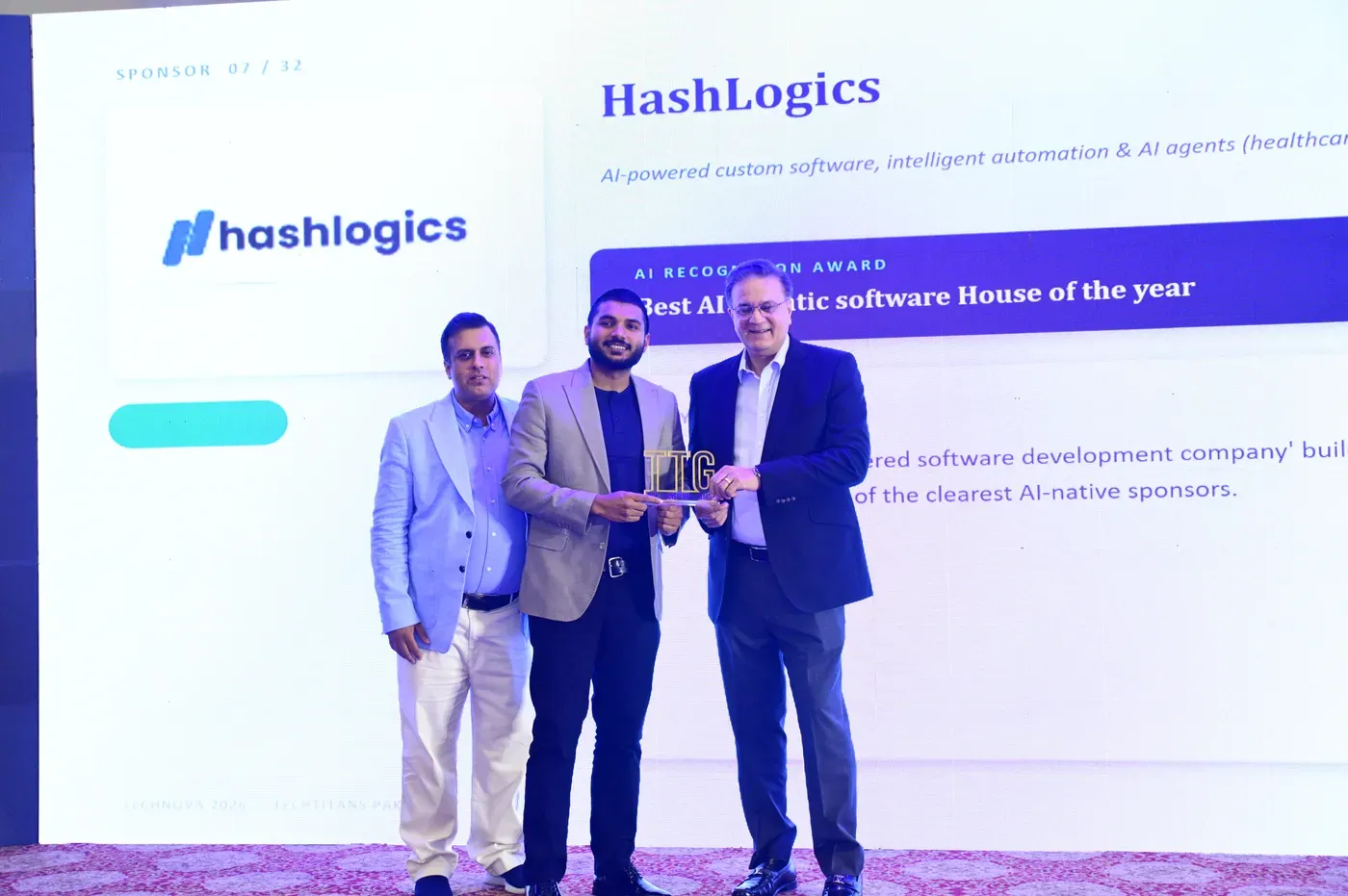
Abdul Basit founded Hashlogics in 2017, and the team runs from Lahore with a US LLC. Clients rate the work 4.8 on Clutch across 22 reviews, and in 2026 it was named Best AI-Native Software House of the Year at TechNova. Go Real Travel, a personalised European concierge platform, and TomoDomo, a coliving operations platform in Switzerland, are two of the hospitality systems we built and can show you.
Your audit call is with an engineer who has read phone logs by shift, request queues and PMS source reports like yours. Bring last month's numbers if you have them, and we'll work from those.
- NDA before the first conversation.
- No pitch on the call. A note you could hand to another firm.
- Fixed price per milestone from the Blueprint, so the number isn't a guess.
More for hotels
- AI, automation and custom software for hospitality →The whole chain across hotels, restaurants, studios, salons and travel, and which page owns each part.
- AI guest desk →The overflow call and the after-hours line answered, quoted and booked.
- Operations automation →Request to task to room-ready, direct win-back, and reviews caught in the room.
- Custom hotel software →PMS and accounting integration, multi-property operations and the owner's numbers.
- How should a hotel handle the 4pm check-in wave? →The direct answer, and what the phone log tells you before you build anything.
- How to win back direct bookings from OTAs →Win-back to past guests, the offer at the phone, and where a person still decides.
- Cloudbeds, Mews and Opera APIs →What each access model actually requires before a line of code gets written.
- The 4pm check-in wave →What one month of phone logs by hour shows, and what to do about the hour the misses cluster in.
- Short-term rental operations →The same guest chain where the units are apartments and the owner is a landlord.