

Custom software for hospitality and travel: the integration layer, the group's operating view, and the product a guest actually holds
A guest notices the handoff you never automated. Your PMS holds the booking, your POS holds the covers, the channel manager holds the rooms and accounting holds the money. Your night auditor moves numbers between them by hand. We build the layer that closes those gaps, on Cloudbeds, Mews, Opera, Toast, Mindbody, Zenoti, Amadeus or whatever you run.
- 4.8 on Clutch across 22 reviews
- PremiumAudit.io: audit cycle cut 75%, calculation errors cut 95%
- In production for SmartREI, Tankaware, ZyloBase, KiwiWrite
What you get
3 things that decide this
- 01One layer instead of four systems that each hold half the truth. Bookings, rates, folios, covers and payouts move between your PMS, POS, channel manager and accounting on the APIs that exist. Where they stop, a reviewed queue takes over, so nothing gets typed at 2am and nothing gets typed blind.
- 02One place to run a group, without flattening how each site works. TomoDomo runs residents, rooms, bookings, payments and repairs across Swiss cities from one dashboard, and role-based access sets what each site's staff can change. Settle which choices are central and which stay local before the build, not during it.
- 03Read-only dashboards across every system, plus the travel product your guest holds. ADR, occupancy, direct share, covers and class use sit in one place. Then there are concierge platforms, booking engines and offline-first apps for a traveller with no data abroad.
From the night audit's re-keying to the owner's numbers, and out to the traveller
These stations sit behind everything the guest sees, which is exactly why they're the last ones anybody fixes. Pick your system to see what each one writes back.
Station 01 · The night audit's re-keying
- Today
- Your night auditor closes the day, then somebody moves the same numbers between the PMS, the channel manager, the POS and accounting by hand. A group's properties each do it slightly differently.
- What we automate
- An integration layer syncs reservations, rates, folios, covers and payouts between your systems on the APIs that exist, and posts a reviewed queue where they don't. A multi-property operating layer gives a group one place to run several sites without flattening how each one works.
- What stays human
- Your accountant still closes the books. Anything that looks like a variance is queued for a person rather than pushed through.
Writes to CloudbedsReservations, folios and rate data synced to accounting, with variances queued.
Station 02 · The owner's numbers
- Today
- ADR, occupancy, direct share, covers per shift, class utilisation and member churn live in four systems, and the owner gets them in a spreadsheet somebody rebuilds every month.
- What we automate
- Read-only dashboards across PMS, POS, booking and accounting, by property, site or shift, with the custom report your systems never offered. It refreshes on a schedule instead of on a Sunday.
- What stays human
- Pricing, staffing and investment decisions stay yours. The dashboard shows the number; it does not set the rate.
Writes to CloudbedsReads reservations, rates and source reports; writes nothing back.
Station 03 · The 4pm check-in wave
- Today
- One agent, a line at the desk, a reservations phone that will not stop, and a guest texting for towels. July runs 16.1 inbound calls per room against 8.9 in February (Revinate 2026), so the caller behind the check-in line hears a hold tone and books on an OTA instead.
- What we automate
- Your guest desk answers overflow calls and messages in a ring, quotes availability and rates from your PMS or booking system, holds or books the room, texts the confirmation, and answers the parking, late-arrival and "is it cheaper than Booking.com?" questions by the script you wrote.
- What stays human
- Groups, negotiated rates and anything about a complaint go to your agent. A guest who asks for a person gets one.
Writes to CloudbedsReservation created with source tagged, and the call summary on the guest profile.
Before these come the guest desk and the request path. The hospitality hub walks the whole chain.
Four builds, and what each one plugs into
The integration layer across PMS, POS, booking and accounting
Cloudbeds, Mews, Opera, Toast, Mindbody, Zenoti, Amadeus and the rest each open up bookings, rooms, folios, covers and payments to different depths. Some gate the API behind a plan or a partner programme. We confirm what your account exposes during the audit, design to it, and build a reviewed queue your staff accept in one click wherever the API stops. Channel work is a rooms problem before it is an API problem. So we write down who wins when two channels confirm the same room, before we connect anything.
Cloudbeds, Mews and Opera APIs: what a real integration involves →
A multi-property operating layer for a group
TomoDomo is the shape: residents, rooms, bookings, payments and maintenance across several Swiss cities on one dashboard, with role-based access following staff between sites and guest updates going out in English and German. Access has to follow the person as they move between sites. If it does not, every building quietly rebuilds its own spreadsheet. The shared part is the data model; the policy stays local.
TomoDomo coliving management platform →
Dashboards across systems, read-only by design
ADR, occupancy, direct share, covers by day part, class use and member churn get pulled from four places into a spreadsheet somebody rebuilds each month. We build the view instead: by property, site or shift, refreshed on a schedule, and built from scratch where no system offers the report. It reads your PMS, POS and accounting and writes nothing back. That is what makes it safe to hand an owner.
How we build custom software →
Concierge platforms, itineraries and booking engines
Go Real Travel pairs human trip planners with an itinerary builder, live pricing and a personalisation engine. It reported 60% less planning time after launch, and a small team covers 41+ European destinations without hiring for each one. Cruise Search AI runs inside the client's existing WordPress site. It checks every request against real ship, port and date combinations before it hands back a link you can book. Sold at a desk, used with no signal. So the companion app holds daily checklists and tickets offline, for a traveller who lands abroad with no data.
Go Real Travel concierge platform →
An off-the-shelf connector, a BI template and a booking widget are cheaper than a build. Until the gap between systems is your actual problem.
Plenty of this is buyable. Marketplace connectors sync a PMS to a channel manager. A BI template will chart occupancy for you. A booking widget puts availability on your website, and an itinerary app will email a PDF. If you run two systems with a supported connector between them, and the report your PMS ships is enough, buy those and keep your money.
You outgrow that when the gap itself is the problem. Rates and rooms move all day, and each channel keeps its own copy. Sell a room on one, and the others have to drop it before a second guest books it. Older XML links push on a timer, which leaves a window open. An API makes that window smaller. It does not close it. What matters is what you do inside that window, not which endpoint you call. You decide whether to oversell with a buffer or hold rooms back. You also decide who wins when two channels confirm the same room. Write that rule down first. The integration will not make it for you, and your front desk is the one who lives with it. Ask any vendor which channel they connected to, and in what year. Connectors age badly, and a badge from four years ago says little about today.
- 01We confirm what your account's API actually opens up during the audit, before a price is quoted, so the scope is built on what is there rather than what a brochure implies.
- 02Where an API stops, your staff accept a reviewed item in one click.
- 03Your PMS, POS and accounting stay the record. Dashboards read them and write nothing back.
Fire, medical and security go to a person, always. Reviews are never auto-posted. Card numbers never touch a transcript.
A guest desk sits under rules that don't bend for software: a safety call is answered by a human, a review reply carries your name and is approved by you, payment data stays in your PMS or POS and never in a message log, and rate parity, overbooking walks and chargebacks are decisions a person owns. So every build starts with a one-page map of what the system answers, what it only proposes, and where a person is woken.
What follows is simple to state, and we put it in writing. Safety triggers are a short list you write and the first thing we test. Review-reply drafts queue for your approval and nothing posts on its own. Consent is captured before a guest or member is messaged. And every automated touch is logged so you can read what was said to a guest, and when.
- 01Fire, medical, security and any guest-safety call reach a person before the caller finishes the sentence.
- 02Review replies drafted, never posted; rate parity, walks and chargebacks stay human.
- 03Guest data crosses systems only where you've agreed it should, and every sync is logged so you can prove what moved and when.
“They will treat your vision like their own and build it that way.”
Ron Klabunde · Founder, SmartREI ↗
“They really help you understand the problem and deliver solutions in a short time frame.”
Johannes Peter · CEO, TomoDomo Coliving
Some of the systems we have shipped
- AuditFree. We map every system one booking passes through and where somebody re-keys between them. Then we read your night-audit routine and the reports your owner rebuilds by hand.
- DiagnoseWe map the path into your PMS, POS or booking system and accounting, and sit at the desk through one check-in wave or one service.
- BuildFixed price per milestone from the Blueprint. Tested on your real calls, requests and bookings, under NDA.
- RunMonitoring, a named engineer, and the first two months of maintenance free.
Best fit: a property, restaurant group, studio or operator with a desk that's saturated at peak, more than one location or shift, and a system you've outgrown in places. Not a fit yet: a single-room B&B that needs a booking widget, and we'll say so. You can stop after any stage; the audit note is yours either way.
Before you book
01Can we run several properties from one system without losing local control?+
Yes, and that's exactly what TomoDomo needed across Swiss cities. One dashboard holds residents, rooms, bookings, payments and maintenance, while role-based access decides what each site's staff can change. Decide which choices are central and which are local before the build starts. Settling it mid-build is how a group ends up with one system and five workarounds.
02Do you connect to booking channels and distribution systems?+
We connect the payment, calendar, signing and accounting systems around a booking. We connect your PMS, POS or booking platform too, as deep as your account allows. For channel work, the honest answer is that timing matters more than the interface. We would rather agree your overselling and conflict rules with you than promise a connector. Ask any vendor which channel they connected to and in which year.
03Can you add AI search without rebuilding our website?+
Yes, and Cruise Search AI is that exact build. It runs as a module inside the client's existing WordPress site and hands results back to the search engine they already had. Your traveller describes the trip in plain words, a couple of follow-up questions turn that into validated filters, and back comes one clean link. Rebuilding a working booking site to add a chat box is a poor trade. And a chat box that describes a lovely cruise you cannot buy is worse than a filter form.
04What happens when a traveller has no signal abroad?+
Their essentials are already on the device. Go Real Travel's mobile companion holds daily checklists and stored tickets offline, so a traveller landing without usable data still knows where to go. Nothing a guest needs on arrival should wait on a live request. That is the difference between a useful app and one they close at the gate.
05Do you handle guests in more than one language?+
Yes, and we treat language as part of the guest record rather than a template setting. TomoDomo sends editable guest updates in English and German, chosen per guest. Your staff must be able to fix those messages without calling a developer. A booking note with a mistake in it reaches the guest before your team notices. Decide early which content is translated and which stays templated.
06Will automation make our service feel impersonal?+
Only if you automate the wrong half. Nobody has ever wanted a warmer human touch on a check-in reminder, so confirmations, document collection, access instructions and reminders should run instantly. Go Real Travel kept its human trip designers and still reported 60% less planning time, because the planners stopped spending their day assembling logistics.
07How do you scope a hospitality or travel build?+
Scoping calls are free. Every build starts with a fixed-fee Blueprint: an engineer reads your real systems and writes the plan, with a fixed price for each milestone rather than a guess. The fee is credited in full against the build, and if the plan isn't one you'd act on, you don't pay for it. The first thing we map is every tool one guest passes through. That count usually is the project. We scope the route into your PMS before we quote, not after.
A senior engineer, not a sales rep
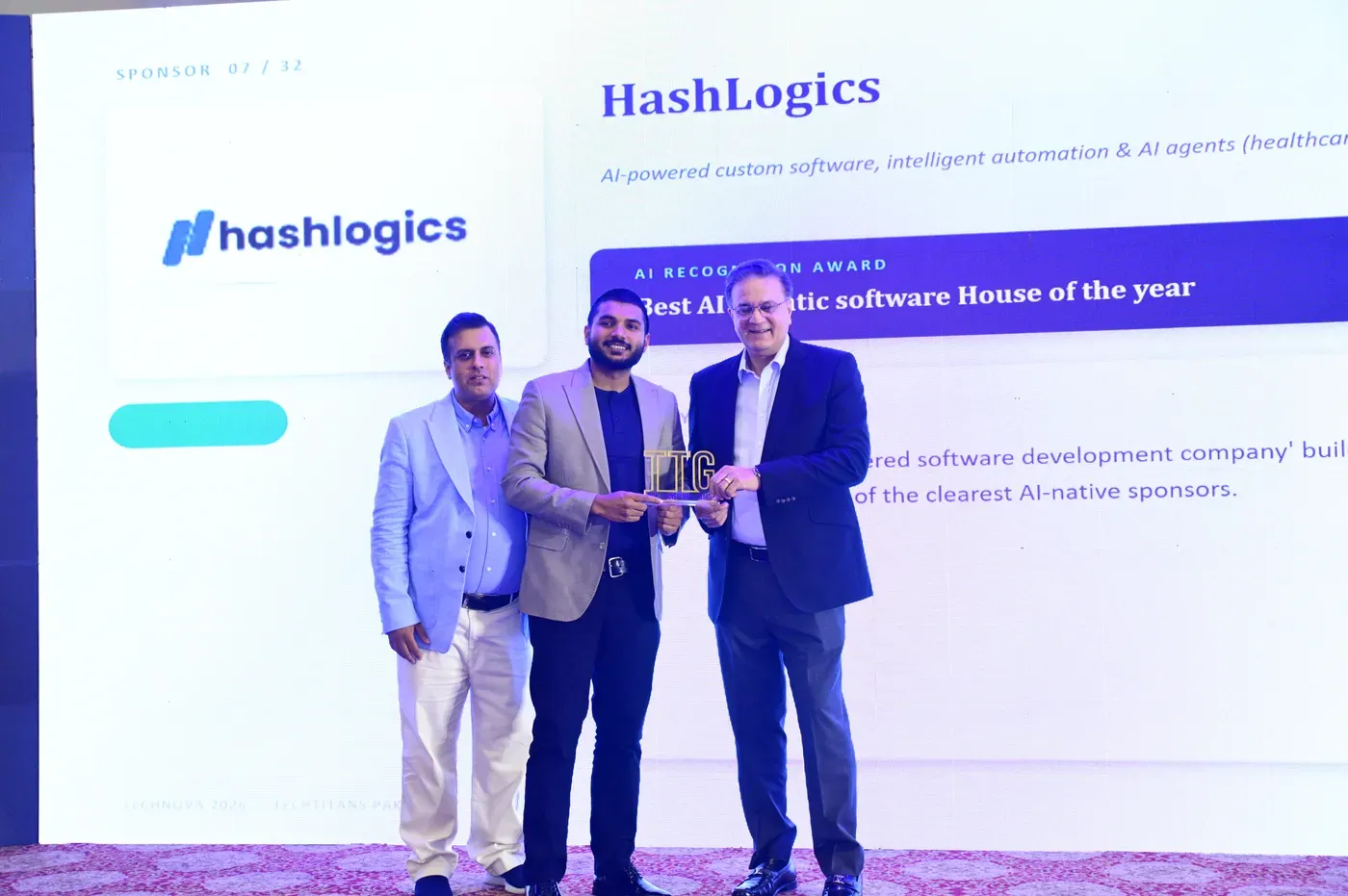
Abdul Basit founded Hashlogics in 2017, and the team runs from Lahore with a US LLC. Clients rate the work 4.8 on Clutch across 22 reviews, and in 2026 it was named Best AI-Native Software House of the Year at TechNova. Go Real Travel, a personalised European concierge platform, and TomoDomo, a coliving operations platform in Switzerland, are two of the hospitality systems we built and can show you.
Your audit call is with an engineer who has read phone logs by shift, request queues and PMS source reports like yours. Bring last month's numbers if you have them, and we'll work from those.
- NDA before the first conversation.
- No pitch on the call. A note you could hand to another firm.
- Fixed price per milestone from the Blueprint, so the number isn't a guess.
Go deeper
- AI, automation and custom software for hospitality →The whole chain, from the 4pm wave to the owner's numbers.
- AI guest desk for hospitality →Calls, messages and bookings, through the wave and after 11.
- Operations automation for hospitality →Requests to tasks, direct win-back, reviews and retention.
- AI and software for travel operators →Itineraries, booking engines and apps that work with no signal.
- AI and software for hotels →The night audit, the OTA share and the group's operating view.
- Cloudbeds, Mews and Opera APIs: what a real integration involves →Access models, plan gates and what they mean for a build.
- Custom software development →We scope, price and maintain a build after it launches.
