


An AI guest desk that answers the calls and messages your team can't reach, and books them into the system you already run
At 4pm your agent has a line at the desk, a ringing reservations phone and a guest texting for towels. We build the layer that carries the other two: overflow calls and messages answered in a ring, availability and rates quoted from your PMS or booking system, the room, table or class booked, the confirmation texted, and the after-hours line covered for lockouts and late arrivals.
- 4.8 on Clutch across 22 reviews
- PremiumAudit.io: audit cycle cut 75%, calculation errors cut 95%
- In production for SmartREI, Tankaware, ZyloBase, KiwiWrite
What you get
3 things that decide this
- 01Every call and message answered, through the wave and after 11: quoted from your PMS, POS or booking system, booked into it with the source tagged, confirmed by text, and summarised on the guest record so your morning shift reads what happened overnight.
- 02The questions your desk answers forty times a week, answered the way you would: parking, late arrival, pet policy, the class that's full, the table at seven, and "is it cheaper than Booking.com?" handled by the script you wrote and the rate your system holds.
- 03An escalation list you own rather than a vendor's default. Fire, medical, security and any guest-safety call reach a human immediately, complaints go to your manager on duty, and every automated touch is logged so you can read what was said to a guest.
From the 4pm wave to the 11pm lockout, and what each one writes back
These two stations sit at the front of the chain, before the request becomes a task and long before the night audit. Pick your system to see what each one writes back.
Station 01 · The 4pm check-in wave
- Today
- One agent, a line at the desk, a reservations phone that will not stop, and a guest texting for towels. July runs 16.1 inbound calls per room against 8.9 in February (Revinate 2026), so the caller behind the check-in line hears a hold tone and books on an OTA instead.
- What we automate
- Your guest desk answers overflow calls and messages in a ring, quotes availability and rates from your PMS or booking system, holds or books the room, texts the confirmation, and answers the parking, late-arrival and "is it cheaper than Booking.com?" questions by the script you wrote.
- What stays human
- Groups, negotiated rates and anything about a complaint go to your agent. A guest who asks for a person gets one.
Writes to CloudbedsReservation created with source tagged, and the call summary on the guest profile.
Station 02 · After 11
- Today
- Your desk closes and the phone forwards to a bartender or to whoever is asleep in a spare room; 26% of hotels report front-desk shortages (AHLA/Hireology 2025). A lockout, a late arrival and tomorrow's booking all ring the same number.
- What we automate
- Your after-hours line answers lockouts, late arrivals, access instructions and tomorrow's bookings, gives the instruction you wrote, and wakes the on-call human by a trigger list you own. Everything gets logged for the morning.
- What stays human
- Fire, medical, security and any guest-safety call reach a person before the caller finishes the sentence. It never tells a guest that a safety problem can wait.
Writes to CloudbedsIncident and booking log on the property, with the recording attached.
Station 03 · Request to task to room-ready
- Today
- A towel request goes to the desk, onto a sticky note, over a radio and maybe to a room attendant. Housekeeping is the most short-staffed department at 38% of hotels (AHLA/Hireology 2025), and room-ready waits on somebody walking the floor.
- What we automate
- A text or WhatsApp message becomes a task in your housekeeping app or PMS with a category, a room and an ETA back to the guest. Room-ready texts fire from room status. Recurring maintenance runs on a schedule nobody has to remember.
- What stays human
- Complaints, injuries and anything a guest calls an emergency go straight to a person. Inspection stays with your housekeeper.
Writes to CloudbedsHousekeeping or maintenance task on the room, with room status driving the ready message.
After these come the request path, the direct-booking work and the review. The hospitality hub walks the whole chain.
Four jobs the guest desk takes, and what each one plugs into
Overflow calls and messages, quoted from your PMS
When your agent is mid check-in, the second call and the WhatsApp message still get answered. It reads availability and rates from Cloudbeds, Mews, Opera or whatever you run, quotes the room and the package, holds or books it, texts the confirmation, and tags the source so your direct share stays honest. Groups and negotiated rates go to your reservations manager.
Operations automation for hospitality →
Restaurant reservations and the "do you have a table" call
Your phone rings hardest in the middle of service, which is exactly when nobody can pick it up. Your desk layer takes the reservation with party size and notes into Toast, Square, OpenTable or your book, answers the opening-hours and allergen questions from your own script, handles the waitlist, and texts a confirmation the guest can change without calling back.
AI and software for restaurants →
Studio and salon booking, waitlist and rebooking
Your front desk is teaching a class or standing at a colour station, so the booking call goes to voicemail and the client books somewhere else. It books into Mindbody, Zenoti, Glofox, Fresha or whatever you run, works the waitlist when a class fills, offers the next slot when someone cancels, and asks for the rebook at the moment the client is easiest to reach.
AI and software for gyms and studios →
The after-hours line, with a human woken by rule
Lockouts, late arrivals, access instructions and tomorrow's bookings all ring one number after your desk closes. It works the script you wrote, resolves what it can, logs everything for the morning, and wakes your on-call person by a trigger list you own. A safety call never gets triaged by software at all.
Voice AI agents →
A hotel chatbot, a per-room messaging tool and a restaurant answering service are good buys, right up to the point you outgrow them
Most operators start with something packaged, and they are usually right to. A hotel chatbot answers the FAQ on your website. A guest-messaging platform gives you a shared inbox and bills per room. A restaurant answering service takes a message and texts it over, and a studio booking app puts your timetable online. If your desk is quiet, one shift covers your day and your booking system does everything you ask of it, buy one of those and skip us.
You outgrow them at three points, and they arrive in a predictable order. First comes the moment the desk has to quote from your PMS and book into it rather than collect a name: an answering service can't see your availability, and a per-unit chatbot usually reads a knowledge base rather than your rate plan. Second comes the day safety escalation has to follow your rules instead of a vendor's default, because a lockout, a fire alarm and a guest with chest pain are three different calls and only one of them is a script. Third comes the point where you run several properties or sites on one line and the tool prices per room, per location or per seat, so the bill grows with the thing you were trying to make cheaper. That's when a build on your own stack starts making sense, and we scope the route into your PMS before we quote.
- 01Quotes and books from your own availability and rates, not from a knowledge base.
- 02Escalation is a list you write and the first thing we test.
- 03One build across your properties or sites, on the system you already pay for.
Get a 2-minute demo call from our AI
Leave a mobile number. A person checks the request, then our AI calls you and plays your reservations line. First you're the traveller at 4:10pm wanting two nights this weekend: ask about parking, tell it you'll arrive late, and ask whether it's cheaper than Booking.com. Then you're the guest in 214, locked out at 11pm. Try to stump it. It's one part of the build; hear that part first.
Fire, medical and security go to a person, always. Reviews are never auto-posted. Card numbers never touch a transcript.
A guest desk sits under rules that don't bend for software: a safety call is answered by a human, a review reply carries your name and is approved by you, payment data stays in your PMS or POS and never in a message log, and rate parity, overbooking walks and chargebacks are decisions a person owns. So every build starts with a one-page map of what the system answers, what it only proposes, and where a person is woken.
What follows is simple to state, and we put it in writing. Safety triggers are a short list you write and the first thing we test. Review-reply drafts queue for your approval and nothing posts on its own. Consent is captured before a guest or member is messaged. And every automated touch is logged so you can read what was said to a guest, and when.
- 01Fire, medical, security and any guest-safety call reach a person before the caller finishes the sentence.
- 02Review replies drafted, never posted; rate parity, walks and chargebacks stay human.
- 03Consent is captured before a guest or member is messaged, and the demo line calls once on the number you give us.
“They will treat your vision like their own and build it that way.”
Ron Klabunde · Founder, SmartREI ↗
“They really help you understand the problem and deliver solutions in a short time frame.”
Johannes Peter · CEO, TomoDomo Coliving
Some of the systems we have shipped
- AuditFree. We read a month of phone logs by hour and shift against your arrivals, the messages that came in outside desk hours, and what happened to each one.
- DiagnoseWe map the path into your PMS, POS or booking system and accounting, and sit at the desk through one check-in wave or one service.
- BuildFixed price per milestone from the Blueprint. Tested on your real calls, requests and bookings, under NDA.
- RunMonitoring, a named engineer, and the first two months of maintenance free.
Best fit: a property, restaurant group, studio or operator with a desk that's saturated at peak, more than one location or shift, and a system you've outgrown in places. Not a fit yet: a single-room B&B that needs a booking widget, and we'll say so. You can stop after any stage; the audit note is yours either way.
Before you book
01Can it quote our rates and book, or does it just take a message?+
It quotes and books wherever your account's API allows, which is the whole point of building rather than subscribing. It reads availability and rate plans from Cloudbeds, Mews, Opera, Toast, Mindbody, Zenoti or whatever you run, holds or confirms the booking, and texts the guest. Where an API only reads, it collects everything and queues a one-click confirmation for your desk instead of leaving you a voicemail to decipher.
02A guest calls at 2am locked out. Who gets woken?+
Your on-call person, by a trigger list you write during the audit. The line works your lockout script first, and if that doesn't resolve it, a human's phone rings. Fire, medical, security and any guest-safety call skip the script entirely and reach a person before the caller finishes the sentence. That's a design rule in the build, not a setting somebody can toggle later.
03Will guests know they're talking to software?+
Yes, because we tell them, and because a guest who asks for a person gets one immediately. Hiding it is how you turn a small annoyance into a review. In practice most callers are asking whether you have a room this weekend, where to park, or whether the class at seven is full, and they want that answered in a ring rather than by a warm voice ninety seconds later.
04Where does guest card data go?+
Not into a transcript, a message log or an email. Payment stays inside your PMS or POS, and where a card is needed for a guarantee, the guest is sent a secure link from the system that already holds it. We read what your system exposes and we don't store card numbers anywhere in the layer we build. That's the PCI-safe shape, and it's decided on paper before anything is built.
05We're a 22-room hotel with one agent per shift. Are we too small?+
That's often exactly the size where the desk layer pays for itself, because one agent covering a wave is the situation the whole thing exists for. The audit is free and we'll tell you honestly what would earn its keep. If a booking widget and a good answering service genuinely cover you, we'll say so rather than sell you a build.
06Can one line cover several properties or sites?+
Yes, and that's usually the reason a group calls us rather than buying per-room software. One build routes by property, site or brand, quotes from each system, and escalates to the manager on duty at that location. The bill doesn't multiply by the number of rooms, which is the arithmetic that pushes most groups past a packaged tool.
07What does the demo call actually prove?+
That the desk can hold a real conversation and come out with a booking. You play a traveller at 4:10pm asking for two nights, parking and a late arrival, then you play the guest in 214 locked out at 11pm. It's one part of a build, and the audit is where we work out whether the rest of it is worth doing for you.
A senior engineer, not a sales rep
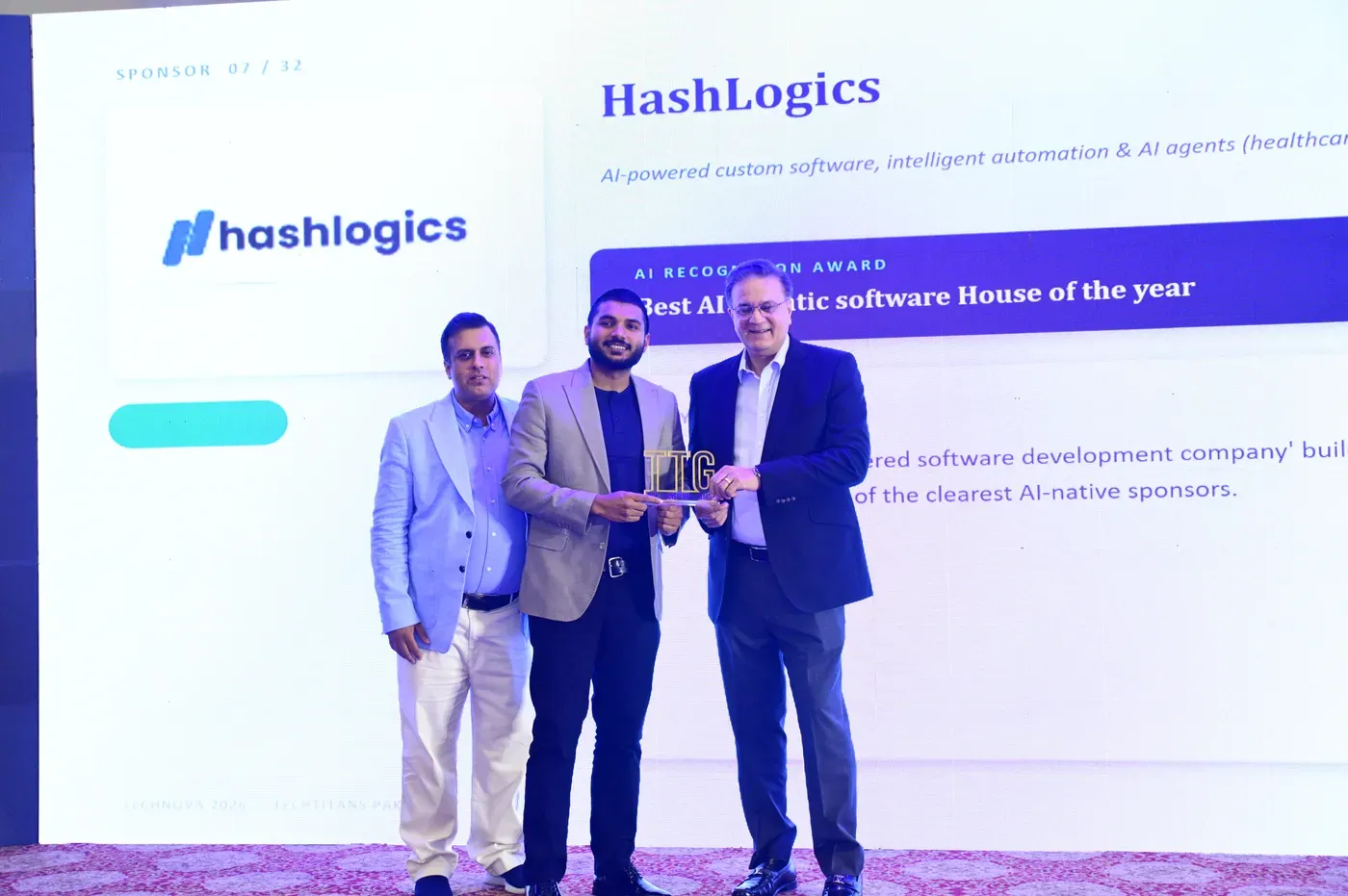
Abdul Basit founded Hashlogics in 2017, and the team runs from Lahore with a US LLC. Clients rate the work 4.8 on Clutch across 22 reviews, and in 2026 it was named Best AI-Native Software House of the Year at TechNova. Go Real Travel, a personalised European concierge platform, and TomoDomo, a coliving operations platform in Switzerland, are two of the hospitality systems we built and can show you.
Your audit call is with an engineer who has read phone logs by shift, request queues and PMS source reports like yours. Bring last month's numbers if you have them, and we'll work from those.
- NDA before the first conversation.
- No pitch on the call. A note you could hand to another firm.
- Fixed price per milestone from the Blueprint, so the number isn't a guess.
Go deeper
- AI, automation and custom software for hospitality →The whole chain, from the 4pm wave to the owner's numbers.
- Operations automation for hospitality →What happens after the call: requests, direct win-back, reviews.
- Custom software for hospitality →PMS and POS integration, multi-property and dashboards.
- AI and software for hotels →The wave, the request path and the OTA share, in hotel words.
- How should a hotel handle the 4pm check-in wave? →What a system carries, and what your agent keeps.
- Voice AI agents →How we build and test a phone agent before it takes a live call.
- The 4pm check-in wave →One property's afternoon, and which of the three jobs to automate.
