

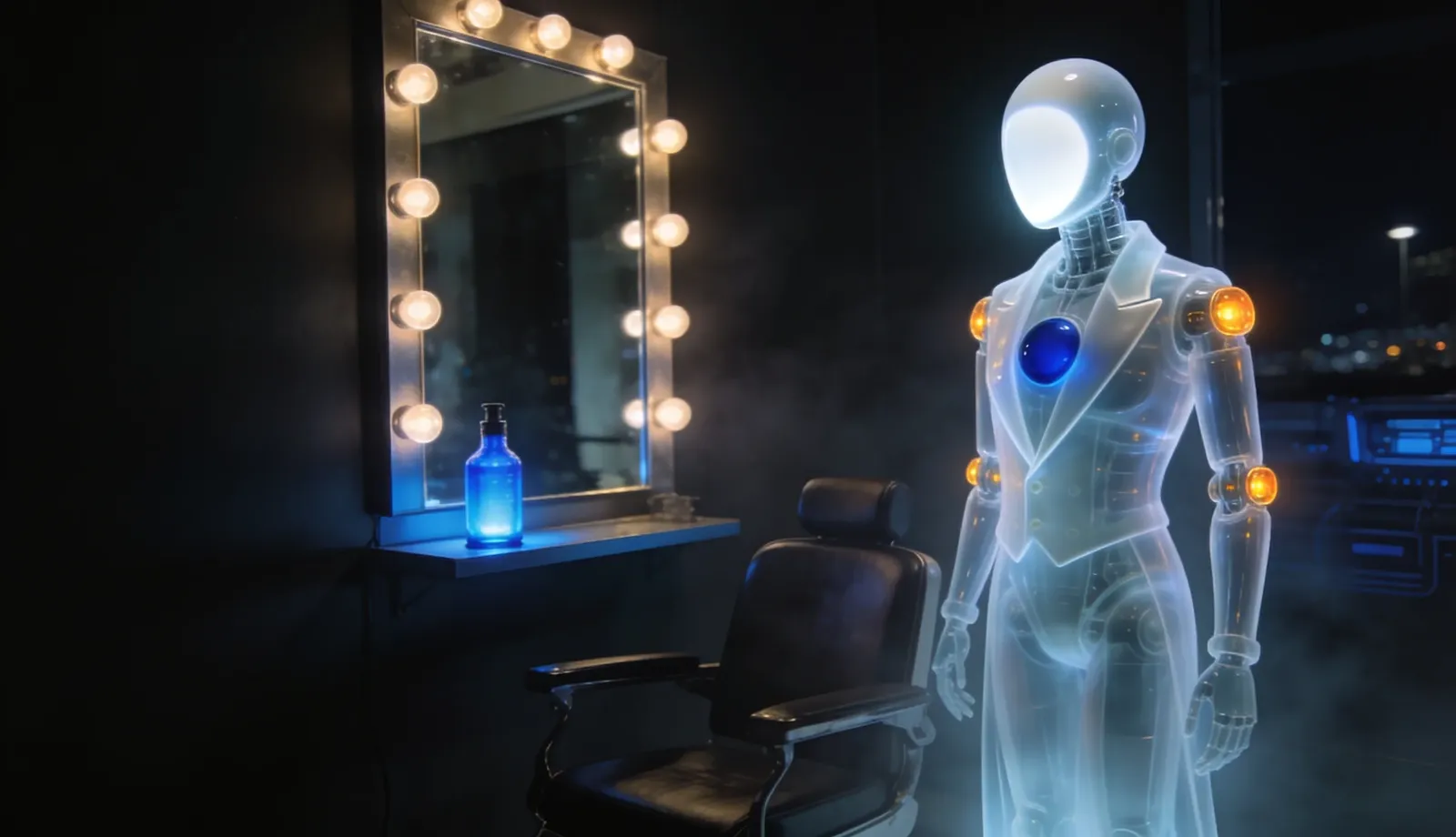
AI, automation and custom software for salons and spas, built around the booking system you already run
Your phone rings while your hands are in someone's hair, and the caller books elsewhere. You keep Zenoti, Vagaro, Booker or whatever your front desk runs, and we build the layer it never sold you: that call answered and booked with the right stylist, the cancelled slot filled from a waitlist, the rebook asked for in the chair, and memberships that renew without a chase.
- 4.8 on Clutch across 22 reviews
- PremiumAudit.io: audit cycle cut 75%, calculation errors cut 95%
- In production for SmartREI, Tankaware, ZyloBase, KiwiWrite
What changes at your front desk
3 things that decide this
- 01The phone rings mid-appointment, which is most of the day, and you either interrupt a client or lose a booking. Your line answers instead: it knows which stylist does which service and how long each one takes, offers real times from your book, takes the deposit by your rules and texts the confirmation.
- 02A cancellation two hours before a colour is an empty chair unless somebody works a waitlist by hand. We offer the slot down your list in order, with a response window you set, so the gap gets filled while your team keeps working rather than after they've noticed it.
- 03The rebook is the single most valuable thing that happens in your salon, and it depends on somebody remembering to ask while the client is still there. We prompt it at the chair by the service they just had, then chase the ones who left without one, in your voice and on your rules.
Eight places a salon or spa loses a booking, a rebook or an hour, and what we put in each one
These are the eight areas our audits keep finding, in the order a client meets them. Each one links to the page that owns it.
The phone that rings mid-appointment
Your hands are busy, the desk is empty, and the call is somebody who wants an appointment this week. Your line answers it: it knows which stylist or therapist does the service, how long that service takes, and what your book actually has free, then books it and texts the confirmation. Nobody gets interrupted and nobody gets lost.
AI guest desk →
The empty chair a waitlist should have filled
A late cancellation leaves a colour slot open, and filling it means somebody scrolling a list between clients. We offer the slot down your waitlist in order, with a window you set, and move on if the first person doesn't take it. Your team finds out the chair is full rather than that it needs filling.
Operations automation →
The rebook you didn't get to ask for
A client who leaves without a next appointment comes back when they remember, which is usually later than it should be. We prompt the rebook by the service and the interval it actually needs, at the chair and afterwards, so the six-week client books at six weeks instead of eleven.
Operations automation →
No-shows and the deposit rule you set
A no-show on a long service costs you the slot and the product you'd already mixed. We build the confirmation the day before, the one-tap cancel that actually releases the slot, and the deposit or card-on-file rule you decide on, applied the same way to everybody so nobody has an awkward conversation about it.
Operations automation →
Memberships and packages that renew themselves
A package of six facials or a monthly membership needs somebody to track what's left and when it lapses. We keep the balance current, prompt the renewal before it expires rather than after, and handle the failed card with a retry path so a billing hiccup doesn't quietly become a cancellation.
Operations automation →
Catch it at the basin, not in the review
A client who isn't happy with a colour rarely says so at the desk, and says it online instead. A short message after the appointment asks while you can still put it right, and review replies are drafted in your voice for you to approve. Nothing posts on its own, and your name stays on what does.
Operations automation →
Your booking system, your till and accounting, agreeing
Appointments live in one system, retail and payments in another, and commission gets worked out in a spreadsheet at the end of the month. We build on the APIs where they exist and a reviewed queue where they don't, so an appointment, a sale and a stylist's commission land once. Zenoti, Vagaro, Booker or whatever you run stays the book.
Custom salon software →
Chair utilisation, rebook rate and revenue per stylist
You can see who was busy. Seeing rebook rate by stylist, chair utilisation by day part and what retail actually adds per visit is a different question. We pull bookings, till and accounting into one read-only view, by site if you run more than one, so a quiet Tuesday afternoon becomes a decision rather than a feeling.
Custom salon software →
From the call you couldn't take to the rebook you nearly missed, and where the machine takes over
Three stations where a salon or spa is different from every other kind of business. Pick your system to see what each step writes back; Fresha, Phorest and the rest follow the same pattern to the depth your account allows.
Station 01 · The call, while your hands are busy
- Today
- You're mid-colour when the phone goes. Either you stop and apologise to the person in the chair, or you let it ring and hope they call back. Most don't, and nothing in your book records the appointment you never made.
- What we automate
- Your line answers, asks what service they want and who they usually see, checks who's qualified and how long that service takes, offers real times from your book, takes a deposit if that's your rule, and texts the confirmation.
- What stays human
- A complaint about a previous service, anything about a skin reaction or a medical condition, and any request for advice about a treatment goes to you. You write that list, and it's the first thing we test.
Writes to ZenotiAppointment booked against the right provider and service duration, with the client note attached.
Station 02 · The 4pm cancellation on a colour slot
- Today
- A client cancels two hours out. Filling that chair means somebody scrolling a waitlist between blow-dries, texting one name at a time and waiting to hear back. Usually the slot just stays empty.
- What we automate
- That slot is offered down your waitlist in order, to clients who want that service and that stylist, with a response window you set. If the first person doesn't take it, it moves on by itself, and the booking lands in your book the moment somebody accepts.
- What stays human
- Who gets priority on the list, whether a late cancellation costs a deposit, and any exception for a long-standing client are your policy. Our system applies your rules and never invents one.
Writes to ZenotiBooking created for the client who accepted, and the waitlist entry cleared.
Station 03 · The rebook, at the chair and afterwards
- Today
- Your stylist finishes, the next client is already waiting, and the rebook conversation doesn't happen. Your client leaves meaning to call, and comes back five weeks later than the colour needed.
- What we automate
- Prompts fire by the service and the interval that service actually needs, so your team is asked to book a real date rather than a vague soon. Clients who leave without one get a message at the right point, in your voice, and can book from it.
- What stays human
- Your stylist decides what the client needs next and says so. We never let software recommend a treatment, an interval or a product as though it were professional advice.
Writes to ZenotiNext appointment booked with the same provider, and the rebook recorded against the client history.
Each station links to the page that owns it, and the rest of the chain sits on the hospitality hub. What a client is charged, comped or refunded stays your decision.
We don't replace Zenoti, Vagaro, Booker or whatever your front desk runs. We build what they won't.
Your booking system holds the calendar, the client history and the till, and your team has years of habit in it. Replacing it costs more than it fixes, and it moves the gaps rather than closing them: the call that rang out mid-appointment, the chair nobody filled, the rebook nobody asked for, the membership that lapsed quietly.
So what matters is the access model, not the logo on the login screen. Zenoti, Vagaro, Booker and Square Appointments are cloud platforms with their own developer programmes, and the depth you get depends on your plan and what your account is approved for. During the audit we confirm what yours exposes, then design to that. Where the connection stops, we build a queue your front desk accepts with one click, so nobody re-keys an appointment at close.
One thing we plan for that most projects don't: a platform ships an update and a field you depended on changes shape underneath the integration. Nothing errors. Your rebook-rate number just goes quietly wrong. We watch the shape of what we read, so a version change reaches you as an alert rather than a report you stop trusting a season later.
- 01Appointment, client note and rebook write-back into the system you already run, against the right provider.
- 02Your booking system stays the calendar and the till. We write into it; we don't replace it.
- 03Card details never enter a message log or a call transcript, and payment stays inside your platform or gateway.
If you inject, prescribe or treat, the rules change and so does the architecture
A med spa looks like a salon on the booking screen and behaves like a clinic everywhere else. There's a medical director, an intake form that's a health record, consent that has to be captured and kept, and treatment notes that belong under clinical rules rather than in a booking system's free-text field.
So we build those differently, and we say so early rather than discovering it halfway through. If your business injects, prescribes or treats, the medspa page is the right starting point, and the front-desk work on this page still applies to the booking half of it.
- 01Consent, intake and treatment notes handled as health information, with access scoped to the person and the visit.
- 02Nothing clinical is decided, suggested or drafted by software; your medical director owns the treatment decision.
Fire, medical and security go to a person, always. Reviews are never auto-posted. Card numbers never touch a transcript.
A guest desk sits under rules that don't bend for software: a safety call is answered by a human, a review reply carries your name and is approved by you, payment data stays in your PMS or POS and never in a message log, and rate parity, overbooking walks and chargebacks are decisions a person owns. So every build starts with a one-page map of what the system answers, what it only proposes, and where a person is woken.
What follows is simple to state, and we put it in writing. Safety triggers are a short list you write and the first thing we test. Review-reply drafts queue for your approval and nothing posts on its own. Consent is captured before a guest or member is messaged. And every automated touch is logged so you can read what was said to a guest, and when.
- 01Fire, medical, security and any guest-safety call reach a person before the caller finishes the sentence.
- 02Review replies drafted, never posted; rate parity, walks and chargebacks stay human.
- 03Nothing about a client's skin, health or treatment is decided by software, and consent is captured before a client is messaged.
“They will treat your vision like their own and build it that way.”
Ron Klabunde · Founder, SmartREI ↗
“They really help you understand the problem and deliver solutions in a short time frame.”
Johannes Peter · CEO, TomoDomo Coliving
Some of the systems we have shipped
- AuditFree. We read a week of your call log by hour against your appointment book, your no-show and late-cancel rate, your rebook rate by stylist, and what your booking platform actually exposes. That's the Guest-Journey Audit, and the one-page note is yours either way.
- DiagnoseWe map the path into your PMS, POS or booking system and accounting, and sit at the desk through one check-in wave or one service.
- BuildFixed price per milestone from the Blueprint. Tested on your real calls, requests and bookings, under NDA.
- RunMonitoring, a named engineer, and the first two months of maintenance free.
Best fit: a property, restaurant group, studio or operator with a desk that's saturated at peak, more than one location or shift, and a system you've outgrown in places. Not a fit yet: a single-room B&B that needs a booking widget, and we'll say so. You can stop after any stage; the audit note is yours either way.
Before you book
01Do we have to leave Zenoti, Vagaro or Booker?+
No, and we'd usually argue against it. Your platform holds the calendar, the client history and the till, and your team knows it. What's missing is the layer around it: the call answered while your hands are busy, the cancelled chair filled from a waitlist, the rebook asked for at the right interval, and the membership that renews without a chase. We build that and leave your book alone.
02Will an AI receptionist know which stylist does what?+
It has to, or it books appointments your team can't honour. We map your services to the people qualified to do them and the real duration each one takes, including processing time, before anything answers a call. A line that books a two-hour balayage into a forty-five minute gap causes more damage than the missed call it replaced.
03What happens when a caller wants advice about a treatment?+
It goes to a person, on a list you write before we build anything. Anything about a skin reaction, an allergy, a medical condition, a complaint about a previous service, or a client who sounds distressed reaches your team rather than getting an answer from software. Your line never recommends a treatment or a product as though it were professional advice.
04We're a med spa. Is this the right page?+
The booking half applies, and the clinical half needs a different build. Once you inject, prescribe or treat, intake becomes a health record, consent has to be captured and kept, and treatment notes sit under clinical rules rather than in a booking system's notes field. Start on the medspa page instead, and the front-desk work here still applies to how the appointment gets made.
05Can you help with rebook rate specifically?+
That's usually the first thing we look at, because it's the number with the most money attached and the one most systems report badly. We measure it by stylist and by service, prompt the booking at the interval that service actually needs, and chase the clients who left without one. You see whether it moved, by person and by month.
06How do you charge, and how does an engagement start?+
Our Guest-Journey Audit is free, and the one-page note is yours whether or not you go further. Every build starts with a fixed-fee Blueprint: an engineer reads your real systems and writes the plan, with a fixed price for each milestone rather than a guess. The fee is credited in full against the build, and if the plan isn't one you'd act on, you don't pay for it. That number is a commitment, not a guess, and you can stop after any stage.
A senior engineer, not a sales rep
Abdul Basit founded Hashlogics in 2017, and the team runs from Lahore with a US LLC. Clients rate the work 4.8 on Clutch across 22 reviews, and in 2026 it was named Best AI-Native Software House of the Year at TechNova. Go Real Travel, a personalised European concierge platform, and TomoDomo, a coliving operations platform in Switzerland, are two of the hospitality systems we built and can show you.
Your audit call is with an engineer who has read phone logs by shift, request queues and PMS source reports like yours. Bring last month's numbers if you have them, and we'll work from those.
- NDA before the first conversation.
- No pitch on the call. A note you could hand to another firm.
- Fixed price per milestone from the Blueprint, so the number isn't a guess.

More for salons and spas
- AI, automation and custom software for hospitality →The whole chain across hotels, restaurants, studios, salons and travel, and which page owns each part.
- AI guest desk →The call answered mid-appointment, booked with the right provider.
- Operations automation →Waitlists, rebooking, deposits, memberships and reviews caught early.
- Custom salon software →Booking and till integration, commission, and utilisation by chair and stylist.
- Med spas →Where the treatment is clinical and consent, intake and notes change the build.
- Gyms and studios →The same booking and retention chain, where the slot is a class rather than a chair.
- Voice AI agents →The service behind the line that answers while your hands are busy.
