

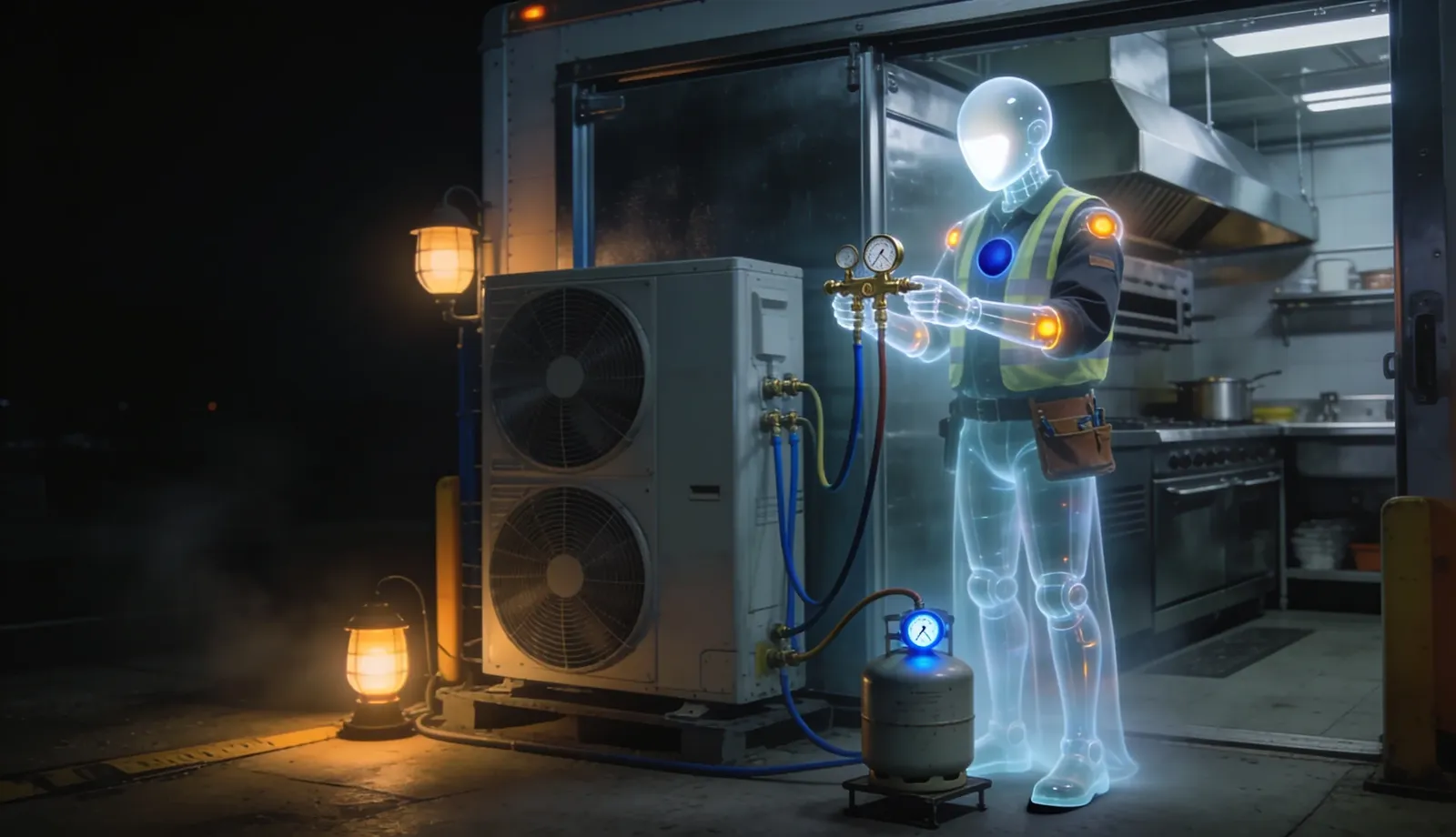
Refrigerant compliance automation and custom software for HVAC and refrigeration contractors
EPA audits fail on paperwork, not on repairs. We build the compliance layer around ServiceTitan, BuildOps, ServiceTrade or whatever you run: leak rates worked out from the pounds your tech added, the 30-day clock on a screen in the office, certs and recovery logs on every job, and a record you can hand an auditor without digging.
- 4.8 on Clutch across 22 reviews
- PremiumAudit.io: audit cycle cut 75%, calculation errors cut 95%
- In production for SmartREI, Tankaware, ZyloBase, KiwiWrite
What changes for you
4 things that decide this
- 01Every pound of refrigerant your tech adds becomes a leak-rate calculation against that system's full charge, using EPA's own annualizing or rolling-average method, the moment the ticket closes.
- 02A system that crosses its threshold (10, 20 or 30 percent a year by equipment class) starts a visible 30-day clock in your office, with the initial and follow-up verification tests tracked to done.
- 03Tech certifications, recovery and recycling logs, and cylinder inventory ride on the same job record, so the three-year file EPA can request is assembled as you work, not rebuilt when the letter arrives.
- 04January 2026 widened the net: EPA's AIM Act rules now apply leak repair to HFC systems holding 15 pounds or more, on top of the 50-pound rule under Section 608. The software knows which rulebook each system sits under.
On the record
Facts you can check before you call
4.8
Clutch rating from client reviews
4
countries our client work runs in: US, UK, Switzerland, Australia
2017
building since. TechNova 2026: Best AI-Native Software House of the Year
2 mo
of support and maintenance free after launch. NDA before the first call
Six places refrigerant compliance breaks, and what we put in each one
Each one keeps the dispatch platform you already run and plugs the compliance gap next to it.
Leak-rate math at the truck, not at year end
Your tech logs pounds added and the system's full charge on the ticket. The software runs EPA's annualizing method on the spot and the rolling average across the last 365 days. Nobody works out percentages from a stack of paper tickets in March.
How the EPA 608 leak-rate calculation works →
The 30-day clock the office can see
When a system crosses its threshold, a repair deadline appears on a board with the site, the system and the days left. Industrial process systems that need a shutdown get their 120-day version. If the owner chooses retrofit or retirement instead, the plan deadline and the one-year completion date sit on the same board.
Dispatch and field automation for HVAC →
Verification tests tracked to done
A repair without its initial verification test and the follow-up test on record is an open item in an audit. Both tests get their own line on the leak event, with the follow-up window counted from the day the system returns to normal operation. The event closes only when the paper trail does.
What is EPA Section 608 compliance? →
Tech certs on every service record
Type I, II, III or Universal: the tech's cert number lands on each record automatically, and dispatch is warned before it books a Type I tech onto a low-pressure chiller. Expiry dates and new hires are tracked in one place instead of a drawer of wallet cards.
HVAC business software and reporting →
Recovery, recycling and cylinder inventory
Refrigerant recovered, reclaimed and added is logged per job and rolled up per truck and per cylinder. What's on the van matches what the log says, and the reclaimed-refrigerant rules arriving under the AIM Act land in the same ledger rather than a second system.
Business process automation →
The audit export and the March 1 report
One click produces the three-year record for any site or system: owner, location, full-charge method, refrigerant added, leak rates, repair dates, test results, inspections. Systems that leaked 125 percent of their charge in a calendar year are flagged for the report due to EPA by March 1 of the next year.
Custom software development →
- Ticket closesPounds added, system ID, tech cert number.
- Full charge looked upNameplate, calculation or measured, per EPA's four methods.
- Leak rate calculatedAnnualized and rolling, both kept.
- Threshold checked10, 20 or 30 percent; 608 or AIM Act rulebook.
- Clock and tests30-day repair, initial and follow-up verification.
- Record retainedThree years, exportable per site or system.
Your certified tech still does the repair and signs the test. The software makes sure the office sees the clock start.
Full charge is the number nobody has, and every leak rate depends on it
A leak rate is pounds added divided by the system's full charge. That second number is where most contractors' records fall apart. EPA accepts four ways to set it: the manufacturer's figure, a calculation from component sizes and pipe volume, actual measurements including seasonal swings, or the midpoint of an established range. Pick one per system, write it down once, and every calculation after that is defensible.
So the first thing we build is an equipment register your team can actually keep current. Each system carries its full charge, the method used to set it, its refrigerant, its equipment class and which rulebook applies. Your techs then log pounds, and the math happens without them.
It also settles arguments with site owners. When a supermarket rack crosses 20 percent, you can show the owner the ticket history and the method behind the number the same day, instead of a month later from memory.
- One equipment register per customer site, with full charge and its method recorded per system.
- Refrigerant type and equipment class decide the threshold; the software never asks the tech to remember it.
- Owners get a plain-language leak notice with the history behind it.

We don't replace ServiceTitan, BuildOps, ServiceTrade or whatever you run. We build what they won't.
Your field platform is good at jobs, schedules and invoices. What it doesn't ship is an EPA leak-rate engine, a repair clock or an audit export built to the regulation. Packaged compliance tools such as RefGuard and OxMaint cover pieces of that, and where one fits you we'll say so. Dispatch is the gap they leave: the compliance record and the job record live in different systems, and someone re-keys between them. We build the layer that joins them.
Access decides the integration, so we confirm it before anyone estimates a build. ServiceTitan works through its developer program with your tenant credentials. BuildOps and ServiceTrade expose data through their APIs. On a spreadsheet, an older FSM or a system you had built years ago, we write into that instead.
- 01Job, equipment and customer write-back to your board, with the leak event attached to the job.
- 02QuickBooks stays your ledger. We read refrigerant purchases from it for inventory reconciliation, never touching your books.
- 03Owners and facilities managers can get a read-only portal to their own sites' records where you want to offer it.
“They will treat your vision like their own and build it that way.”
Ron Klabunde · Founder, SmartREI ↗
Some of the systems we have shipped
- AuditFree. We take one quarter of your leak-inspection paperwork and check it against the 608 and AIM Act requirements, line by line.
- DiagnoseWe map your equipment register, your tickets and your board, with your service manager in the room.
- BuildFixed price from the diagnostic. Tested on your real tickets and your real systems.
- RunMonitoring, a named engineer, and the first two months of maintenance free.
Best fit: a refrigeration or HVAC/R contractor with real commercial charge sizes and a platform that can't see the clock. A residential-only shop rarely needs this layer, and we'll say so. You can stop after any stage; the audit findings are yours either way.
Before you book
01Which leak-rate method does the software use?+
Both of EPA's methods, and it keeps the result of each. Annualizing divides pounds added by full charge, then scales by the days since the last addition (capped at 365). Rolling average sums pounds added over the past 365 days and divides by full charge. Your compliance lead picks which one governs each system, and the record shows the method used.
02What counts as crossing the threshold?+
A calculated leak rate above 10 percent a year for comfort cooling and other appliances, 20 percent for commercial refrigeration, or 30 percent for industrial process refrigeration. Your 30-day repair clock starts when the rate is exceeded, whether or not anyone in the office noticed. That's the moment the software is built to catch.
03Does this cover the AIM Act HFC rules too?+
Yes. Each system in the register is tagged with its refrigerant and its full charge, so the software knows whether it falls under Section 608's 50-pound rule, the AIM Act's 15-pound rule for HFCs from January 2026, or neither. Your chronically leaking report (125 percent of charge in a calendar year, due March 1) comes out of the same data.
04How long are records kept, and what's in them?+
At least three years from the service or disposal event, which is what both rulebooks require. Your export carries the owner, the site, the full-charge method, refrigerant added and recovered with dates, the leak-rate calculations, repair dates and results, verification tests and inspection records. It's the file an auditor asks for, in the order they ask for it.
05Will it work with our platform?+
ServiceTitan works through its developer program with your tenant credentials, and BuildOps and ServiceTrade expose data through their APIs. On something else, an older FSM, a spreadsheet or your own build, we write into that. We confirm exact access during the free audit, before any estimate.
06Does the AI ever decide whether a system is compliant?+
No. It does arithmetic EPA has already defined, tracks deadlines and assembles records. Whether a repair is adequate, whether a retrofit plan is acceptable and how a rule applies to an unusual system stay with your certified tech and your compliance adviser. That line is written into the build.
More for HVAC and refrigeration contractors
- AI, automation and custom software for HVAC companies →The whole chain, from the first ring to the renewal.
- What is EPA Section 608 compliance? →Defines the rule behind this page, plainly.
- EPA 608 leak-rate calculator →Both methods, with worked examples.
- HVAC business software and reporting →Where compliance records meet job data.
- Dispatch and field automation for HVAC →The board the repair clock lands on.
- Business process automation →Our service behind threshold-triggered workflows like this.
