


Agencies and MSPs
A white-label AI and software partner for agencies and MSPs: built under your brand, run after launch
Your clients are asking for AI and you have nowhere to put the request. We're the bench behind you: AI intake agents, document workflows, RAG assistants, portals and integrations into ConnectWise, Autotask, Halo or whatever your client runs. Your brand on the front, your client relationship untouched, and a named engineer on it after go-live.
- 4.8 on Clutch across 22 reviews
- PremiumAudit.io: audit cycle cut 75%, calculation errors cut 95%
- In production for SmartREI, Tankaware, ZyloBase, KiwiWrite
What a partnership actually gives you
3 things that decide this
- 01You get to say yes to the AI request instead of parking it. MSP Success reported in October 2025 that 93% of MSPs use generative AI internally while only 24% see a significant change from it and 53% see a help-desk benefit, which is the gap between using a tool and shipping something for a client.
- 02Your client stays your client. Referral or white-label, your brand is on the work, the tickets route through your desk, and the relationship never moves. Terms get agreed on a call rather than published on a page.
- 03The build is maintained after launch by a named engineer, which is the thing that usually goes wrong when a freelancer delivers and disappears. Scoping calls cost nothing. Every build then starts with a fixed-fee Blueprint, credited in full against the build, and if the plan isn't one you'd act on, you don't pay for it.
What partners hand us
Four shapes of request, all delivered under your brand and wired into the systems your client already runs.
AI intake and voice agents
A client's phone and mailbox answered, verified and triaged, or your own help desk line taking the Monday morning lockout call at 8:02 instead of 8:30. Tickets open on the right board at the right priority with the SLA clock already running.
AI voice agents →
Document workflows and RAG assistants
The document-heavy jobs your clients keep asking about: contracts and forms parsed into structured records, an assistant answering from their own documents with citations, and approval gates where a person has to sign off before anything moves.
AI agents →
Integration into the PSA and the client's stack
Notes, time, status and closure codes written back to ConnectWise, Autotask, HaloPSA or whatever you run, plus the client-side systems behind them. Kaseya's 2024 MSP Benchmark Survey found 31% of technicians waste too much time swapping between IT applications, and that is an integration problem.
Business process automation →
Portals and custom builds
Client portals, multi-tenant dashboards, reporting your stack does not produce, and the workflow a packaged product will never model. Built to your design system where you have one, and to your naming where you don't.
Custom software development →
Staff augmentation
Senior engineers into your team under your management, for the months you need them, when the shape of the work is yours to direct rather than ours to own.
Staff augmentation →
A dedicated team
A standing team that learns your clients and your stack, so the second and third project do not start from zero. This is the shape most partners settle into once the first build lands.
Dedicated team →
How the partner motion works
An NDA comes first, before we talk about a named client. Your brand goes on the work, your client contracts with you where you want it that way, and our engineers sit behind your team rather than beside it. When your client asks who built it, the honest answer is that you did, with a bench you employ for exactly this.
Scoping calls are free. Every build starts with a fixed-fee Blueprint: an engineer reads your real systems and writes the plan, with a fixed price for each milestone rather than a guess. The fee is credited in full against the build, and if the plan isn't one you'd act on, you don't pay for it. You get a written scope you could hand to another vendor, which is how you know it's a real scope.
Then the part most partners have been burned by: what happens after launch. A named engineer stays on the build, under an SLA or a trained handover into your own team, and support routing is agreed before go-live so your client never discovers a gap. Tier one and tier two stay with your desk; we take what escalates.
- 01NDA signed before we discuss a named client, and we stay out of your client list.
- 02Your brand, your relationship, your invoice. Referral or white-label, decided on the call.
- 03Scoping calls cost nothing. Every build then starts with a fixed-fee Blueprint, credited in full against the build, and if the plan isn't one you'd act on, you don't pay for it.
- 04Fixed price per milestone from the Blueprint, and a named engineer on it after launch.
What the research says about your desk
The numbers behind the ask
31%
of MSP technicians waste too much time swapping between IT applications (Kaseya 2024 MSP Benchmark Survey)
85%
call automation a must-have RMM feature (Kaseya 2024 MSP Benchmark Survey)
93%
of MSPs use generative AI internally, and 24% see a significant change from it (MSP Success, October 2025)
20–50%
of help-desk calls are password resets (Gartner and Forrester figures, via BleepingComputer 2022)
The first build is usually your own desk, and then it becomes your demo
Most partners come to us with a client request and end up building for themselves first, because the fastest way to sell an AI intake agent is to have one answering your own line. Kaseya's 2024 survey put 60% of technicians ranking automation and auto-remediation of tickets as the top RMM feature and 85% calling automation a must-have, so the appetite inside your own team is usually already there.
It's also the safest place to learn what the build actually does. Your Monday morning lockout call gets answered at 8:02, the ticket opens on the right board with the client, the site and the priority filled in, the SLA clock starts, and the four other people from the same office get grouped onto it rather than opening four tickets. Nobody's client is the test case.
Then it becomes the demo. Your vCIO walks a client through a system that is visibly running in your own business, which is a different conversation from showing them a vendor's marketing site and hoping.
- Identity verification before any reset, and admin, finance and executive accounts always wait for a technician.
- Alert storms de-duplicated before they become a hundred tickets from one outage.
- Every P1 acknowledgement and every security incident stays with a person, by rule.

Where a person stays in the loop, on your builds and ours
Every build we deliver under a partner's brand has the same lines drawn through it, and they are written into the design rather than left to a model's judgement. Identity gets verified before any account action, and admin, finance and executive accounts always wait for a technician. On anything that looks like a security incident, the system opens the ticket, pages your on-call and touches nothing else.
The rest is about consent and honesty. Calls announce that they're recorded. Any outbound texting runs on people who opted in, with an unsubscribe that works. An assistant answering from a client's documents cites where the answer came from rather than asserting it, so your client's team can check. And your data stays your data: we sign a DPA alongside the NDA, we don't train on your clients' inputs, and where the client wants it in their own tenant, that's where it runs.
- 01Identity verified before any account action. Privileged accounts always wait for a technician.
- 02Security incidents open a ticket and page a person. Nothing automated remediates them.
- 03Assistants cite the document the answer came from, so your client's team can check it.
- 04NDA and DPA signed up front. No training on your clients' data, and we stay out of your client list.
“They will treat your vision like their own and build it that way.”
Ron Klabunde · Founder, SmartREI ↗
Some of the systems we have shipped
- AuditScope. Free. We read the last ten AI or automation asks you couldn't staff and map which ones ship.
- DiagnosePilot under your brand. One build, usually your own desk, so your team sees it working before a client does.
- BuildBuild. Fixed price per milestone from the Blueprint, delivered white-label, integrated into your PSA and your client's stack.
- RunMonitoring, a named engineer, and the first two months of maintenance free.
Best fit: an agency or MSP with a handful of clients asking for AI you cannot currently staff, one PSA, and a desk worth automating. Not a fit yet: a reseller wanting a cheap chatbot to mark up, or anyone who wants unattended password resets with no identity check, and we'll say so. You can stop after any stage.
Before the scoping call
01Referral or white-label. What is the difference, and who contracts with the client?+
Two shapes, and you pick. On a referral, we contract with the client directly and you take a referral position, which suits an agency that wants the introduction made and nothing else. White-label means you contract with your client and we sit behind you: your brand, your invoice, your relationship, our engineers. Most partners want the second one, and the terms get agreed on the call rather than published here.
02Does it write back to ConnectWise, Autotask or HaloPSA, or is it another inbox?+
It writes back, and that's the whole point of building rather than buying. Notes, time, status and closure codes land on the right board from the call, the thread or the RMM event, so your technicians are not re-typing what a tool already knows. We confirm exactly what your PSA tenant exposes during scoping, and where an interface doesn't exist we build a watched process instead of pretending it does.
03Who does my client call when it breaks?+
You do, and that is agreed before go-live rather than discovered afterwards. Tier one and tier two stay with your desk because your client knows your number. What escalates comes to us, to a named engineer who worked on the build, under an SLA or a trained handover into your own team if you would rather own it outright.
04Can it live in the client's own tenant so we can white-label it properly?+
Yes, and for a lot of MSP clients that's the only answer their compliance team will accept. The build runs where the data already lives, we sign a DPA alongside the NDA, and we don't train on your clients' inputs. Your client's data staying inside your client's tenant is a design decision made at the start, not a setting somebody toggles later.
05How does it verify who is calling before a password reset?+
By your rules, and never by voice alone. Identity checks happen before any account action, and admin, finance and executive accounts always wait for a technician regardless of how well the check went. Password resets are worth automating precisely because Gartner and Forrester figures put 20% to 50% of help-desk calls in that bucket, but an unattended reset with a weak identity check is a breach waiting to be written up.
06We are eight people. Is this for us or for the 200-seat MSPs?+
Eight is a good size for this, because the constraint you have is bench rather than demand. If three or more clients have asked you for AI in the last year and you had nowhere to put the request, the partnership pays for itself on the first build. What doesn't work is break-fix with no PSA, or a reseller looking for a cheap chatbot to mark up, and you'll get that answer on the scoping call rather than a proposal.
A senior engineer, not a sales rep
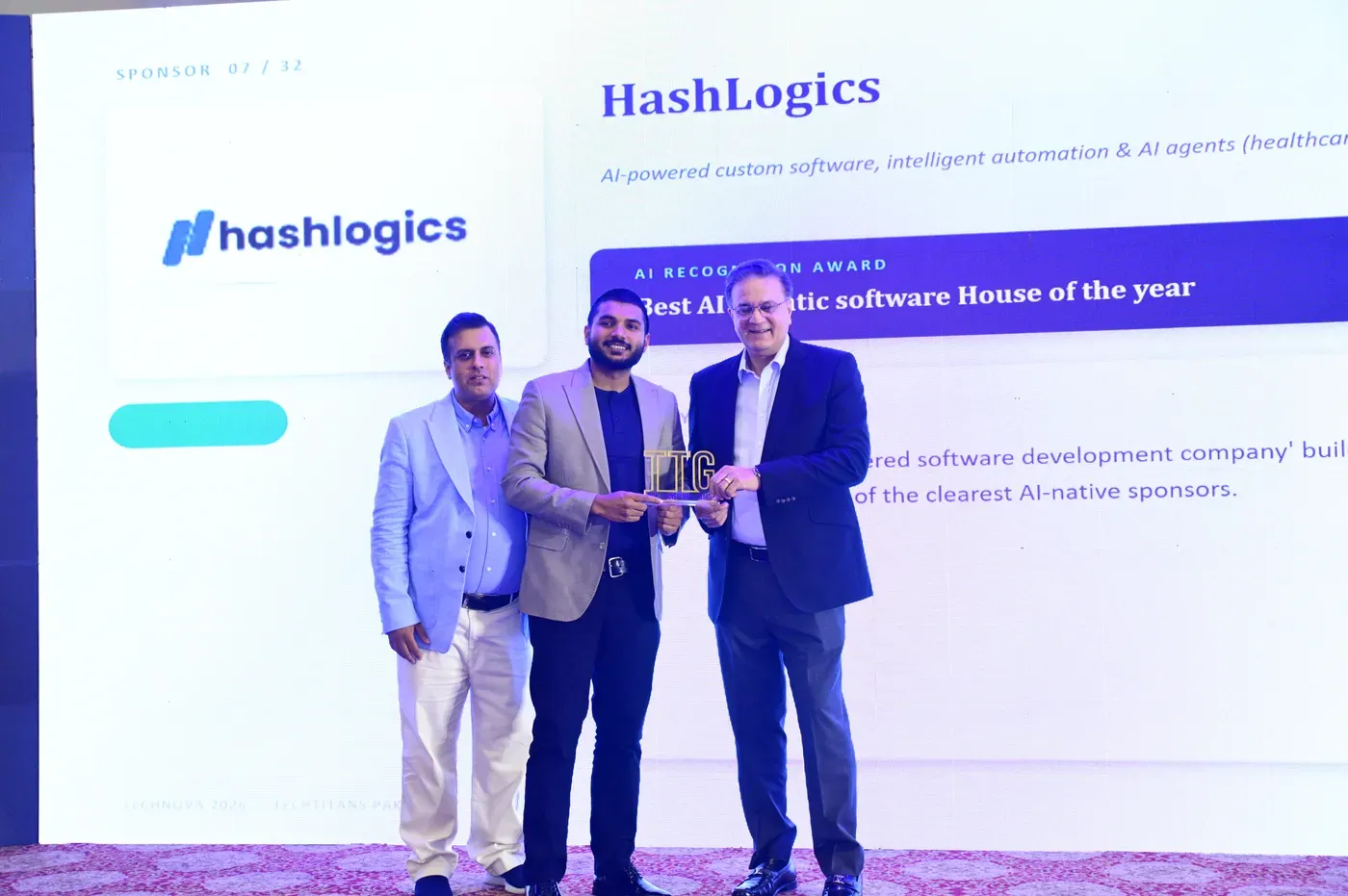
Abdul Basit founded Hashlogics in 2017, and the team runs from Lahore with a US LLC. Clients rate the work 4.8 on Clutch across 22 reviews, and in 2026 it was named Best AI-Native Software House of the Year at TechNova. WAIQ, a business operations execution platform with multi-tenant readiness dashboards, and Shift Link, where workforce compliance checks gate whether work can be scheduled at all, are two of the systems we built. Both are the shape of a multi-tenant partner build.
Your scoping call is with an engineer, not a partner manager. Bring the last ten requests you couldn't staff and we'll tell you which three ship and which one you should decline.
- NDA before we discuss a named client, and a DPA alongside it.
- No pitch on the call. You get a written fit map you could hand to another vendor.
- Fixed price per milestone from the Blueprint, and a named engineer on it after launch.
More for agencies and MSPs
- Staff augmentation →Senior engineers into your team, under your management.
- Best white-label development partners →The field ranked, and where we sit in it.
- Best staff augmentation companies →An honest roundup of who staffs what.
- Hiring developers vs a white-label partner →Which one wins, and under what conditions.
- Staff augmentation vs a dedicated team →Direction and ownership, side by side.
- Staff augmentation vs outsourcing →Where the line actually sits.
- What should an agency ask a white-label partner? →The questions that separate a bench from a broker.
- AI agents →Intake agents, RAG assistants and the approval gates around them.
- Custom software development →Portals, dashboards and the workflow nothing packaged will model.