


Roofing contractors
AI, automation and custom software for roofing contractors, built around the claim
A roofing job is not closed until the insurer agrees, and your crews are on a roof all day while the phone decides who wins the next one. We answer it, capture the carrier and policy details on call one, chase the supplement documents, and write every bit of it back to AccuLynx, JobNimbus, Roofr or whatever you run.
- 4.8 on Clutch across 22 reviews
- PremiumAudit.io: audit cycle cut 75%, calculation errors cut 95%
- In production for SmartREI, Tankaware, ZyloBase, KiwiWrite
What changes for your company
3 things that decide this
- 01Your line keeps answering through a storm week. Vendor pages selling into roofing put the post-storm surge at 300% to 500% of normal volume inside 72 hours, and your office staff does not triple, so the surge becomes a queue with real inspection slots instead of a pile of missed calls.
- 02A lead gets worked in minutes rather than at six in the evening, when a roofer told JobNimbus the homeowner has already booked somebody else. Speed-to-lead texting, a callback list on somebody's desk each morning, and a canvassing list that gets worked twice.
- 03Claim paperwork stops being the thing that kills a sold job. Carrier, policy number, adjuster and deadline captured on the first call, then a watched checklist that nudges whoever is holding up the supplement.
Five places a roofing company loses signed work
Pick the one costing you the most this season. Every build keeps the CRM your office already runs and adds the layer it never had.
The call nobody was free to take
Goodcall's roofing page puts unanswered roofing calls at 62%, and that is a vendor figure about a problem every roofer recognises. Your line answers day or night, asks whether it is storm damage or a leak, gets the address and the carrier, and books an inspection against a real crew calendar.
Best AI answering services for roofing →
Storm-week surge capacity
Vendor pages selling into this trade describe call volume jumping 300% to 500% within 72 hours of a storm. Intake scales with it: every caller gets answered and qualified, damage details and photos get requested by text, and your canvassers get a live list of who called from which street.
What a storm week does to a roofing phone line →
Speed to lead on paid and canvassed work
You're paying real money for those leads, and a five-minute response is reported to lift the odds of connecting by around a hundred times. We text back the second a form lands, keep texting until somebody replies, and put the ones who went quiet on a callback list your salesperson actually opens.
Why roofing leads are so expensive →
Claim intake and the supplement chase
Insurance jobs die in the paperwork, not on the roof. It isn't the roof that holds them up. We capture carrier, policy, adjuster and deadline on call one, then run a watched checklist over the scope, the photos, the measurement report and the supplement so nothing sits waiting on a person who forgot.
Custom software development →
The numbers your CRM will not give you
Where your leads came from, what each storm actually produced, how long a claim sat at each stage, and which crew closes what. We pull it out of the CRM and the phone system into a view you can read on a Monday morning without exporting anything.
Business process automation →
A roofing job from the storm to the payout, and where the machine takes over
Pick the system your office runs. Each station shows what happens today, what we automate, what stays with a person, and what gets written back.
Station 01 · The storm hits and the phone melts
- Today
- Three days of calls arrive in an afternoon. Your office manager takes what they can, everyone else gets voicemail, and by the time you call back the homeowner has three other roofers booked.
- What we automate
- Every caller gets answered and qualified: storm damage or a leak, address, roof age, carrier, and whether an adjuster has already been out. Inspections get booked against real crew capacity rather than into an optimistic diary.
- What stays human
- Anyone describing water pouring into the house, a partial collapse or an injury goes straight to a person. So does anyone who wants to argue about a bill.
Writes to AccuLynxLead created with the storm tag, address and carrier details on the job.
Station 02 · The inspection and the measurement
- Today
- Your salesperson climbs, takes forty photos on a phone, and the report gets written up that night if there is time. Half of them never make it into the file.
- What we automate
- A photo checklist that will not close half-done, the measurement report ordered automatically once the address is confirmed, and everything filed against the job rather than sitting in a camera roll.
- What stays human
- Your inspector decides what the roof needs. No system we build declares a roof sound, safe or code-compliant, and that judgement stays on the name of the person who climbed it.
Writes to AccuLynxPhotos, measurements and the inspection report attached to the job file.
Station 03 · The estimate and the claim
- Today
- Your estimator builds the scope line by line against the carrier's expectations, and a three-day turnaround loses the bid to whoever got there first.
- What we automate
- A draft scope assembled from the measurement report and your own price book, ready for your estimator to check, plus the claim record with carrier, policy number, adjuster name and every deadline attached to it.
- What stays human
- Your estimator owns the number, and the conversation with the adjuster is a human conversation. We just make sure nobody is hunting for the policy number while they have the adjuster on the line.
Writes to AccuLynxEstimate and claim details on the job, with the adjuster contact recorded.
Station 04 · The follow-up that decides it
- Today
- Out goes the proposal, and then the week happens. Nobody rings back, the homeowner signs with the roofer who did, and the estimate sits in a status nobody filters by.
- What we automate
- Timed follow-ups fire off the estimate status: a text the same evening, a nudge at day three, a financing reminder where you offer it, and a callback list on your salesperson's desk at eight the next morning.
- What stays human
- Your salesperson still makes the call. We only make sure it is on their desk with the context attached instead of buried in a CRM status.
Writes to AccuLynxFollow-up tasks and the estimate status updated on the job.
Station 05 · The supplement, and getting paid
- Today
- Your crew finds decking rot, somebody writes the supplement, and then it waits. Nobody knows whether it's with the adjuster, the carrier or on somebody's desk, and the job stays open for months.
- What we automate
- A watched checklist per claim: what has been submitted, what is outstanding, who is holding it, and how long it has been sitting. Reminders go out on your schedule, and the invoice is raised the day the payout clears.
- What stays human
- Every conversation with a carrier is yours. So is the decision about what to supplement for and what to absorb.
Writes to AccuLynxSupplement status and payment milestones tracked on the job.
Running an older CRM, a spreadsheet, or something built for you years ago? The stations are the same. Only the write-back changes, and that is the part we build.
A hailstorm should not be the week your intake falls over
A storm is the only marketing event in roofing you didn't have to pay for, and it lasts about a week. Vendor pages selling into this trade describe call volume jumping several times over inside 72 hours, and everything downstream of the phone was sized for a normal Tuesday.
The failure is never dramatic. Your office manager answers what they can, the rest go to voicemail, and the callbacks happen in an order set by whoever left the clearest message rather than by who has the biggest roof and the best carrier. Two weeks later you can't tell which streets you actually covered.
We build intake that holds the surge and hands your canvassers a live map of who called from where, because a storm week is worth more than the calls you answered. It's knowing which neighbourhood is worth a door-knock on Saturday.
- Every caller answered and qualified, whatever the hour and whatever the volume.
- Damage photos requested by text before the inspector is dispatched.
- A live list by street, so canvassing works the storm instead of guessing at it.
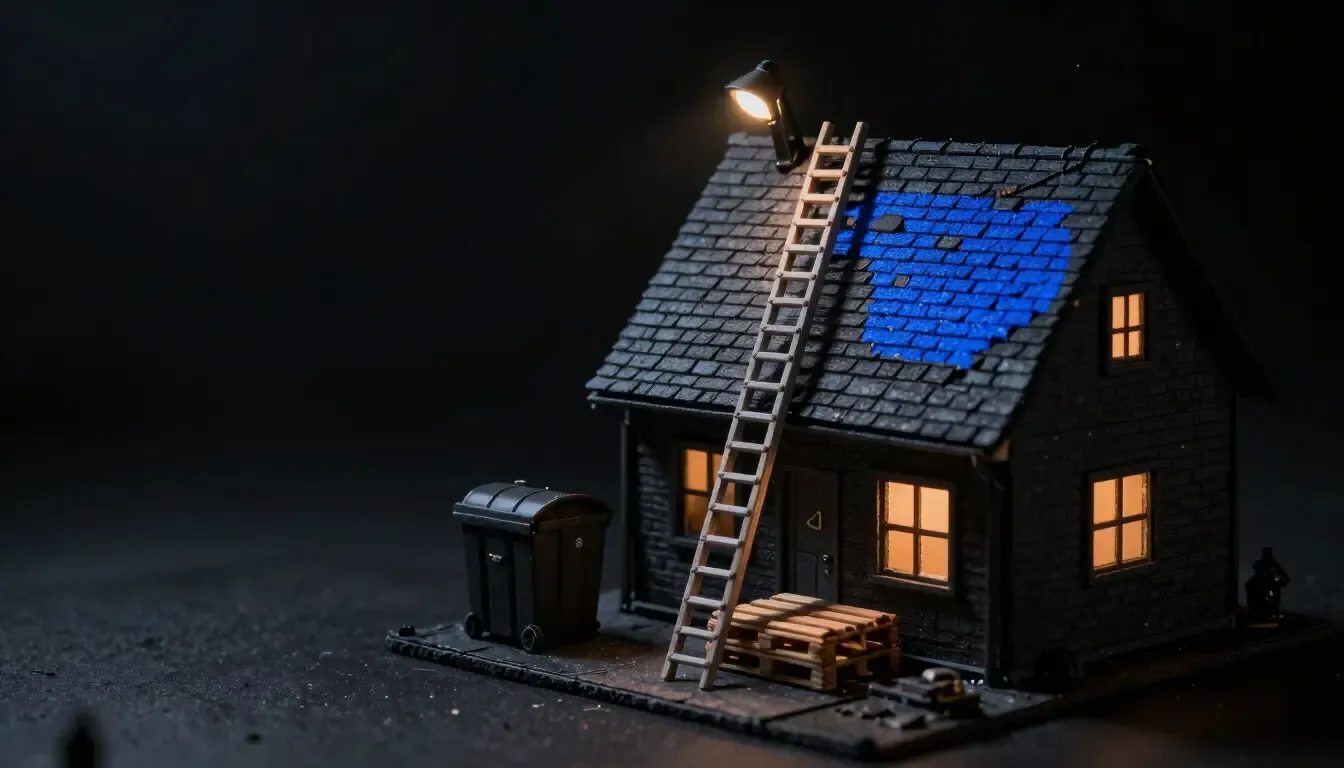
Nobody automated declares a roof safe, and the hazard call goes to a person
Roofing has two lines that never move, and both are written into the triage table rather than left to a model. If a caller describes water coming through a ceiling, a partial collapse, a live wire touching the structure, or anybody hurt on the property, the system stops qualifying and starts escalating: it tells them what to do right now where that applies, rings your on-call number, and stays on the line until a person answers.
Our second hard line is your licence. No output we build calls a roof sound, safe, code-compliant or beyond repair. That judgement belongs to the licensed and insured person who climbed it, and it stays on their name in the file. Calls announce that they are recorded, and every storm text campaign runs on people who opted in, because a compliance problem is not less of one for being automated.
- 01A hazard call escalates to a human before the caller finishes the sentence, by rule and not by judgement.
- 02No AI output declares a roof safe, sound or compliant. Your inspector decides, and the file records who decided.
- 03Estimates and supplements are drafted for a person to check, never sent to a carrier unread.
- 04Calls announce recording. Storm texting runs on opt-in, with an unsubscribe that works.
“They will treat your vision like their own and build it that way.”
Ron Klabunde · Founder, SmartREI ↗
Some of the systems we have shipped
- AuditFree. We compare your last storm week against a normal week, call by call and hour by hour.
- DiagnoseWe trace the booking path into your CRM, read your open claim list, and sit with your office manager for an afternoon.
- BuildFixed price per milestone from the Blueprint. Tested against your real calls and your real claims before it touches a homeowner.
- RunMonitoring, a named engineer, and the first two months of maintenance free.
Best fit: three or more crews, an office that drowns in a storm week, and a CRM you have outgrown in places. Not a fit yet: a one-crew shop where the owner answers every call themselves, and we will say so. You can stop after any stage, and the audit report is yours either way.
Before you book
01Do we have to leave AccuLynx or JobNimbus to work with you?+
No, and you shouldn't want to. You keep the CRM your office knows, whether that is AccuLynx, JobNimbus, Roofr, Housecall Pro or something older, and we build the layer around it: the line that books into it, the claim checklist that runs beside it, and the reporting it never gave you. We only suggest replacing a system when it genuinely cannot do the job.
02What happens to a call during a storm week when volume triples?+
Intake keeps answering when your desk can't, so a surge becomes a queue with real inspection slots rather than a voicemail box. Every caller is qualified the same way, damage photos get requested by text, and your canvassers get a live list by street. Vendor pages in this trade describe post-storm volume jumping several times over inside three days, which is exactly the week a fixed-size office can't cover.
03Can it capture insurance details properly on the first call?+
Yes, and that is usually the highest-value thing it does. Carrier, policy number, whether an adjuster has been out, the date of loss and the deadline all get captured while the homeowner is on the phone, then written onto the job in your CRM. Nobody's ringing back for the policy number two days later, and nobody is hunting for it while the adjuster is on the line.
04Will an AI system tell a homeowner their roof needs replacing?+
No. Nothing we build declares a roof sound, unsafe, code-compliant or beyond repair, and that's a design decision rather than a limitation. The system captures what the caller described and gets your licensed inspector to the address; the verdict stays with the person who climbed it and stays on their name in the file.
05Our leads cost a fortune already. Why is this different?+
Because this works the leads you've already bought instead of buying more. A lead that gets a text back in minutes converts far better than one called at six in the evening, and a roofer told JobNimbus exactly that: by six the homeowner has booked somebody else. The audit measures your own speed to lead first, so you can see the gap before you spend anything.
06What does the free audit involve?+
Free, and specific to your numbers: we compare your last storm week against a normal week call by call, look at your open claim list and where each one is stuck, trace the booking path into your CRM, and name the three fixes that would recover the most signed work first. You keep the one-page report either way, and your build is a fixed price per milestone set in the Blueprint.
A senior engineer, not a sales rep
Abdul Basit founded Hashlogics in 2017, and the team runs from Lahore with a US LLC. Clients rate the work 4.8 on Clutch across 22 reviews, and in 2026 it was named Best AI-Native Software House of the Year at TechNova. WorkMateAI, a trades marketplace in Australia, is one of the systems we built: provider licence and insurance verification before a job can be accepted, which is the same compliance-gating problem a roofing claim has.
Your audit call is with an engineer who has read storm-week call logs and open claim lists like yours. Bring last season's numbers if you have them and we will work from those.
- No pitch on the call. You get a note you could hand to another vendor.
- Fixed price per milestone from the Blueprint, so the number is not a guess.
- A named engineer after launch, and the first two months of maintenance free.

More for roofing contractors
- AI and automation for trades and field service →The wider chain, and the other trades we build for.
- Best AI answering services for roofing →The packaged tools ranked, and where a custom build fits.
- Why are roofing leads so expensive? →What drives the cost, and what actually moves it.
- What a storm week does to a roofing phone line →The surge, the callbacks, and the streets you never covered.
- AI voice agents →The line that answers, qualifies and books into your CRM.
- Business process automation →The claim chase and the follow-up, running without your office.
- Custom software development →For the workflow your CRM will never model.
- AI and automation for cleaning companies →A neighbouring trade with the same recurring-crew problem.
- Field service case studies →The systems we run in trades businesses today.
