


Custom software and AI automation for MGAs and carriers, built around the systems you run
Hashlogics builds custom software and AI automation for MGAs and carriers: submission intake, underwriting worklists, bordereaux, premium audit and claims intake. Intake, audit and claims write back to Applied Epic, Guidewire, Duck Creek, Vertafore or whatever you run. Bordereau assembly only reads from it. Underwriters, auditors and adjusters make the decisions.
- 4.8 on Clutch across 22 reviews
- PremiumAudit.io: audit cycle cut 75%, calculation errors cut 95%
- In production for SmartREI, Tankaware, ZyloBase, KiwiWrite
What changes on an MGA's desk
3 things that decide this
- 01Submissions stop living in an inbox. The system reads each email and its attachments, cites where every field came from, checks the file against your binding authority and queues it on an underwriting worklist, where an underwriter decides to quote, refer or decline.
- 02Bordereaux are assembled from your own policy and claims data and checked against the columns your carrier expects before anyone sends them. This job only reads from your system.
- 03Premium audit and first notice of loss run on one pattern: a model reads, code checks the numbers and dates, and a person decides. Auditors sign findings and adjusters decide coverage.
Four places the hours go
Each one has its own page on the insurance chain. This page covers how they fit together for an MGA or a carrier.
Submissions by email
Applications, loss runs and schedules arrive in different shapes and get re-keyed. We add reading with citations, an authority check and a worklist.
Document intake →
Bordereaux to carriers
Month-end exports are reshaped by hand and bounce on the carrier's checks. We add assembly from your data and validation before anyone sends.
Workflow automation →
Audit disputes
Payroll records arrive late and nobody can trace a figure. We add one audit record where each number points to its source.
Premium audit automation →
First notice of loss
Loss reports land in an inbox and wait to be matched to a policy. We add policy matching, date checks and routing to an adjuster.
Claims automation →
Four jobs on an MGA's desk: three write back to your system, one only reads from it
Pick your system to see what each job writes back, or reads. Another core system, Majesco among them, or one built in-house, follows the same pattern to the depth its API and your permissions allow.
Station 01 · The submission that arrives as an email
- Today
- A broker sends a PDF application, a loss run and a spreadsheet of locations. Someone re-keys them, checks the risk against the contract's guidelines by eye, and the file waits in a shared inbox.
- What we automate
- The system reads the email and attachments, pulls out the fields with the page each came from, checks them against the risk types, limits and territories in your binding authority, flags what is missing, and puts the file on an underwriting worklist in your priority order.
- What stays human
- An underwriter decides to quote, refer or decline. Anything outside authority goes to a referral queue with the reason.
Writes to Applied EpicRecord created or updated through the Epic API, under the API licence you hold with Applied.
Station 02 · The bordereau due to the carrier
- Today
- At month end someone exports policies, premium and claims from several places, reshapes them into the carrier's template and fixes rows that fail the carrier's checks.
- What we automate
- The system assembles risk, premium and claims rows from your policy and claims data, checks each row against the columns and rules the carrier or syndicate expects, and lists the rows that fail with the reason.
- What stays human
- Someone in operations clears the exceptions, reviews the file and sends it. Nothing goes to the carrier unreviewed.
Writes to Applied EpicRead-only: the records your licence lets the build read.
Station 03 · The premium audit that turns into a dispute
- Today
- Payroll records come in by email in different shapes. An auditor re-types them, allocates payroll by class code and builds the report by hand, and the policyholder disputes a number nobody can trace.
- What we automate
- The system schedules the audit, collects the documents and reads them. Code checks the sums and classes against the policy terms, then drafts a report in which each figure points to its source document.
- What stays human
- An auditor reviews each figure and signs the findings. A class code the system can't place goes to a person.
Writes to Applied EpicReviewed result written back under your licence after the auditor accepts it.
Station 04 · The first notice of loss at 6pm
- Today
- A policyholder's loss report lands in a claims inbox, by email or form. Someone finds the policy, checks the dates and passes it to an adjuster, and the policyholder waits for an acknowledgement.
- What we automate
- The system reads the notice, finds the policy, checks the loss date against the policy period, flags a possible duplicate and routes the file to an adjuster with a summary and an acknowledgement drafted.
- What stays human
- An adjuster decides coverage and sets reserves. Neither is the system's call.
Writes to Applied EpicRouting note and notice written under your licence.
Underwriters keep every quote, referral and decline. Adjusters keep coverage and reserves. Auditors sign findings.
Applied Epic, Guidewire, Duck Creek or Vertafore stays your system of record. We build around it.
Custom software for an MGA or carrier is a layer that reads and writes your core system through its API, so your people keep working where they work today. We leave your system of record where it is.
Each vendor opens its door differently, and access is usually tied to your contract. Guidewire describes its InsuranceSuite Cloud API as RESTful, with create, read, update and delete on resources, and publishes API references for ClaimCenter and PolicyCenter. Duck Creek's Anywhere REST API can be extended, and its extension packages need access to be granted first. Vertafore's Developer Portal needs a Vertafore single sign-on account and registration as a licensed customer, and each API is enabled by scope. Applied's own blog says using its Epic APIs takes an SDK-API licence. For Majesco or any other core, we check the same things in the Blueprint.
We ask for a user with only the access the build needs. You can review and remove that access in your system, and the build logs each change it makes.
A worklist an underwriter can act on, not another inbox
In the NAIC's Managing General Agents Act, to underwrite is the authority to accept or reject risk on behalf of the insurer, and the contract sets the guidelines: the risks that may be written, the limits and the territory. The intake system holds those guidelines as rules you write. It reads a submission, fills the worklist and checks the file against them. Quoting, binding and declining stay with the underwriter.
The NAIC's model bulletin on AI says decisions or actions that affect consumers and are made or supported by AI systems must comply with all applicable insurance laws and regulations. States issue their own versions. We build the logging and the human decision point so your compliance team can see what the system read, what it flagged and who decided.
- 01Every extracted field carries the document and page it came from.
- 02Missing items are listed, and a follow-up to the broker is drafted for a person to send.
- 03A submission outside authority goes to a referral queue with the rule that stopped it.
- 04Each model call and each human override is logged.
Bordereaux are the carrier's view of your book, so they get checked before they leave
The NAIC's model act has the MGA render accounts to the insurer, detailing all transactions, on not less than a monthly basis. It also has the insurer review the MGA's underwriting and claims processing at least semi-annually. States adopt their own versions, so your contract and your state decide the details.
At Lloyd's, the Coverholder Reporting Standards set a core data set for coverholders and delegated claims administrators to report risk, premium and claims data. We build the output to the columns your contract and your carriers specify, which can be those standards, and we check every row before a person reviews the file. The build only reads from your policy system, and the carrier gets nothing until your team sends it.
Premium audit and first notice of loss, on the same pattern
SAIF, an Oregon workers' compensation insurer, says the primary purpose of a premium audit is to confirm proper classification and determine the correct premium. It says audits happen after a policy expires or is cancelled, and that the auditor allocates payroll by class code. A dispute starts when the payroll record, the class code and the arithmetic can't be traced. We build one audit record in which each figure points to its source, so the auditor and the policyholder look at the same thing.
First notice of loss is the first report of a loss to the insurer. The NAIC's Unfair Claims Settlement Practices Act model lists failing to acknowledge claim communications with reasonable promptness among the acts that can be an unfair claims practice. Our intake reads the notice, finds the policy, checks the loss date against the policy period and routes the file to an adjuster, who decides coverage and reserves. The result is written to your claims system.
Client-reported results
What PremiumAudit.io reported after its audit platform launched
Vertafore, Sixfold, VIPR and where a custom build fits
These are real products, and if one already covers your job, buy it. A build earns its place in the gaps, so name yours before you sign.
| Tool | How it describes itself | Strong at | Check before you buy |
|---|---|---|---|
| Vertafore Velocity AI Submission Processing Agent | An AI submission processing agent for MGAs, as described in trade press. | Reads unstructured emails, PDFs, spreadsheets and supporting documents, and organizes them for underwriting review. | It sits inside Vertafore's own MGA workflows. If your core system is elsewhere, or your referral rules need logic of their own, that part is a build. |
| Sixfold | "The AI Brain Behind Better Underwriting." | Reads documents such as loss runs and SOVs, and scores each submission with cited signals. | It is an underwriting-analysis layer. Its site doesn't say how it connects to your policy system, so ask, and ask what it writes back. |
| VIPR (Intrali) | An AI bordereaux solution on a delegated authority platform. | Validations and automations that transform bordereaux data from any format into a single, compliant model. | It centres on delegated authority data. Its site doesn't describe premium audit files or first notice of loss, so ask how it handles those. |
| A custom build | Software written to your rules, owned by you. | Your authority rules, your carrier templates and your audit record as code you own, hosted where you and your carriers agree. | It's built, not switched on. Choose it when a packaged tool leaves a gap you can name. |
Three systems we've built that use the mechanisms this page relies on
PremiumAudit.io is an insurance audit platform. The other two are not insurance systems. Each uses a mechanism the stations above need.
- 01PremiumAudit.io: audits for Workers' Compensation, General Liability and Commercial Auto run through one shared record. The Claude API reads uploaded documents, sums and classes are checked against policy terms, and the carrier signs off.
- 02IRS Escape Plan: OCR reads 1040s, K-1s and 1099s and checks them against the user's intake answers before any result is shown. Reading a loss run against a submission uses the same step.
- 03Shift Link: a compliance gate sits in front of scheduling, so a worker with an expired document never sees a shift to book. A binding-authority check needs the same gate in front of a quote.
“They will treat your vision like their own and build it that way.”
Ron Klabunde · Founder, SmartREI ↗
“I am extremely happy with the results and would highly recommend Hashlogics to anyone.”
Daniel Khin · CEO, PremiumAudit.io
Some of the systems we have shipped
- Scoping callFree, with an engineer. We look at a week of inbound submissions, your last bordereau and the audit file you found hardest.
- BlueprintFixed-fee and credited in full against the build. We map the path into your core system and sit with your desk for an afternoon. If the plan isn't one you'd act on, you don't pay for it.
- BuildFixed price per milestone from the Blueprint, accepted against written criteria. Tested on your real files, under NDA.
- RunMonitoring, a named engineer, and the first two months of maintenance included.
Best fit: an MGA or carrier operations team on one core system, with submission or bordereau volume that already hurts. Not a fit: a system that quotes, binds or decides claims with no person in the loop. You can stop after any stage; the Blueprint is yours either way.
Before you book
01Who builds custom software for MGAs and carriers?+
Hashlogics builds custom software and AI automation for MGAs and carriers: submission intake, underwriting worklists, bordereaux, premium audit and claims intake. Intake, audit and claims write back to Applied Epic, Guidewire, Duck Creek, Vertafore or whatever you run. Bordereau assembly only reads from it. Underwriters, auditors and adjusters make the decisions. We work under NDA and stay on after launch with a named engineer.
02Does it write back to our policy system, or only read?+
It depends on the job. Submission intake, premium audit and claims intake write back to your system, and audit results are written only after the auditor accepts them. Bordereau assembly only reads from your system, and nothing goes to a carrier until your team sends it.
03Will the system quote, bind or decide a claim?+
No. The system prepares files and routes them. Underwriters decide to quote, refer or decline, adjusters decide coverage and reserves, and auditors sign findings. We log each model call and each human override.
04Should we buy a product or build?+
Buy one if it already does the job: Vertafore, Sixfold and VIPR each cover part of this list. Build when your authority rules, carrier templates or audit record go beyond what a product exposes, or when you want the logic as code you own.
05Can you produce bordereaux to the Lloyd's Coverholder Reporting Standards?+
We build the output to the columns your contract and carriers specify, and that can be the Lloyd's standards, which set a core data set for risk, premium and claims reporting. We confirm the exact template with you in the Blueprint.
06Which systems do you work with?+
Applied Epic, Guidewire, Duck Creek, Majesco, Vertafore or whatever you run. Access depends on each vendor's developer program and your contract, so we confirm what your licence allows in the Blueprint, before anything is built.
07Where does our data live, and who can see it?+
We agree in the Blueprint where the system runs and where data is stored, which can be your own cloud. We write down the retention, region and training terms for every model we use, and scope access to the data each build needs.
08Who do we call when it breaks?+
A named engineer, under monitoring, and the first two months of maintenance are included. After that you choose an SLA or a trained handover to your team.
09Is this the whole of what you do?+
No. We also build voice agents, document workflows, portals and custom software for agencies and other firms. The firms hub shows the rest.
A senior engineer, not a sales rep
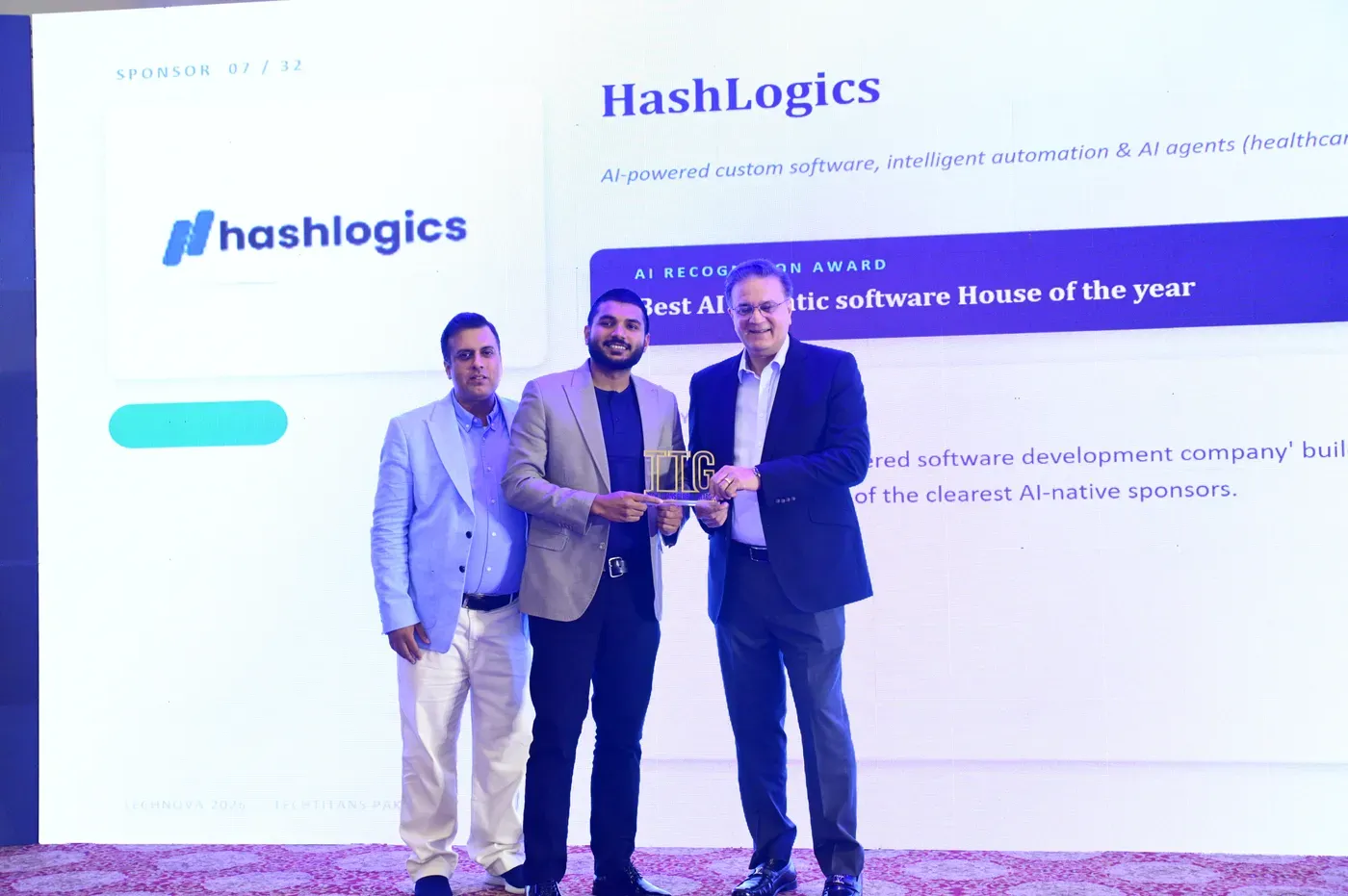
Abdul Basit founded Hashlogics in 2017. It is headquartered in East Islip, NY, with engineering in Lahore. Clients rate the work 4.8 on Clutch across 22 reviews, and in 2026 it was named Best AI-Native Software House of the Year at TechNova.
Your scoping call is with an engineer who has built systems that read documents, check them against rules and hand the decision to a person. Bring a week of submissions and your last bordereau, and we'll work from those.
- NDA before the first conversation.
- No pitch on the call. A note you could hand to another firm.
- Fixed price after the Blueprint, so the number isn't a guess.
Go deeper
- Insurance hub →Agencies, MGAs and carriers: the full chain.
- Premium audit and claims intake →The audit lifecycle in detail.
- Claims automation →First notice of loss through to adjuster.
- Document intake automation →Reading submissions and loss runs.
- Workflow automation →Reports, batch jobs and handoffs.
- Firms hub →All of our work for professional-services and insurance firms.
- AI agents →The agents behind intake and routing.
- Guidewire, Duck Creek and Applied Epic APIs: what a real integration involves →Access models for each core system.
- Is premium audit AI regulated? →The rules around AI in audits.
