


AI, automation and custom software for staffing and recruiting agencies: from the resume nobody has read to the placement that redeploys
Your recruiters work for the ATS instead of the other way around. We build the layer that fixes each of those, into Bullhorn, JobAdder or whatever you run.
- 4.8 on Clutch across 22 reviews
- PremiumAudit.io: audit cycle cut 75%, calculation errors cut 95%
- In production for SmartREI, Tankaware, ZyloBase, KiwiWrite
What changes for your desk
3 things that decide this
- 01Screening stops eating the morning. A resume read by hand takes five to ten minutes and takes seconds when a first pass runs it (MindStudio), so your recruiter opens a ranked shortlist with the reasons attached rather than a folder of eighty CVs.
- 02The candidates you already paid for come back into play. Your ATS holds people nobody can surface again because Boolean search fails on the way real resumes are written, and a matching layer that reads the record puts them in front of the job that fits.
- 03A dashboard tells you. A gate stops you. Shift Link validates documents, expiry dates and right to work before a shift ever reaches the roster, and Shift Link reports 70% less manual compliance verification as a result.
Eight places a desk's week leaks time, in your words
These are the eight areas our audits keep finding, in the words an agency owner uses rather than the words software gets sold in. Each one links to the page that owns it.
Recruiters spend more time in the ATS than with candidates
Screening, scheduling and chasing take 80 or more hours across a hiring cycle, and a resume read by hand runs five to ten minutes against seconds automated (MindStudio). We build the first pass that reads, ranks and explains, so your recruiter spends the morning on calls rather than on CVs.
Recruiter admin hours calculator →
You re-source candidates you already have
Your database holds people you sourced last year, and Boolean search misses them because nobody writes a resume the way a search string expects. We build matching that reads the record itself, so an open role surfaces the people already in your ATS before you pay for the same candidate twice.
Bullhorn API: what a real integration involves →
Scheduling turns into a group text
Three calendars, a client who moves the slot, and a candidate who answers at nine in the evening. We build the scheduling agent that offers real slots, confirms by the channel that candidate answers, handles the reschedule and writes the outcome back, with your recruiter owning anything that needs a judgement call.
Workflow automation for firms →
Candidates ghost between placement and redeploy
A contractor finishes on Friday and nobody called them on Wednesday, so a placement you already earned walks to another agency. We build the check-in and redeployment sequences off your ATS: who finishes when, who has not been contacted, and what role they fit next.
Workflow automation for firms →
Compliance checks slip through the cracks
Right to work, credentials and expiry dates sit in spreadsheets, and margin leaks in the gap those checks miss. Shift Link puts the check before the booking rather than after it, and Shift Link reports 70% less manual compliance verification. An ineligible worker never appears in the bookable list at all.
Workforce compliance →
Submissions get typed twice
Your ATS, your job boards, your client portals and your payroll each want the same candidate data in a different shape, so somebody re-keys it. We build the layer between them, to the depth your account allows, which we confirm during the audit. Bullhorn and JobAdder both publish an API, and where one stops your staff accept a filled record with one click.
Custom software for firms →
Every client wants a different report
Fill rate, time to submit, margin by desk and the weekly update each client insists on all get rebuilt by hand. We build the dashboard across your ATS and your payroll, read-only, plus the per-client reporting that goes out on a schedule instead of on a Friday afternoon.
Custom software for firms →
Documents nobody can find when it matters
Right-to-work evidence, certifications, timesheets and signed terms live across email, a drive and the ATS, and you need them the day a client audits you. We build one intake point that collects, checks and files them against the candidate record, with a person reviewing anything ambiguous.
Document intake automation for firms →
Three moments that decide your week, and what each one writes back
Here are three stations from the firms chain, the three a staffing desk feels hardest. Pick your system to see what gets written back. Your job boards, your VMS or whatever you run work the same way, to the depth their access allows.
Station 01 · Eighty resumes and one morning
- Today
- A role goes live and the applications land. Your recruiter opens each CV, reads for five to ten minutes, and by lunchtime has covered a third of them. The best candidate applied at eleven last night and has not been called yet.
- What we automate
- A first pass reads every application against the role, ranks them, and writes the reason for each ranking so your recruiter can argue with it. Screening questions go out by the channel that candidate answers. Your recruiter opens a shortlist with notes rather than a folder.
- What stays human
- Your recruiter decides who goes forward, and nobody gets rejected by software. Any ranking your team disagrees with is visible with its reason, so the rules get fixed rather than trusted blindly.
Writes to BullhornCandidate, submission and note records written; the shortlist and its reasons filed against the job order.
Station 02 · The compliance gate
- Today
- Right to work, certifications and expiry dates sit in a spreadsheet somebody updates on Mondays. A consultant books a shift on Friday afternoon, and the licence that lapsed on Thursday is spotted the following week, if at all.
- What we automate
- Documents get validated at source and expiry drives status rather than a reminder email. Somebody who is not cleared never appears in the bookable list. Shift Link works exactly this way, and Shift Link reports 70% less manual compliance verification.
- What stays human
- A name mismatch or an odd visa condition goes to your consultant with the file attached. Overrides exist, they need a reason and a name, they time out on their own, and they show in the same audit view as everything else.
Writes to BullhornCredential status and expiry written to the candidate record; ineligible candidates hidden from booking.
Station 03 · The finish date nobody called about
- Today
- A contractor's assignment ends Friday. Nobody called on Wednesday because the finish dates live in a report somebody runs when they remember. On Monday that person is working for another agency, and you pay to source a replacement you already had.
- What we automate
- Finish dates drive a check-in schedule. Your ATS gets asked who ends in the next three weeks, who has not been contacted, and which open roles they match. Outreach goes out in your wording, and the response lands on the candidate record.
- What stays human
- Your recruiter makes the call that matters and decides what to offer. Software makes sure the call is on somebody's list before the contract ends rather than after.
Writes to BullhornPlacement end dates read; tasks, notes and redeployment activity written back to the candidate.
Your recruiter decides every submission and every placement. Software reads, ranks and chases, and it hands the call to a person.
Keep your system. Bullhorn, JobAdder or whatever you run stays the record, and we build around it.
Your ATS holds the candidates, the job orders, the submissions and the placements, and your consultants know it cold. Replacing it moves the seams rather than closing them, and it costs you a quarter to find that out. So we don't suggest it. Bullhorn, JobAdder, your VMS, your job boards or whatever you run stays the record. We build the layer between them that does the work none of them was built for.
Access is the part worth being exact about. Bullhorn publishes an API and so does JobAdder, and how much your account can do with it depends on your plan and your partner status. We confirm that during the audit rather than promising it on a call. Where an API is open we read and write straight to it. Where it stops, your staff accept a filled record with one click instead of typing it twice, and nothing gets guessed in between.
Payroll and timekeeping sit on the other side of the same problem. Hours, rates and eligibility live apart from the ATS in most agencies, which is why margin by desk gets rebuilt in a sheet every month. We read both and join them, read-only, so the number you argue about is one number.
- 01Your ATS stays the record. We write notes, tasks, submissions and status back to it.
- 02Payroll and timekeeping read read-only, so a reporting filter can never move somebody's pay.
- 03Where the API stops, a reviewed queue takes the place of typing, and nothing gets guessed.
The professional signs, the model reads but never does the arithmetic, and the compliance gate blocks. We write that down first.
A firm's work is a regulated act: the CPA signs the return, the producer binds the policy, the adjuster determines the claim, the recruiter decides the placement, and the regulator expects to see how a model was used and governed. So every build starts with a one-page map of what the software reads, what it proposes, and where a professional signs.
What follows is simple to state, and we put it in writing. Documents are read and extracted by the model; numbers are computed by code and reviewed by a person. Compliance checks are gates that stop the next step, not dashboards that mention it later. Client data is scoped to the engagement, never firm-wide, with written no-training terms you can produce. And every automated touch is logged so a reviewer, an auditor or a regulator can read what happened, and when.
- 01Returns, binds, determinations and placements signed by the professional; the software prepares.
- 02Extraction by the model, arithmetic by code, review by a person; compliance gates that block.
- 03Right-to-work and credential checks that gate a booking rather than report on it, with every override named, reasoned and time-boxed.
“They will treat your vision like their own and build it that way.”
Ron Klabunde · Founder, SmartREI ↗
“I am extremely happy with the results and would highly recommend Hashlogics to anyone.”
Daniel Khin · CEO, PremiumAudit.io
Some of the systems we have shipped
- AuditFree. We read one desk for one week: hours on sourcing, screening, scheduling and chasing against hours closing, plus what your ATS holds that never gets surfaced again.
- DiagnoseWe map the path into your practice, agency or ATS system and accounting, and sit with the people who do the intake and the close for an afternoon.
- BuildFixed price per milestone from the Blueprint. Tested on your real documents, quotes and placements, under NDA.
- RunMonitoring, a named engineer, and the first two months of maintenance free.
Best fit: a firm with ten or more staff, a system you've outgrown in places, and a recurring process you can feel at month end or renewal season. Not a fit yet: a solo practitioner who needs a practice-management app, and we'll say so. You can stop after any stage; the audit note is yours either way.
Before you book
01Will AI reject a candidate on its own?+
No, and we build that as a routing rule rather than a setting. A first pass reads, ranks and writes down why, and your recruiter decides who goes forward and who gets a call. Every ranking carries its reason, so a recruiter who disagrees can see the rule that produced it and change the rule. Automated rejection is a legal exposure that lands on your agency rather than on a vendor, which is why we don't build it.
02Why is a gate better than a dashboard?+
A dashboard tells you about a problem after it happened, and it depends on somebody reading it during a busy Friday. A gate removes the option. On Shift Link an ineligible worker never appears in the list a consultant can book from, so there is no decision left to get wrong, and Shift Link reports 70% less manual compliance verification. The check moved from after the booking to before it.
03Do we have to leave Bullhorn or JobAdder?+
No, and we'd usually tell you not to. Your ATS stays the record and your consultants keep working in the screens they know. We build the layer around it: the screening pass, the scheduling agent, the resurfacing, the redeployment sequences and the reporting it was never built to assemble. Swapping an ATS out costs you a quarter you don't get back.
04How deep does the Bullhorn integration actually go?+
To the depth your account allows, and we confirm that during the audit rather than promising it on a call. Bullhorn publishes a REST API covering candidates, job orders, submissions, placements and notes, and what your agency can reach through it depends on your plan and your partner status. Where it's open we read and write directly. Where it stops, your consultant accepts a filled record with one click rather than typing it twice.
05Our candidate data is a mess. Does that break the matching?+
It's the normal starting point, and it's usually why Boolean search stopped working for you. Matching that reads the record itself copes with resumes written in different shapes far better than a search string does. What it can't fix is data that was never captured, so the audit looks at what your ATS holds today and tells you which gaps are worth filling before anything gets built.
06What does the free Firm Operations Audit look at?+
One desk for one week: hours on sourcing, screening, scheduling and chasing against hours closing. What your ATS holds that never gets surfaced again, and which workflows your consultants fight. How many finishing contractors get a call before their last day. And which compliance checks live in a spreadsheet today. You walk away with a one-page map of the desk hours your agency can hand to software, and it's yours whoever builds it.
A senior engineer, not a sales rep
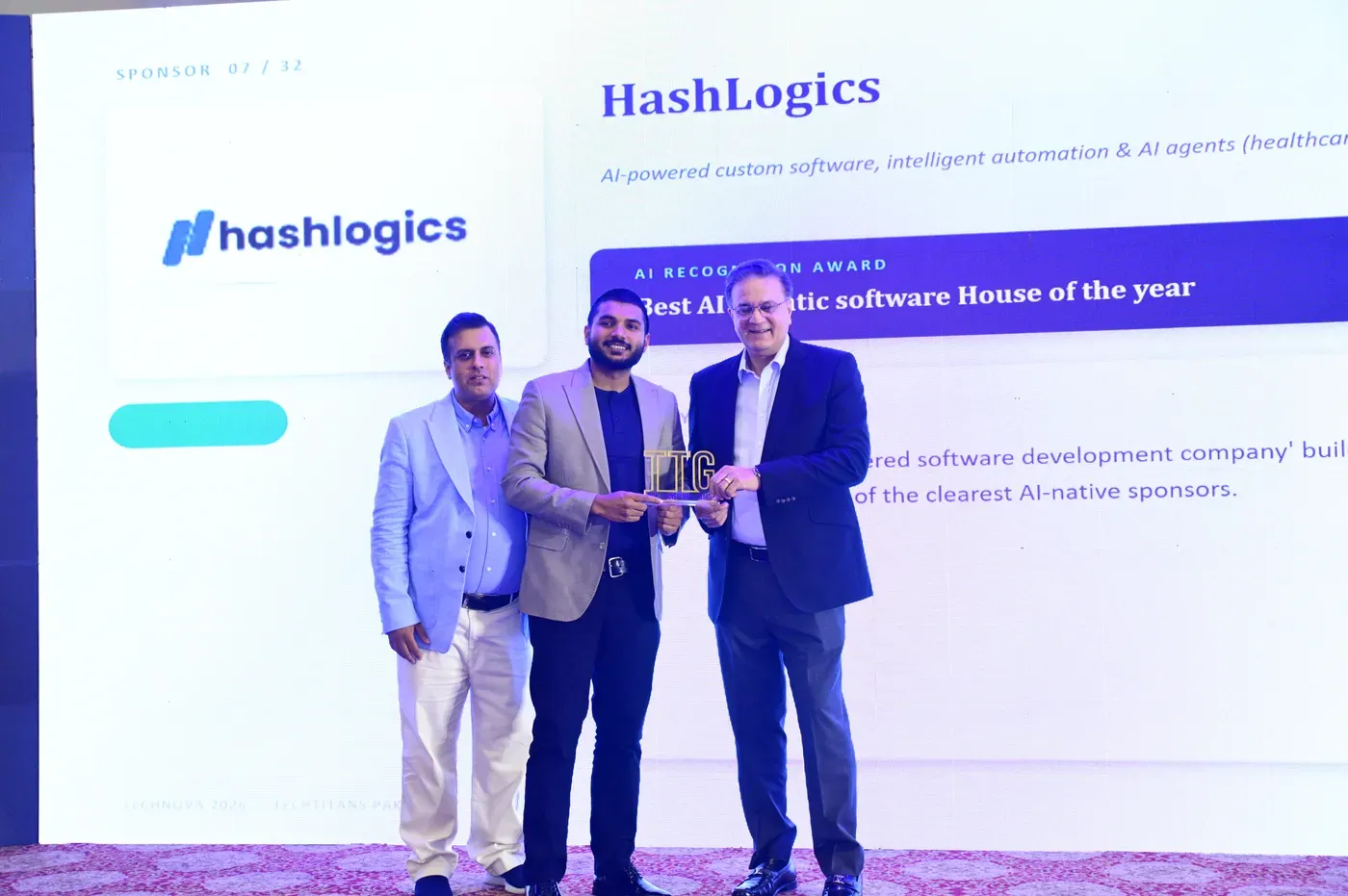
Abdul Basit founded Hashlogics in 2017, and the team runs from Lahore with a US LLC. Clients rate the work 4.8 on Clutch across 22 reviews, and in 2026 it was named Best AI-Native Software House of the Year at TechNova. PremiumAudit.io, the AI premium-audit automation platform, IRS Escape Plan, the AI tax-strategy platform, and Shift Link, the workforce-compliance platform, are three of the systems we built and can show you.
Your audit call is with an engineer who has read client document queues, quote logs and compliance spreadsheets like yours. Bring last month's numbers if you have them, and we'll work from those.
- NDA before the first conversation.
- No pitch on the call. A note you could hand to another firm.
- Fixed price per milestone from the Blueprint, so the number isn't a guess.
Go deeper
- AI, automation and custom software for firms →The whole chain, for accounting, insurance, staffing and HR.
- Workforce compliance →The gate that blocks a booking rather than reporting it.
- Workflow automation for firms →Screening, scheduling, redeployment and the recurring chase.
- Document intake automation for firms →Right-to-work evidence and certifications, collected and filed.
- Custom software for firms →Portals, dashboards and the integration layer your ATS won't build.
- Best recruiting automation for staffing agencies →The tools, ranked honestly, and where a custom build earns its place.
- Bullhorn API: what a real integration involves →What the API opens up, and where your plan stops you.
- Recruiter admin hours calculator →Put your own numbers against the screening and chasing hours.
