


Field operations for oilfield services: the ticket that reaches the invoice in days, and dispatch that survives the day
Your paper ticket rides in the truck, waits on a signature, and gets keyed into an operator's portal a week later. So your DSO runs in weeks, and a duplicate line is nearly impossible to catch. We build digital tickets with offline capture and an approval flow.
- 4.8 on Clutch across 22 reviews
- PremiumAudit.io: audit cycle cut 75%, calculation errors cut 95%
- In production for SmartREI, Tankaware, ZyloBase, KiwiWrite
What changes for your crews and your controller
3 things that decide this
- 01Your ticket stops travelling. Your crew captures it at the wellsite on a phone that works with no signal, and your operator's man signs it there. It reaches your approver the same day instead of riding back with the truck on Thursday.
- 02Your controller gets a reconciliation instead of a shoebox. Every ticket is checked against what dispatch actually sent. Duplicates and inflated lines get flagged before the operator's auditor finds them, and the invoice goes out in the format that operator requires.
- 03Dispatch survives contact with a Tuesday. When a truck breaks down or a crew runs short of hours, the system shows the exception and proposes the reshuffle. Your dispatcher commits it, because full autonomy isn't credible here and your people won't accept it.
From dispatch to the operator's portal, and where the machine takes over
Three stations of an oilfield services week. Pick the system you'd want written to; P2, WellView, your own ERP and the rest follow the same pattern to the depth their access model allows.
Station 01 · The field ticket's road trip
- Today
- Your ticket rides in the truck for three days, waits on a signature at your office, gets keyed into the operator's portal a week later, and your invoice waits with it.
- What we automate
- Digital field tickets with offline capture and an approval flow, validation against dispatch, ticket-to-invoice automation into the operator's portal, and reconciliation that flags a duplicate or an inflated line before the operator does.
- What stays human
- Your people approve every ticket and every invoice before it goes to the operator. Disputes stay yours.
Writes to Enverus OpenInvoiceTicket and invoice submitted through OpenInvoice in the operator's required format.
Station 02 · Dispatch and the day that breaks
- Today
- Your dispatch is one person's head. A truck breaks down and your plan is gone; the replacement plan drops your driver over hours of service.
- What we automate
- Delivery planning that respects compartments, compatibility, ullage, hours of service and hazmat routes, exception handling when the day breaks, and driver paperwork and BOLs captured on the phone at the rack.
- What stays human
- Your dispatcher owns the plan. It proposes; your dispatcher commits.
Writes to Enverus OpenInvoiceNothing.
Station 03 · JSAs and compliance records
- Today
- Your crew fills a JSA on paper at the wellsite and it rides back with the ticket. Then an operator's HSE audit lands, and somebody compiles a month of them by hand.
- What we automate
- JSAs, safety meetings and competency records go on the same phone as the ticket, tied to the job and the crew. They're held immutable with the time the work happened, and export as the pack an operator's auditor asks for.
- What stays human
- Your supervisor still walks the job and signs the JSA. We make the pack assemble itself instead of costing you a week.
Writes to Enverus OpenInvoiceCompliance pack attached where the operator's portal accepts one.
Every ticket and every invoice is approved by one of your people before it reaches an operator. Disputes stay yours.
Four things we build into a field operations platform
Four pieces, in the order a job meets them, around the systems you already run.
Digital tickets with offline capture and an approval flow
A wellsite is exactly where the signal isn't. So capture works with none, and syncs later with the original time intact. Your crew records units, hours, consumables and equipment against the job. Your operator's representative signs on the device, photos attach, and it routes to whoever in your shop approves. Nothing leaves the building unapproved, and nobody re-keys a ticket into a second system.
Validation against dispatch, and duplicate detection
A ticket that bills eleven hours against a job dispatched for six is a dispute waiting to happen. Catching it in your office is cheaper than the operator catching it in an audit. So we check every ticket against what dispatch sent, flag the line that repeats across two tickets, and surface a rate that doesn't match the master service agreement. What goes out is what your controller would have signed anyway.
Ticket to invoice, in the format the operator demands
Enverus OpenInvoice dictates the shape your invoice arrives in. On top of that, every operator has its own coding, cost centres and attachment rules. We build the mapping once per operator. After that the invoice assembles itself from approved tickets, carrying the attachments the portal expects. Where a portal has no route in, your staff accept a reviewed queue with one click rather than re-keying it.
Dispatch, exceptions and the day that breaks
Half a dispatcher's day is re-planning the plan. We build scheduling that respects crew competencies, equipment, hours of service and the operator's windows. Then we build for the part that actually hurts. A truck goes down at ten, the system shows what that breaks and proposes the reshuffle, and your dispatcher decides. A plan a dispatcher can edit gets used; a locked one gets abandoned in week two.
Most contractors should buy a ticketing app. Here's the point where one stops being enough.
There are good packaged field ticketing products, and we rank them honestly on a separate page rather than pretending they don't exist. If you run one crew, bill one or two operators, and your accounting is QuickBooks, buy one of them. It'll be running next month and a build won't.
Three things push contractors past that. Start with format. Your operator's portal wants the invoice one way, your dispatch system holds the job another way, and your accounting wants a third. So somebody spends their week as a human adapter between them. Reconciliation is the second. Catching a duplicate line, or a rate that drifted from the master service agreement, means reading the ticket against the dispatch record and the contract at once. A ticketing app only holds the ticket. Third comes a particular kind of scale: several crews across several yards, each with its own equipment, competencies and operator relationships. That's where one shared spreadsheet of who's where stops being funny.
None of that is a reason to throw out what works. We build the layer that spans your dispatch, your tickets and your accounting, and leave each of them doing the job it's good at.
- 01One crew, one operator, QuickBooks: buy the packaged ticketing app.
- 02Operator portal, dispatch system and accounting that don't line up: that gap is the build.
- 03Several crews and yards, or reconciliation that has to catch a duplicate: same answer.
Software on top of a certified detection method, never instead of it. We write that down first.
Fuel and oilfield operations sit under rules that don't bend for software: release detection has to meet the performance standards in 40 CFR 280 and be certified as a method, the 30-day walkthrough record is the compliance artefact whether or not the inspection happened, and a field ticket is a billing document an operator will audit. So every build starts with a one-page map of what the software records, what it only proposes, and where a person signs.
What follows is simple to state, and we put it in writing. We triage, de-duplicate and escalate alarms from your certified method; we never claim to be the method. Every inspection record is timestamped, photo-backed and immutable, and a gap stays visible as a gap. Tickets and invoices are approved by a person before they go to an operator's portal. And every automated touch is logged so an inspector or an auditor can read what happened, and when.
- 01Release detection stays with the certified method; we add triage, escalation and the record.
- 02Inspection records immutable and gap-honest; tickets and invoices approved by a person.
- 03Every ticket is validated against dispatch and approved by one of your people before it reaches an operator's portal.
“They will treat your vision like their own and build it that way.”
Ron Klabunde · Founder, SmartREI ↗
“TankAware has revolutionized how we manage petroleum sites. The real-time data and automation have exceeded expectations.”
Blake Sutherland · President, Sutherland Excavating Ltd.
Some of the systems we have shipped
- AuditFree. We trace one of your jobs from dispatch to payment, count the days it sat at each hand-off, and read how a month of tickets got from the wellsite into the operator's portal.
- DiagnoseWe map the path into your ERP, ATG feeds and operator portals, and ride along on a site round or a ticket's journey.
- BuildFixed price per milestone from the Blueprint. Tested on your real sites, real tickets and real alarms, offline-first, under NDA.
- RunMonitoring, a named engineer, and the first two months of maintenance free.
Best fit: ten or more sites or trucks, or an oilfield services company with a ticket-to-cash problem, and systems you've outgrown in places. Not a fit yet: a single-site operator who needs a sensor and a text, and we'll say so. You can stop after any stage; the audit note is yours either way.
Before you book
01How much of our DSO is actually the paper ticket?+
More than most controllers expect, and the audit measures it rather than guessing. Days stack up at every hand-off. Your ticket rides back to the yard. It waits on an approver's signature, then waits to be keyed into the portal. Then it waits again when the operator rejects it for a coding error. Digital capture, approval on the device and correct-format submission remove the first three. Validation against dispatch removes most of the fourth.
02Can you submit into OpenInvoice, Quorum or our operator's portal?+
To the depth each exposes, and we confirm exactly what's available during the audit rather than promising it on a call. OpenInvoice dictates a format and the operator's own coding rules sit on top of it; Quorum, P2 and WellView expose data to different depths; some operator portals have no route in at all. There we build a reviewed queue your staff accept with one click instead of re-keying. Our audit settles which of those you're dealing with, and that comes before the quote.
03Our crews work where there's no signal. Does that break it?+
No, because we design for it from the first line rather than adding it later. Tickets, JSAs and photos are captured on the device, and the operator's representative signs there. Everything syncs when the phone next sees a network. Capture time is stored separately from upload time. Building offline capture in after launch usually means rebuilding the whole ingestion path.
04Will this replace our dispatch system or our accounting?+
Not unless you want it to, and mostly you shouldn't. Your accounting stays the system of record and wins any conflict. Your dispatch system keeps doing what your dispatcher already trusts. What we build is the layer across them, so the same job doesn't get typed three times. Where you genuinely have no dispatch system beyond a whiteboard, we'll build one, and we'll say so on the call.
05Can it catch duplicate or inflated billing?+
That's most of the reconciliation work, and it's the reason a ticketing app alone doesn't finish the job. We read each ticket against what dispatch sent, against the other tickets on that job, and against the rates in your master service agreement. Then we flag the exception for a human. Catching it in your office is a correction; the operator catching it is a dispute and a slower payment.
06We run four yards on three different systems. Where do you start?+
With the ticket, not the dashboard. Multi-yard contractors usually ask for a roll-up first. A roll-up over inconsistent capture just makes the mess visible faster. Standardise how a ticket and a JSA get captured, get the approval flow the same everywhere, and then the numbers across yards mean something. We took the same route with Shift Link for multi-site workforce compliance.
07What does the free audit cover?+
One of your jobs traced from dispatch to payment. A month of tickets and what happened to each one. What your operator's portal and your accounting actually expose, and where your days sit. You get a one-page map and a build order you could hand to another firm. Build pricing is fixed per milestone in the Blueprint, and the first two months of maintenance are free.
A senior engineer, not a sales rep
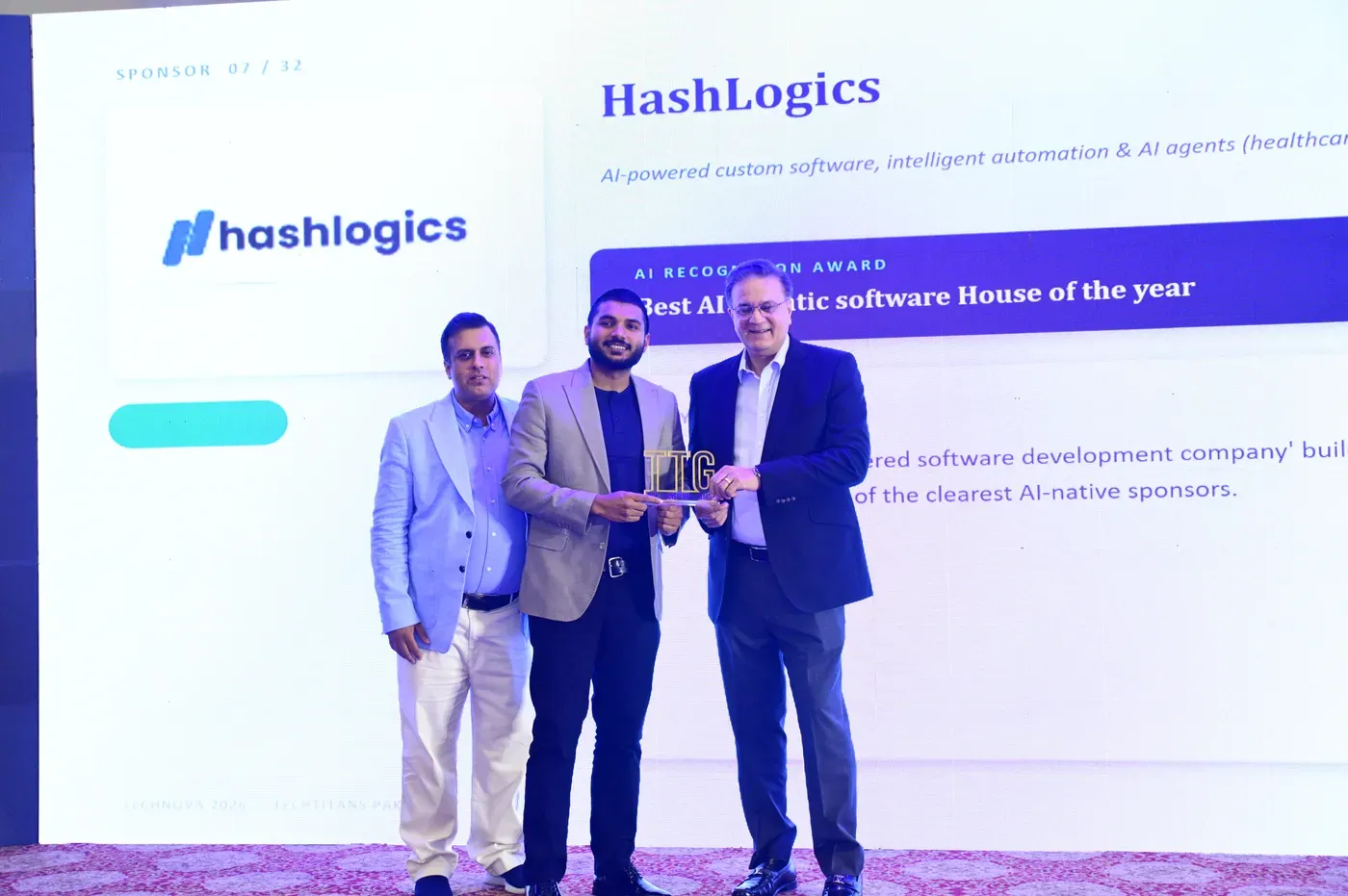
Abdul Basit founded Hashlogics in 2017, and the team runs from Lahore with a US LLC. Clients rate the work 4.8 on Clutch across 22 reviews, and in 2026 it was named Best AI-Native Software House of the Year at TechNova. TankAware, the AI and IoT petroleum site platform we built for Sutherland Excavating Ltd. in Canada, is live and we can show it to you.
Your audit call is with an engineer who has read inspection logs, ATG alarm histories and field tickets like yours. Bring last month's numbers if you have them, and we'll work from those.
- NDA before the first conversation.
- No pitch on the call. A note you could hand to another firm.
- Fixed price per milestone from the Blueprint, so the number isn't a guess.
Go deeper
- Oil and gas →The hub: all eight areas, and which page owns each one.
- Site monitoring for fuel and oilfield →Tank levels, alarm triage and the 30-day inspection record.
- Custom software for oil and gas →Vendor portals, multi-tenant separation and the numbers across sites.
- Best field ticketing software for oilfield services →The packaged products, ranked, and where each one runs out.
- How do you cut DSO in oilfield services? →Kill the paper ticket's road trip. The days follow.
- OpenInvoice, Quorum and Enverus APIs: what a real integration involves →Access models, formats, and what to settle before anyone quotes.
- The ticket rode in the truck for three days →Where the days actually go between the wellsite and the payment.
