

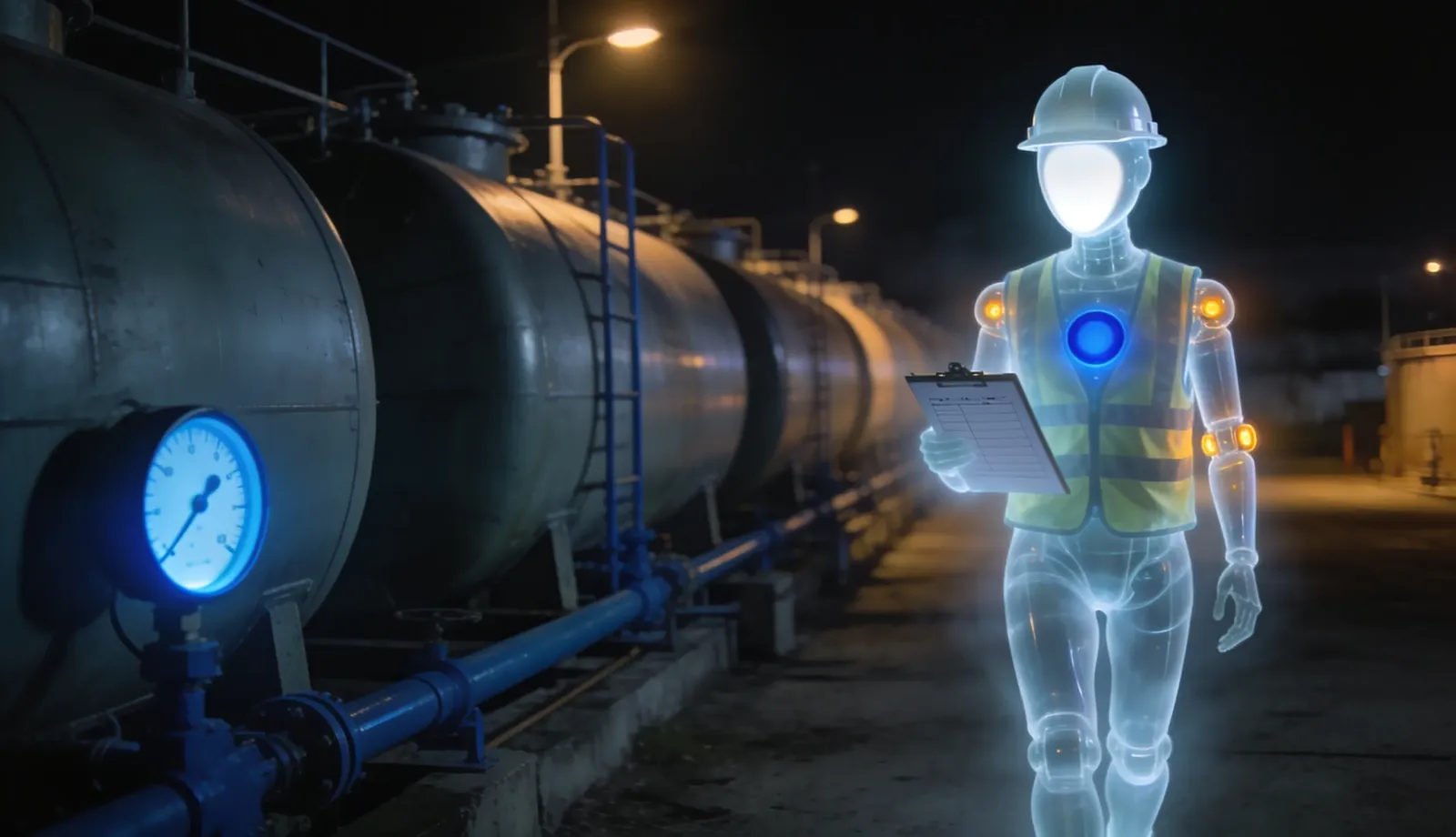
Energy software for assets nobody can go and look at
Your kit sits behind locked gates on a link that fails for days. Every question costs a van trip unless the software answers it first.
- 4.8 on Clutch across 22 reviews
- PremiumAudit.io: audit cycle cut 75%, calculation errors cut 95%
- In production for SmartREI, Tankaware, ZyloBase, KiwiWrite
What makes energy assets hard
5 things that decide this
- 01A truck roll is your unit of waste. Every question your software can't answer becomes someone driving to a site to look at a gauge, and half of those trips find nothing wrong.
- 02Design as though you'll never touch the device again. Remote diagnostics, watchdogs and over-the-air updates decide whether your fleet is fixable, or whether each fault costs you a visit.
- 03Sensors drift, so treat a reading as evidence rather than truth. Keep raw values apart from derived ones and hold a calibration record per device, or a slow error becomes a business mystery.
- 04A gap in your data isn't a reading of zero. Conflate them and you either hide a genuine fault or raise an alarm every time a site loses signal.
- 05Your load is seasonal, and the worst day is the one where everything peaks together. Test against the winter peak rather than the annual average.
Distance turns every small question into a cost
In most trades a question is cheap. Someone walks over and looks. For you, the same question means a van, a driver, a day, and often a locked gate at the end of it.
That changes what software is for. A dashboard isn't the point; the trip it saves you is. Judge a build by how many visits it removed for you, and how many of the rest arrived with the right part on the van.
TankAware works this way for a Canadian site operator. Sensor data streams from remote tanks on AWS. Alerts flag an odd reading before it turns into a failure. Inspections are captured on a phone that expects no signal. Sutherland Excavating Ltd. reported 40% fewer manual errors and 30% less overhead after launch.
- 01Count the visits that found nothing. That number is your business case.
- 02Send the diagnosis with the dispatch, so your technician brings the right part.
- 03Buffer at the gateway for days of outage, not minutes, and backfill with the original timestamps.
Relevant work
40%
fewer manual errors, reported by Sutherland Excavating Ltd.
30%
less operational overhead, reported after TankAware launched
20%
faster maintenance turnaround, reported on TankAware
5
permission tiers with per-organisation isolation
- SenseRaw value, device, time taken.
- HoldStore and forward through the outage.
- BackfillOriginal times survive the reconnect.
- CorrectCalibration reinterprets, never rewrites.
- TriageOne condition, one alert, ranked.
- DispatchWith the diagnosis attached.
A project that skips step five produces an alert stream operators stop reading within a month. After that the system is technically live and practically switched off.
Where we are useful
Remote asset telemetry
We build IoT pipelines on AWS with predictive alerting, proven on TankAware for sites where the link drops for days. Raw and derived values stay stored separately, so your history stays trustworthy.
Field capture without signal
Your team captures scheduled inspections on React Native with photos, a named signer and audit logs. We record the time of work at the point of work.
Contractor coordination
A deficiency becomes a work order, reaches an external contractor through their own portal, returns with evidence and ends in a payment. We shipped this pattern on TankAware.
Multi-tenant access
You get five permission tiers with each organisation isolated under its own subdomain. Your operators, site managers and contractors each need a different view of the same asset.
Most of this is not AI, and saying so helps you
Vendors in this sector attach AI to work that's arithmetic. Predicting your consumption from temperature history is regression with decades behind it. Scheduling under constraints is operations research. Both are useful, and neither needs a model.
Machine learning earns its place in two spots: separating causes in your noisy data, and triaging alerts so the ones that reach a person are worth reading. That's a narrower claim than the market makes, and it's also the one that survives your engineers.
Ask any vendor which part of their product is a model and which is a rule. The answer tells you what you're buying and what you'll be maintaining.
- A forecast from weather and past usage is arithmetic. Call it that.
- Alert triage on top of a certified detection method is honest. Replacing the method isn't.
- Your model needs a plan for the day the data shifts under it.

Systems running unattended across sites
“TankAware has revolutionized how we manage petroleum sites. The real-time data and automation have exceeded expectations.”
Blake Sutherland · President, Sutherland Excavating Ltd.
The stack behind TankAware
Built with
- React Native
- Vue.js
- PHP / Laravel
- AWS
- IoT sensors
Field and device work
- Sensor pipelines
- Predictive alerting
- Store-and-forward buffering
- Offline-first capture
- Audit logs
Security
- Role-based access control
- Encryption at rest on AWS RDS
- TLS 1.3
- Rate limiting
Questions buyers ask us first
01How do you monitor sites with no reliable connection?+
We buffer at the gateway for days of outage and backfill on reconnect with the original timestamps. We mark backfilled data as such, so nobody mistakes a late batch for a burst of activity. The rule underneath is that absence is its own state, distinct from a reading of zero and from a device reporting itself unavailable.
02Can software cut the number of site visits?+
That's the main reason to buy it, and the number you should track is visits that found nothing wrong. Remote readings answer your routine questions, and a triaged alert with a diagnosis attached means the technician who does travel brings the right part. Sutherland Excavating Ltd. reported 20% faster maintenance turnaround on TankAware.
03Why do our alarms get ignored?+
Because most of them have been wrong, and your people learn that fast. Never put a raw device alarm in front of an operator. Deduplicate so one condition raises one alert, suppress patterns that are usually benign, and report how often an alert was right as a monitored number. Treat a drop in that number as an incident.
04Do you integrate with the systems we already run?+
We build the operational layer around your system of record rather than replacing it, and yours wins any conflict about a value. Scheduled file exchange is still normal in this sector and isn't a warning sign. Name your systems early, because their access model usually sets the schedule.
05Is AI actually useful for energy operations?+
In two narrow places, and it's oversold everywhere else. Separating causes in your noisy readings is a real statistical problem, and alert triage on top of a proven detection method is genuine value. Forecasting demand from temperature and history is arithmetic, and calling that AI weakens a pitch rather than strengthening it.
06How do you scope an energy build?+
Scoping calls are free. Every build starts with a fixed-fee Blueprint: an engineer reads your real systems and writes the plan, with a fixed price for each milestone rather than a guess. The fee is credited in full against the build, and if the plan isn't one you'd act on, you don't pay for it. We won't put a schedule on it before we know how many device generations are in your estate.
Go deeper
- Oil, gas and fuel hub →The industry hub this page belongs to.
- Oil and gas software development →Upstream and field operations, including hazardous areas.
- Dataset shift →Why a model that worked last year quietly stops working.
- Custom software development →How we scope and build systems like these.
- Solar software →Site monitoring, production data and maintenance dispatch.
