

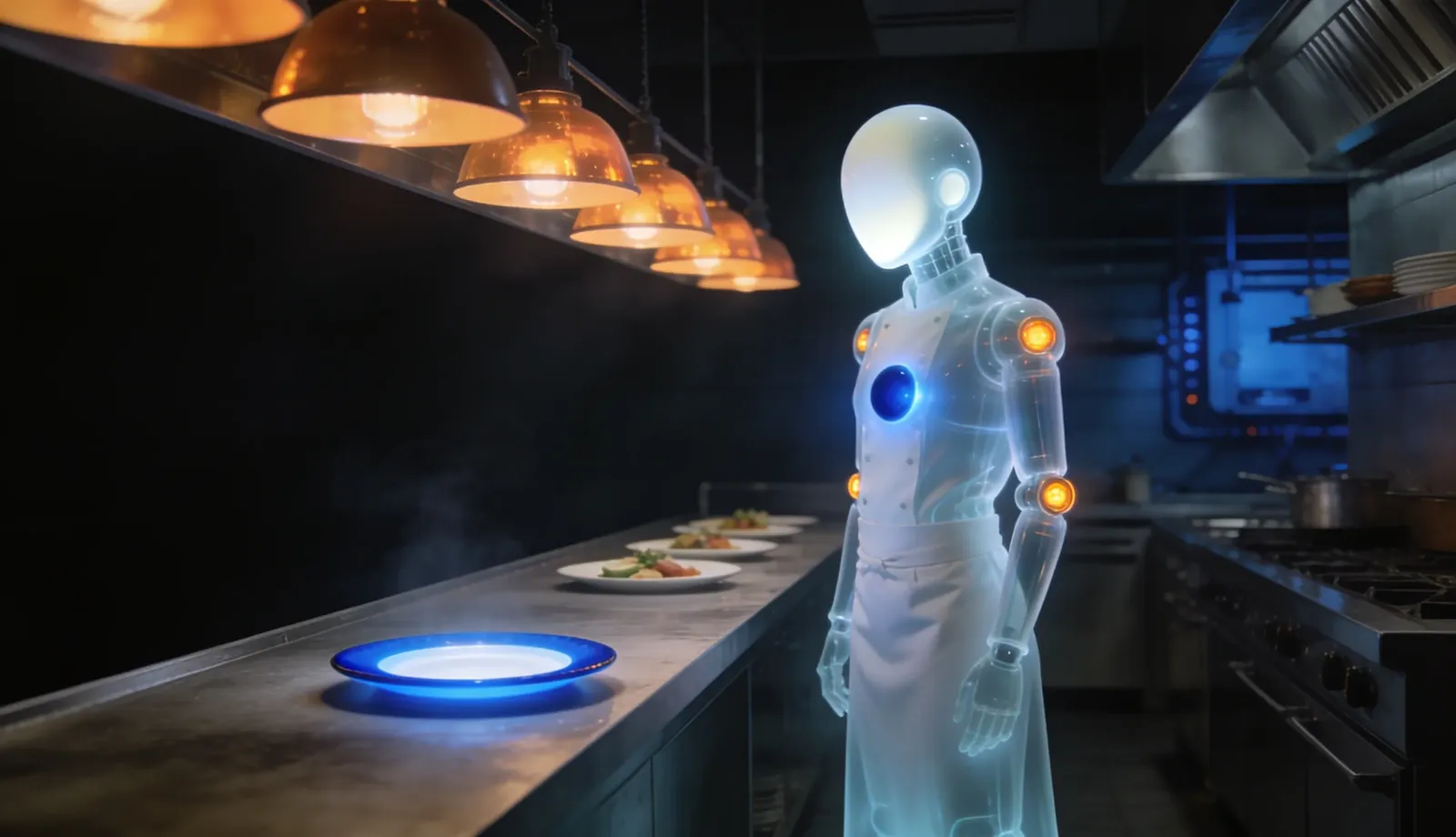
AI, automation and custom software for restaurants, built around the POS you already run
The menu isn't hard. You keep Toast, Square, OpenTable, Resy or whatever your room runs, and we build the layer none of them sold you: the reservations call answered while your host is seating a table, an 86'd item that updates every channel at once, delivery orders landing in the same ticket queue as dine-in, and covers by shift in one honest view.
- 4.8 on Clutch across 22 reviews
- PremiumAudit.io: audit cycle cut 75%, calculation errors cut 95%
- In production for SmartREI, Tankaware, ZyloBase, KiwiWrite
What changes in your room
3 things that decide this
- 01Your phone rings hardest exactly when your host is least free, which is the middle of service. Your line answers it: the hours question, the "do you have a table for four at seven" question, the booking, the change and the cancellation, written straight into your reservation book so nobody re-keys it after close.
- 02An 86'd item is a margin problem the moment it stops being true on one screen. We push the stock-out and the price change to every channel at once, so the item vanishes from the delivery app, the direct ordering page and the online menu together rather than an hour apart.
- 03Delivery orders arrive on a tablet that your POS has never heard of, and a staff member becomes the bridge during a rush. We route those orders into the same ticket queue your kitchen already works from, then reconcile channel commission against what actually reaches your bank.
Eight places a restaurant loses a cover, an order or a margin point, and what we put in each one
These are the eight areas our audits keep finding, in the order a guest meets them. Each one links to the page that owns it.
The reservations call, answered mid-service
Your host is seating a four-top when the phone goes, and it rings out or gets a hurried answer. Your line picks up instead: it takes the booking, the party size and the allergy note, quotes your real availability, and writes it into OpenTable, Resy or whatever book you keep. A caller who wanted tonight becomes a cover rather than a missed ring.
AI guest desk →
The no-show table and the waitlist that runs itself
A no-show table held for a party that never arrives is a cover you sold twice and served none of. We build confirmation the day before, a one-tap cancel that actually frees the slot, and a waitlist that offers the table to the next guest by your rules the moment it opens. Your host stops working a paper list during the busiest hour.
Operations automation →
One ticket queue, not four screens
A delivery aggregator brings orders in on its own tablet, on its own commission, and somebody re-keys them into the POS during a rush. We route those orders into the ticket queue your kitchen already reads, so the line works one list. Toast, Square, or whatever till you run stays the till.
Custom restaurant software →
An 86'd item that disappears everywhere at once
You run out of the special at 7:40 and it stays bookable on two channels until somebody remembers. We make the stock-out and the price change one action that lands on every menu you publish, at every site. A multi-location group breaks on this long before it breaks on the menu screen itself.
Custom restaurant software →
Direct ordering you own instead of rent
Third-party commission comes out before the sale reaches you, and it rises whenever the platform decides it should. A branded ordering page or app takes payment directly for the guests who already know you, while the aggregators keep doing what they are good at, which is bringing you people who don't. It's a margin decision before it's a technology one.
Custom restaurant software →
Catch the problem at the table, not in the review
A guest who had a bad plate rarely tells your server, and tells the internet instead. A short message after the visit asks while you can still fix it, and review replies are drafted in your voice for you to approve. Nothing posts on its own, and your name stays on what does.
Operations automation →
Your POS, your booking system and accounting, agreeing
Sales sit in the POS, covers sit in the reservation book, and payouts sit in a bank feed that matches neither. We build on the APIs where they exist and a reviewed queue where they don't, so a shift closes once. Tip pooling logic gets written down in code with a record you could hand to an audit, instead of a formula someone half-remembers.
Custom restaurant software →
Covers, labour and channel margin by shift
You rebuild the same spreadsheet every month because each system reports on its own half. We pull POS, bookings and accounting into one read-only view: covers and average spend by shift, table utilisation by day part, channel margin after commission, and which service actually pays for itself. By site if you run more than one.
Custom restaurant software →
From the booking call during service to the review you never had to answer, and where the machine takes over
Three stations where a restaurant is different from every other kind of business, plus the one that decides your margin. Pick your system to see what each step writes back; Lightspeed, SevenRooms and the rest follow the same pattern to the depth your account allows.
Station 01 · The booking call, at 7:20 on a Friday
- Today
- Your host has a queue at the stand and two tables waiting to be seated when the phone rings. It gets four rings and a rushed answer, or none at all, and the party books somewhere else. Nothing in your stack records that you lost them.
- What we automate
- Your line answers, takes the date, the party size, the allergy note and the occasion, checks real availability against your book, confirms by text and writes the reservation where your host will see it. It handles the change and the cancellation the same way.
- What stays human
- A large party, a buy-out, a supplier or anything with a complaint behind it goes to your manager. So does a guest who sounds upset about a previous visit, and you write that list before we build.
Writes to ToastReservation created against real table availability, with the allergy note on the booking.
Station 02 · 7:40, when the special runs out
- Today
- Your kitchen calls 86 on the special and shouts it down the pass. Your floor knows within a minute. Your delivery channels, your ordering page and your online menu keep selling it until somebody with a login remembers to go and switch it off.
- What we automate
- One action marks the item out, and it lands on every channel you publish to at once. Price changes and new items work the same way, across one site or all of them, so a menu update stops being an evening of clicking through four back offices.
- What stays human
- What goes on the menu, what it costs and when an item comes back are your calls. We never let the system invent an item, a price or a substitution.
Writes to ToastNothing written here; the booking system holds tables rather than menu items.
Station 03 · The delivery order, during the rush
- Today
- An order lands on the aggregator's tablet, and someone re-types it into the POS between plating two mains. It is the moment mistakes happen, and the commission has already been taken out before the money reaches you.
- What we automate
- Orders route into the same ticket queue your kitchen already reads, whichever channel they came from, so the line works one list instead of four screens. Commission and payouts get reconciled against the sale, per channel and per shift.
- What stays human
- Whether you stay on a platform, what you list there and how you price it are business decisions. So is comping a guest whose order went wrong, and the system prepares that rather than deciding it.
Writes to ToastNothing written here; the booking system holds covers rather than orders.
Each station links to the page that owns it, and the rest of the chain sits on the hospitality hub. What goes on the menu, and what a guest is comped, stay yours.
We don't replace Toast, Square, OpenTable or whatever your room runs. We build what they won't.
Your POS rings the sale and your booking system holds the covers, and both of them are good at that. Replacing either one costs more than it fixes, and it moves the gaps rather than closing them: the call that rang out during service, the 86'd item still selling on two channels, the delivery order somebody re-typed, the report you rebuild by hand every month.
So what matters is the access model, not the logo on the till. Toast and Square are cloud platforms with documented developer programmes, and the depth you get depends on your plan and what your account is approved for. Booking systems like OpenTable and Resy sit alongside them and own the table, not the sale. During the audit we confirm what yours actually exposes, then design to that. Where the connection stops, we build a queue your team accepts with one click, so nobody re-keys a cover after close.
One thing we plan for that most projects don't: a platform ships an update and a field you depended on changes shape underneath the integration. Nothing errors. Your channel margin number just goes quietly wrong. We watch the shape of what we read, so a version change reaches you as an alert rather than a report you stop trusting in the spring.
- 01Order, reservation and menu write-back into the systems you already run, with the channel tagged on the sale.
- 02Your POS stays the till and your book stays the book. We write into them; we don't replace them.
- 03Card details never enter a message log or a call transcript, and payment stays inside your POS or gateway.
Fire, medical and security go to a person, always. Reviews are never auto-posted. Card numbers never touch a transcript.
A guest desk sits under rules that don't bend for software: a safety call is answered by a human, a review reply carries your name and is approved by you, payment data stays in your PMS or POS and never in a message log, and rate parity, overbooking walks and chargebacks are decisions a person owns. So every build starts with a one-page map of what the system answers, what it only proposes, and where a person is woken.
What follows is simple to state, and we put it in writing. Safety triggers are a short list you write and the first thing we test. Review-reply drafts queue for your approval and nothing posts on its own. Consent is captured before a guest or member is messaged. And every automated touch is logged so you can read what was said to a guest, and when.
- 01Fire, medical, security and any guest-safety call reach a person before the caller finishes the sentence.
- 02Review replies drafted, never posted; rate parity, walks and chargebacks stay human.
- 03Tip pooling and payroll rules are written down in code with a record you can hand to an audit, and consent is captured before a guest is messaged.
“They will treat your vision like their own and build it that way.”
Ron Klabunde · Founder, SmartREI ↗
“They really help you understand the problem and deliver solutions in a short time frame.”
Johannes Peter · CEO, TomoDomo Coliving
Some of the systems we have shipped
- AuditFree. We read a week of your phone log by hour and shift, your no-show and cancellation rate, how a menu change reaches every channel today, and what your POS and booking system actually expose. That's the Guest-Journey Audit, and the one-page note is yours either way.
- DiagnoseWe map the path into your PMS, POS or booking system and accounting, and sit at the desk through one check-in wave or one service.
- BuildFixed price per milestone from the Blueprint. Tested on your real calls, requests and bookings, under NDA.
- RunMonitoring, a named engineer, and the first two months of maintenance free.
Best fit: a property, restaurant group, studio or operator with a desk that's saturated at peak, more than one location or shift, and a system you've outgrown in places. Not a fit yet: a single-room B&B that needs a booking widget, and we'll say so. You can stop after any stage; the audit note is yours either way.
Before you book
01Do we have to replace our POS?+
No, and we'd argue against it. Toast, Square or whatever till you run handles the sale well, and your team knows it. What's missing is the layer around it: the call answered during service, the 86'd item that updates every channel at once, and the delivery order that lands in your kitchen's queue rather than on a second tablet. We build that and leave the till alone.
02Can you integrate with Toast, Square, OpenTable or Resy?+
To the depth your account and your plan expose, and we confirm which during the audit rather than promising first. Toast and Square are cloud platforms with documented developer programmes, and what you get depends on the modules you're on and what your account is approved for. Booking systems own the table rather than the sale, so they connect differently. Where the connection genuinely stops, we build a reviewed queue your team accepts with one click.
03Will an AI line make us sound like a chain?+
Only if you automate the wrong minute. Your host greeting a guest at the stand is the part you sell, so we take the overflow ring, the hours question and the booking that would otherwise go to voicemail during service. Anything with a complaint or an occasion behind it reaches your manager, and the voice, the rules and the tone are yours to set.
04Is a direct ordering channel worth building?+
For the guests who already know you, usually yes, because third-party commission comes out of every one of those orders before the money reaches you. Aggregators are good at bringing you people who've never heard of you, and that's worth paying for. What isn't worth paying for is a repeat regular ordering the same Friday pizza through a platform that takes a cut of it.
05We run four sites. Can we manage menus and see numbers in one place?+
Yes, and menu sync is usually the first thing that breaks without it. A price change, a new item or a stock-out has to land at every location and on every channel at once, not on a schedule somebody has to remember. We pull each site into one shared model on a schedule, then report covers, average spend, table utilisation, channel margin after commission and labour by shift and by site.
06How do you charge, and how does an engagement start?+
Our Guest-Journey Audit is free, and the one-page note is yours whether or not you go further. Every build starts with a fixed-fee Blueprint: an engineer reads your real systems and writes the plan, with a fixed price for each milestone rather than a guess. The fee is credited in full against the build, and if the plan isn't one you'd act on, you don't pay for it. That number is a commitment, not a guess, and you can stop after any stage.
A senior engineer, not a sales rep
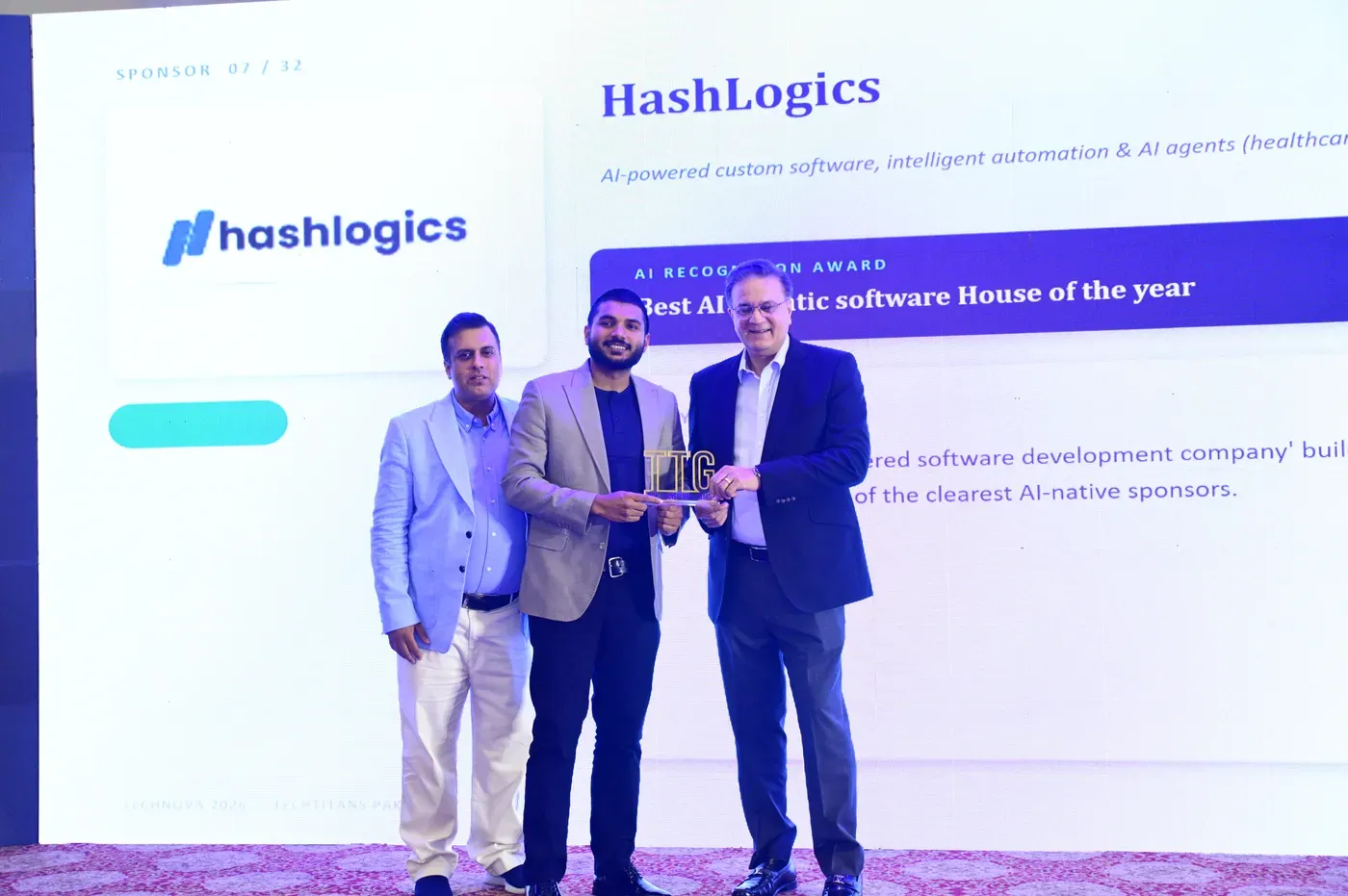
Abdul Basit founded Hashlogics in 2017, and the team runs from Lahore with a US LLC. Clients rate the work 4.8 on Clutch across 22 reviews, and in 2026 it was named Best AI-Native Software House of the Year at TechNova. Go Real Travel, a personalised European concierge platform, and TomoDomo, a coliving operations platform in Switzerland, are two of the hospitality systems we built and can show you.
Your audit call is with an engineer who has read phone logs by shift, request queues and PMS source reports like yours. Bring last month's numbers if you have them, and we'll work from those.
- NDA before the first conversation.
- No pitch on the call. A note you could hand to another firm.
- Fixed price per milestone from the Blueprint, so the number isn't a guess.
More for restaurants
- AI, automation and custom software for hospitality →The whole chain across hotels, restaurants, studios, salons and travel, and which page owns each part.
- AI guest desk →The reservations call answered during service, and the line that still gets picked up after close.
- Operations automation →Confirmations, waitlists, no-shows and reviews caught at the table.
- Custom restaurant software →POS and booking integration, menu sync across sites, and the numbers by shift.
- Business process automation →The service behind the back-office half of this work.
- Custom software development →How we build the systems your platforms won't.
- Hotels →The same chain where the covers are rooms and the book is a PMS.
