


AI, automation and custom software for travel operators, built around the suppliers and systems you already use
Sold at a desk. Used with no signal. We build the concierge platform behind your planners, the search that returns something a traveller can really book, the offline app for the phone, and the supplier and payment plumbing that keeps all three honest.
- 4.8 on Clutch across 22 reviews
- PremiumAudit.io: audit cycle cut 75%, calculation errors cut 95%
- In production for SmartREI, Tankaware, ZyloBase, KiwiWrite
What changes for your operation
3 things that decide this
- 01Your software is used at its worst moment, by a traveller abroad with patchy data and no patience, so anything they need on arrival has to already be on the device. Go Real Travel's companion app holds daily checklists and stored tickets offline, with an escalation route to a person behind it.
- 02Personal service is assumed to cap growth, and it doesn't have to. Go Real Travel reported 60% less trip planning time after we automated the assembly work around its human planners rather than replacing them. It also reported 85% mobile app take-up, which is why the offline features reached the travellers who needed them.
- 03Search is where bookings quietly die, because a filter form that returns an empty page sends a ready buyer somewhere else and nobody records it. Cruise Search AI takes a request in plain words, asks a couple of short questions, checks it against real ship, port and date options, and hands back one clean link into the engine the client already ran.
Eight places a travel operator loses a booking, a traveller or an hour, and what we put in each one
These are the eight areas our audits keep finding, in the order a traveller meets them. Each one links to the page that owns it.
The enquiry that arrives as a paragraph, not a form
Travellers describe a feeling rather than a date range, change their mind halfway, and give you two constraints that can't both be true. Your line and your inbox take that in plain words, ask the two questions that actually change the answer, and turn it into something your planner can price instead of a note that needs a phone call to decode.
AI guest desk →
Search that returns something bookable
A rigid filter form answers an awkward request with an empty page, and the customer assumes you have nothing. Cruise Search AI checks every request against real ship, port and date options before it answers, then hands the traveller back to the booking engine the client already ran. Log the searches that returned nothing; that list is your roadmap.
Custom travel software →
Concierge planning that scales past your planners' hours
One-to-one trip design is what you sell, and it's also the thing that stops you growing. Go Real Travel pairs human planners with a trip builder, live pricing and an engine that learns travel style. A small team covers 41+ European places without adding staff for each one. We automated the assembly, never the advice.
Custom travel software →
The itinerary that works in aircraft mode
Picture your traveller in Bologna with 2% battery and roaming switched off, needing the ticket, the address and the time. A spinner at that moment becomes a support call, and a support call at that moment becomes a bad review. We decide early what has to live on the device and cache it as data, because a page that needs a request to render isn't cached at all.
Custom travel software →
Suppliers, GDS and your own booking engine
A trip isn't one booking. It's flights, transfers, rooms and tickets across countries and currencies, and any one can change while your traveller sleeps. We build on Amadeus, the GDS you already use, your supplier APIs or your own booking engine, and put a queue in front of the suppliers who still answer by email. Build the layer your competitors lack and buy the plumbing.
Custom travel software →
Multi-currency money that still balances in March
Store money as whole units in a named currency and keep the rate you used at the moment of the sale. Otherwise the books drift and nobody can say when it started. We build payments, cost tracking and your cut on that rule. Go Real Travel runs its multi-currency payments through Stripe on exactly this shape.
Custom travel software →
The admin behind every departure
Confirmations, vendor bookings, rooms, transport, papers and the chase for a missing passport number eat the hours your planners should spend designing trips. We automate that work and leave the advice with your people. That's the trade that lets a small team run more trips without feeling like a call centre.
Operations automation →
The numbers behind margin per departure
Bookings sit in one system, supplier costs in another, and your cut gets worked out at the end of a season. We pull bookings, payments and the books into one read-only view: margin by trip and place, occupancy on each departure, how many enquiries turn into sales by source, and which trips are worth running again.
Custom travel software →
From a vague enquiry to a traveller standing on a platform, and where the machine takes over
Three stations where a travel operator is different from every other kind of business. Pick your system to see what each step writes back; Sabre, Travelport and the rest follow the same pattern to the depth your deals allow.
Station 01 · The enquiry, in the traveller's own words
- Today
- Someone sends three paragraphs about a trip they can half-picture, or fills a filter form that returns nothing and leaves. Your planner reads it later, replies with questions, and waits a day for each round. Your analytics record a bounce rather than a lost sale.
- What we automate
- We take the request in plain words, shape it into real search terms, and check it against what exists before anybody answers. Two short questions get asked only where the answer changes the search, and your planner picks it up ready to price.
- What stays human
- Your planner still designs the trip, picks the region and makes the judgement calls. We never let software invent a trip, a price or a promise about a supplier.
Writes to AmadeusFree seats and fare options read to shape the request, to the depth your deal allows.
Station 02 · The booking, across four suppliers and two currencies
- Today
- Flights, transfers, rooms and tickets get put together by hand, each in its own portal, each with its own confirmation email. A change from one supplier lands in your planner's inbox, and reaches your traveller when somebody remembers to forward it.
- What we automate
- The trip lives as one record, with every part, price and confirmation attached to it. Money is stored as whole units in a named currency with the rate you used. Confirmations, vendor bookings and costs run off that record rather than an inbox.
- What stays human
- Your planner signs off the trip and owns the supplier relationship. Anything that changes what a traveller paid or was promised is a person's call, not a rule.
Writes to AmadeusBookings and fare data read and matched to the trip record where your deal allows.
Station 03 · August, in a station with no signal
- Today
- Your traveller needs the ticket, the address and the time, and the app wants a connection to render them. They call your emergency number instead, or they don't, and the review arrives the following week.
- What we automate
- Everything needed in the next two hours is already on the phone: the daily checklist, the stored ticket, the address and the emergency contact, saved as data rather than as a page that needs a request. Alerts still land when there's signal.
- What stays human
- Every traveller gets one obvious way to reach a person, and you staff it. Anything about safety, a missed connection or a health problem goes to your duty contact at once.
Writes to AmadeusNothing written here; the device holds what the traveller needs offline.
Each station links to the page that owns it, and the rest of the chain sits on the hospitality hub. What a traveller is advised, and what a trip costs, stay with your planners.
We don't replace Amadeus, your booking engine or the CRM you already run. We build what they won't.
Your reservation system holds inventory, room types and rates, and it's good at that. It doesn't decide whether a traveller finds the right trip, keep their ticket safe in an airport with no roaming, or write to them in the language they booked in. That gap is where our builds sit, and they connect to what you run rather than replacing it.
So what matters is the access model, not the brand on the login screen. Amadeus and the other big systems work through trade deals as much as through docs, and what you can read and write depends on yours. Supplier APIs vary a lot, and some suppliers still answer by email. In the audit we check what your deals and accounts really expose, then design to that. Where it stops, we build a queue your team accepts with one click, so nobody re-keys a booking at the end of the day.
TomoDomo works alongside Abacus ERP and Skribble for Swiss e-signature, and Cruise Search AI hands results back to the client's own search engine rather than replacing a booking site that already worked. That's the pattern: build the layer your competitors lack, and buy or keep the plumbing.
- 01Trip, traveller and payment written as one record, with every supplier confirmation attached to it.
- 02Your booking engine stays the reservation. We build the layer around it; we don't replace it.
- 03Card details never enter a message log or a call transcript, and payment stays inside your gateway.
Fire, medical and security go to a person, always. Reviews are never auto-posted. Card numbers never touch a transcript.
A guest desk sits under rules that don't bend for software: a safety call is answered by a human, a review reply carries your name and is approved by you, payment data stays in your PMS or POS and never in a message log, and rate parity, overbooking walks and chargebacks are decisions a person owns. So every build starts with a one-page map of what the system answers, what it only proposes, and where a person is woken.
What follows is simple to state, and we put it in writing. Safety triggers are a short list you write and the first thing we test. Review-reply drafts queue for your approval and nothing posts on its own. Consent is captured before a guest or member is messaged. And every automated touch is logged so you can read what was said to a guest, and when.
- 01Fire, medical, security and any guest-safety call reach a person before the caller finishes the sentence.
- 02Review replies drafted, never posted; rate parity, walks and chargebacks stay human.
- 03A traveller always has one obvious way to reach a person, and consent is captured before a traveller is messaged.
“They will treat your vision like their own and build it that way.”
Ron Klabunde · Founder, SmartREI ↗
“They really help you understand the problem and deliver solutions in a short time frame.”
Johannes Peter · CEO, TomoDomo Coliving
Some of the systems we have shipped
- AuditFree. We read where enquiries arrive and how long each round trip takes, the searches that returned nothing, what your travellers need on arrival with roaming off, and what your suppliers and booking engine actually expose. That's the Guest-Journey Audit, and the one-page note is yours either way.
- DiagnoseWe map the path into your PMS, POS or booking system and accounting, and sit at the desk through one check-in wave or one service.
- BuildFixed price per milestone from the Blueprint. Tested on your real calls, requests and bookings, under NDA.
- RunMonitoring, a named engineer, and the first two months of maintenance free.
Best fit: a property, restaurant group, studio or operator with a desk that's saturated at peak, more than one location or shift, and a system you've outgrown in places. Not a fit yet: a single-room B&B that needs a booking widget, and we'll say so. You can stop after any stage; the audit note is yours either way.
Before you book
01Can we grow without losing the personal service we sell?+
Yes, by automating the assembly work rather than the advice. Go Real Travel kept its human planners and still reported 60% less trip planning time, because the platform took over the logistics, the pricing and the confirmations. Customer satisfaction went up 45% over the same work, so the personal part came through it intact. Your planners keep designing trips; nobody spends an afternoon retyping a booking.
02Should we build our own booking engine?+
Usually not, and this is where budgets disappear. Cruise Search AI adds plain-words search on top of the client's own engine and hands off with a single results link, so there's no second booking flow to keep alive. Build the layer your competitors lack and buy the plumbing underneath it.
03What has to work on a traveller's phone with no data?+
Anything they need in the next two hours: the ticket, the address, the time and the emergency contact. Go Real Travel's companion app stores daily checklists and tickets offline for exactly that reason. Treat a live request at the moment of arrival as a design failure, because roaming will be off precisely when it matters most.
04Can you integrate with Amadeus or our supplier APIs?+
To the depth your deals and accounts allow, and we check that in the audit rather than promising first. The big GDS platforms run on trade deals as much as on docs, and supplier APIs range from well documented to an email address. Where a supplier has no connection at all, we build a queue your team accepts with one click.
05How do you handle several currencies without the books drifting?+
Store money as whole units in a named currency, and keep the rate you used at the moment of the sale. Never a float, and never a rate worked out again later from today's number. Go Real Travel runs multi-currency payments through Stripe with cost tracking on that rule, which is what makes a season's numbers still add up in March.
06How do you charge, and how does an engagement start?+
Our Guest-Journey Audit is free, and the one-page note is yours whether or not you go further. Every build starts with a fixed-fee Blueprint: an engineer reads your real systems and writes the plan, with a fixed price for each milestone rather than a guess. The fee is credited in full against the build, and if the plan isn't one you'd act on, you don't pay for it. That number is a commitment, not a guess, and you can stop after any stage.
A senior engineer, not a sales rep
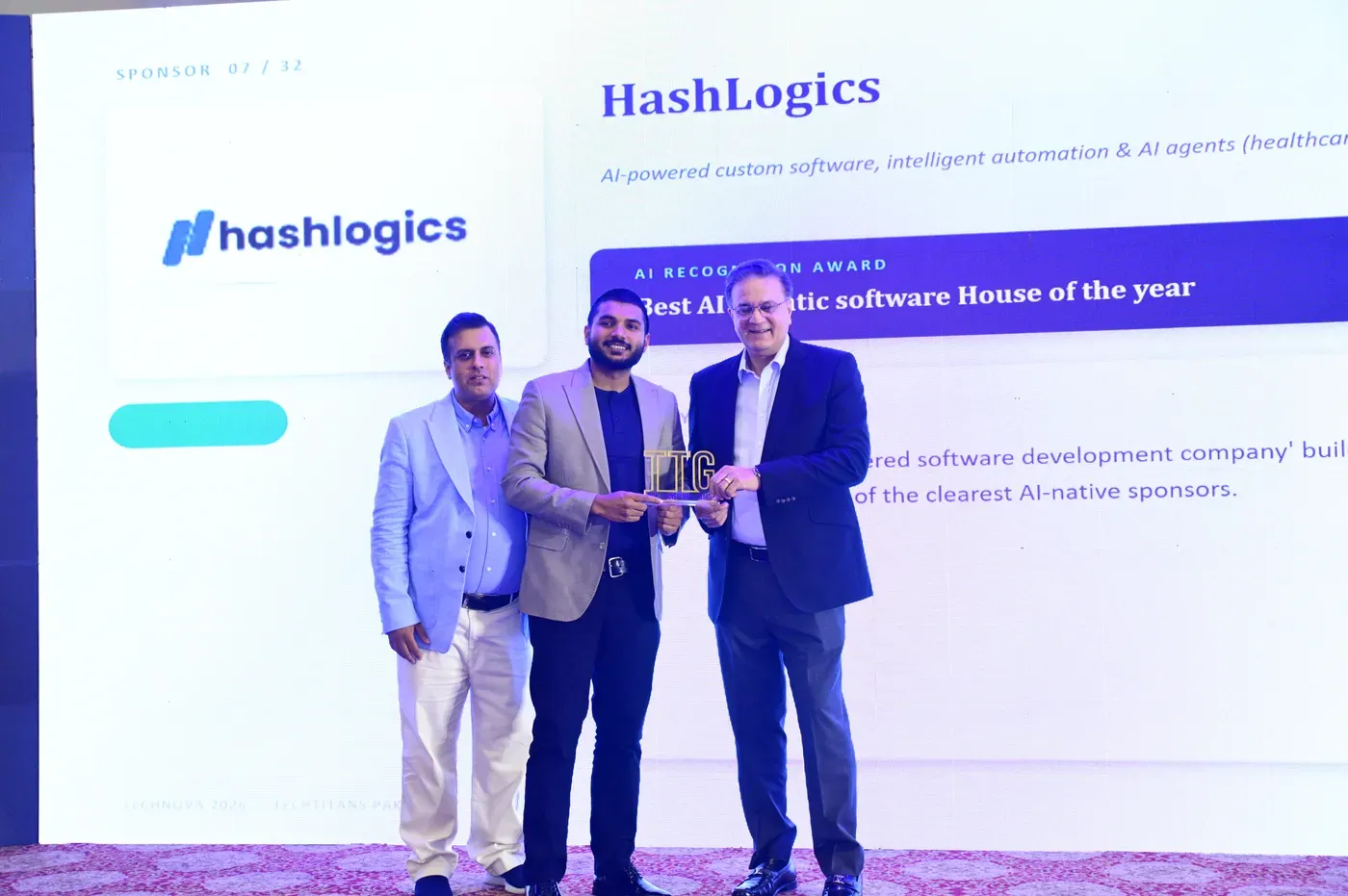
Abdul Basit founded Hashlogics in 2017, and the team runs from Lahore with a US LLC. Clients rate the work 4.8 on Clutch across 22 reviews, and in 2026 it was named Best AI-Native Software House of the Year at TechNova. Go Real Travel, a personalised European concierge platform, and TomoDomo, a coliving operations platform in Switzerland, are two of the hospitality systems we built and can show you.
Your audit call is with an engineer who has read phone logs by shift, request queues and PMS source reports like yours. Bring last month's numbers if you have them, and we'll work from those.
- NDA before the first conversation.
- No pitch on the call. A note you could hand to another firm.
- Fixed price per milestone from the Blueprint, so the number isn't a guess.
More for travel operators
- AI, automation and custom software for hospitality →The whole chain across hotels, restaurants, studios, salons and travel, and which page owns each part.
- Custom travel software →Concierge platforms, search, offline apps and supplier integration.
- AI guest desk →The enquiry answered in plain words, shaped into something your planner can price.
- Operations automation →Confirmations, vendor scheduling and the admin behind every departure.
- Go Real Travel →A personalised European concierge platform with an offline companion app.
- Cruise Search AI →Conversational search validated against real ship, port and date combinations.
- Hotels →The stay side of the same journey, built around your PMS.
- AI agents →The service behind the conversational search and enquiry work.
